JUnit test suite for all the tests in frodo2.algorithms.dpop.test. More...
Static Public Member Functions | |
| static Test | suite () |
| static TestSuite | reverse (TestSuite suite) |
| Returns the same suite, but in reverse order. | |
| static Map< String, QueueOutputPipeInterface > | createQueueNetwork (Map< String, Queue > queues, RandGraphFactory.Graph graph, boolean useTCP) throws IOException |
| A convenience method that takes in a graph and creates all corresponding queues and pipes. | |
| static Document | createRandProblem (int maxNbrVars, int maxNbrEdges, int maxNbrAgents, boolean maximize) |
| Creates a random problem. | |
| static Document | createRandProblem (int maxNbrVars, int maxNbrEdges, int maxNbrAgents, boolean maximize, double p2) |
| Creates a random problem. | |
| static Document | createRandProblem (int maxNbrVars, int maxNbrEdges, int maxNbrAgents, boolean maximize, int sign, double p2) |
| Creates a random problem. | |
| static Document | createRandProblem (int maxNbrVars, int maxNbrEdges, int maxNbrAgents, boolean maximize, int sign, int amplitude) |
| Creates a random problem. | |
| static Document | createRandProblem (int maxNbrVars, int maxNbrEdges, int maxNbrAgents, boolean maximize, int sign, boolean binary) |
| Creates a random problem. | |
| static Document | createRandProblem (int maxNbrVars, int maxNbrEdges, int maxNbrAgents, int maxNbrRandVars, boolean maximize) |
| Creates a random problem with random variables. | |
| static Document | createSizedRandProblem (int nbrVars, int nbrEdges, int nbrAgents, int nbrRandVars, boolean maximize) |
| Creates a random problem with random variables. | |
| static< U extends Addable< U > Document | generateProblem (Graph graph, int maxNbrRandVars, boolean maximize) |
| Creates a problem description based on the input constraint graph. | |
| static< U extends Addable< U > Document | generateProblem (Graph graph, int maxNbrRandVars, boolean maximize, Class< U > classOfU) |
| Creates a problem description based on the input constraint graph. | |
| static< U extends Addable< U > Document | generateProblem (Graph graph, int maxNbrRandVars, boolean maximize, int sign) |
| Creates a problem description based on the input constraint graph. | |
| static< U extends Addable< U > Document | generateSizedProblem (Graph graph, int nbrRandVars, boolean maximize) |
| Creates a problem description based on the input constraint graph. | |
| static< U extends Addable< U > Document | generateProblem (Graph graph, int maxNbrRandVars, List< Hypercube< AddableInteger, U > > solutionSpaces, List< Hypercube< AddableInteger, AddableReal > > probSpaces, boolean maximize) |
| Creates a problem description based on the input constraint graph. | |
| static< U extends Addable< U > Document | generateProblem (Graph graph, int maxNbrRandVars, List< Hypercube< AddableInteger, U > > solutionSpaces, List< Hypercube< AddableInteger, AddableReal > > probSpaces, boolean maximize, Class< U > classOfU) |
| Creates a problem description based on the input constraint graph. | |
| static< U extends Addable< U > Document | generateProblem (Graph graph, int maxNbrRandVars, List< Hypercube< AddableInteger, U > > solutionSpaces, List< Hypercube< AddableInteger, AddableReal > > probSpaces, boolean maximize, int sign) |
| Creates a problem description based on the input constraint graph. | |
| static< U extends Addable< U > Document | generateProblem (Graph graph, int maxNbrRandVars, List< Hypercube< AddableInteger, U > > solutionSpaces, List< Hypercube< AddableInteger, AddableReal > > probSpaces, boolean maximize, int sign, Class< U > classOfU) |
| Creates a problem description based on the input constraint graph. | |
| static< U extends Addable< U > Document | generateSizedProblem (Graph graph, int nbrRandVars, List< Hypercube< AddableInteger, U > > solutionSpaces, List< Hypercube< AddableInteger, AddableReal > > probSpaces, boolean maximize) |
| Creates a problem description based on the input constraint graph. | |
| static< U extends Addable< U > Document | generateSizedProblem (Graph graph, int nbrRandVars, List< Hypercube< AddableInteger, U > > solutionSpaces, List< Hypercube< AddableInteger, AddableReal > > probSpaces, boolean maximize, int sign) |
| Creates a problem description based on the input constraint graph. | |
| static< U extends Addable< U > Document | generateSizedProblem (Graph graph, int nbrRandVars, List< Hypercube< AddableInteger, U > > solutionSpaces, List< Hypercube< AddableInteger, AddableReal > > probSpaces, boolean maximize, int sign, Class< U > classOfU) |
| Creates a problem description based on the input constraint graph. | |
| static Document | generateProblem (Graph graph, boolean maximize) |
| Creates a problem description based on the input constraint graph. | |
| static Document | generateProblem (Graph graph, boolean maximize, int sign) |
| Creates a problem description based on the input constraint graph. | |
| static Document | generateProblem (Graph graph, boolean maximize, int sign, boolean binary) |
| Creates a problem description based on the input constraint graph. | |
| static Document | generateProblem (Graph graph, boolean maximize, int sign, boolean binary, double p2) |
| Creates a problem description based on the input constraint graph. | |
| static Document | generateProblem (Graph graph, boolean maximize, int sign, boolean binary, int amplitude) |
| Creates a problem description based on the input constraint graph. | |
| static Document | generateProblem (Graph graph, List< Hypercube< AddableInteger, AddableInteger > > solutionSpaces, boolean maximize) |
| Creates a problem description based on the input constraint graph. | |
| static< U extends Addable< U > Document | generateProblem (Graph graph, List< Hypercube< AddableInteger, U > > solutionSpaces, boolean maximize, int sign) |
| Creates a problem description based on the input constraint graph. | |
| static< U extends Addable< U > Document | generateProblem (Graph graph, List< Hypercube< AddableInteger, U > > solutionSpaces, boolean maximize, int sign, Class< U > classOfU) |
| Creates a problem description based on the input constraint graph. | |
| static< U extends Addable< U > Document | generateProblem (Graph graph, List< Hypercube< AddableInteger, U > > solutionSpaces, boolean maximize, boolean binary) |
| Creates a problem description based on the input constraint graph. | |
| static< U extends Addable< U > Document | generateProblem (Graph graph, List< Hypercube< AddableInteger, U > > solutionSpaces, boolean maximize, int sign, boolean binary, int amplitude, double p2) |
| Creates a problem description based on the input constraint graph. | |
| static< U extends Addable< U > Document | generateProblem (Graph graph, List< Hypercube< AddableInteger, U > > solutionSpaces, boolean maximize, int sign, boolean binary, int amplitude, double p2, Class< U > classOfU) |
| Creates a problem description based on the input constraint graph. | |
| static Hypercube< AddableInteger, AddableInteger > | randHypercube (List< String > variables, boolean maximize) |
| Generates a random hypercube. | |
| static Hypercube< AddableInteger, AddableInteger > | randHypercube (List< String > variables, boolean maximize, boolean binary) |
| Generates a random hypercube. | |
| static Hypercube< AddableInteger, AddableInteger > | randHypercube (List< String > variables, boolean maximize, final int sign) |
| Generates a random hypercube. | |
| static< U extends Addable< U > Hypercube< AddableInteger, U > | randHypercube (List< String > variables, boolean maximize, final int sign, Class< U > classOfU) |
| Generates a random hypercube. | |
| static Hypercube< AddableInteger, AddableInteger > | randHypercube (List< String > variables, boolean maximize, final int sign, int amplitude) |
| Generates a random hypercube. | |
| static< U extends Addable< U > Hypercube< AddableInteger, U > | randHypercube (List< String > variables, boolean maximize, final int sign, int amplitude, Class< U > classOfU) |
| Generates a random hypercube. | |
| static Hypercube< AddableInteger, AddableInteger > | randHypercube (List< String > variables, boolean maximize, final int sign, boolean binary, int amplitude, double p2) |
| Generates a random hypercube. | |
| static< U extends Addable< U > Hypercube< AddableInteger, U > | randHypercube (List< String > variables, boolean maximize, final int sign, boolean binary, int amplitude, double p2, Class< U > classOfU) |
| Generates a random hypercube. | |
| static Hypercube< AddableInteger, AddableReal > | randProbSpace (List< String > variables) |
| Generates a random probability space. | |
| static void | main (String[] args) throws IOException |
| Generates a random problem and stores it into randProb.xml. | |
Static Public Attributes | |
| static final double | DEFAULT_P2 = 0.3 |
| The default constraint tightness. | |
Detailed Description
JUnit test suite for all the tests in frodo2.algorithms.dpop.test.
Member Function Documentation
◆ createQueueNetwork()
|
static |
A convenience method that takes in a graph and creates all corresponding queues and pipes.
For each cluster in the graph, a new queue is created. For each edge in the graph between two nodes node1 and node2, a new pipe is created such that the queue corresponding to node1's cluster can send a message to the queue corresponding to node2's cluster using the cluster ID of node1 as recipient ID.
If the graph actually has no clusters, then one queue is created for each node.
- Parameters
-
queues the to-be-populated list of queues, indexed by the names of the agents graph the constraint graph useTCP trueif the queues should use TCP pipes to communicate with each other;falseif they should use QueueIOPipes.
- Returns
- Output pipes, indexed by agent name; the calling object is responsible for calling close() on each pipe to dispose of it.
- Exceptions
-
IOException thrown when the method failed to create TCP pipes
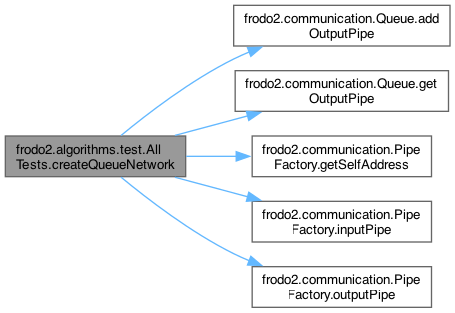
References frodo2.communication.Queue.addOutputPipe(), frodo2.communication.Queue.getOutputPipe(), frodo2.communication.PipeFactory.getSelfAddress(), frodo2.communication.PipeFactory.inputPipe(), frodo2.communication.PipeFactory.outputPipe(), and frodo2.controller.Controller.PipeFactoryInstance.
Referenced by frodo2.algorithms.dpop.test.UTILpropagationTest< U extends Addable< U > >.Listener.Listener(), frodo2.algorithms.dpop.test.VALUEpropagationTest< U extends Addable< U > >.Listener.Listener(), frodo2.algorithms.dpop.privacy.test.SecureRerootingTest.randomTest(), frodo2.algorithms.dpop.privacy.test.VariableObfuscationTest< V extends Addable< V > >.randomTest(), frodo2.algorithms.dpop.privacy.test.SecureCircularRoutingTest.setUp(), frodo2.algorithms.adopt.test.testADOPT.test(), frodo2.algorithms.asodpop.tests.ASODPOPBinaryTest< V extends Addable< V >, U extends Addable< U > >.test(), frodo2.algorithms.asodpop.tests.ASODPOPTest< V extends Addable< V >, U extends Addable< U > >.test(), frodo2.algorithms.dpop.stochastic.test.LowestCommonAncestorsTest.test(), frodo2.algorithms.duct.tests.NormalizeInfTest.test(), frodo2.algorithms.duct.tests.NormalizeTest.test(), frodo2.algorithms.odpop.tests.UTILpropagationTest< V extends Addable< V >, U extends Addable< U > >.test(), frodo2.algorithms.odpop.tests.VALUEpropagationTest< V extends Addable< V >, U extends Addable< U > >.test(), frodo2.algorithms.varOrdering.linear.tests.CentralLinearOrderingTest.test(), frodo2.algorithms.adopt.test.testPreprocessing.testRandom(), frodo2.algorithms.varOrdering.dfs.tests.DFSgenerationTest.testRandom(), frodo2.algorithms.varOrdering.election.tests.LeaderElectionMaxIDTest< S extends Comparable< S > >.testRandom(), and frodo2.algorithms.varOrdering.election.tests.VariableElectionTest< S extends Comparable< S > &Serializable >.testRandom().
◆ createRandProblem() [1/6]
|
static |
Creates a random problem.
The output document is in XCSP format, with an additional attribute owner for each variable specifying the name of the agent that owns the variable.
- Parameters
-
maxNbrVars maximum number of variables maxNbrEdges maximum number of edges maxNbrAgents maximum number of agents maximize when true generate a maximization problem, when false a minimization problem
- Returns
- a JDOM Document describing the problem
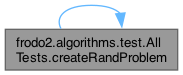
References createRandProblem().
Referenced by createRandProblem(), createRandProblem(), frodo2.algorithms.AgentFactory< V extends Addable< V >, U extends Addable< U > >.main(), main(), frodo2.algorithms.adopt.test.ADOPTagentTest< V extends Addable< V >, U extends Addable< U > >.setUp(), frodo2.algorithms.dpop.memory.tests.MB_DPOPagentTest.setUp(), frodo2.algorithms.dpop.restart.test.TestSDPOP< V extends Addable< V >, U extends Addable< U > >.setUp(), frodo2.algorithms.mpc_discsp.tests.MPC_DisWCSP4tests.setUp(), frodo2.algorithms.dpop.privacy.test.P2_DPOPagentTest< V extends Addable< V >, E extends AddableLimited< AddableInteger, E >.test(), frodo2.algorithms.dpop.privacy.test.P3halves_DPOPagentTest< V extends Addable< V >, E extends AddableLimited< AddableInteger, E >.test(), frodo2.algorithms.maxsum.tests.MaxSumTests< V extends Addable< V >, U extends Addable< U > >.test(), frodo2.algorithms.varOrdering.dfs.tests.LocalRandVarsDFStest.test(), frodo2.algorithms.dpop.privacy.test.P_DPOPagentTest< V extends Addable< V > >.testP_DPOPvsDPOP(), frodo2.algorithms.asodpop.tests.ASODPOPagentTest< V extends Addable< V >, U extends Addable< U > >.testRandom(), frodo2.algorithms.asodpop.tests.ASODPOPBinaryAgentTest< V extends Addable< V >, U extends Addable< U > >.testRandom(), frodo2.algorithms.localSearch.dsa.tests.DSAagentTest< V extends Addable< V >, U extends Addable< U > >.testRandom(), frodo2.algorithms.localSearch.mgm.mgm2.tests.MGM2agentTest< V extends Addable< V >, U extends Addable< U > >.testRandom(), frodo2.algorithms.localSearch.mgm.tests.MGMagentTest< V extends Addable< V >, U extends Addable< U > >.testRandom(), frodo2.algorithms.odpop.tests.ODPOPagentTest< V extends Addable< V >, U extends Addable< U > >.testRandom(), frodo2.algorithms.odpop.tests.ODPOPagentTestBinaryDomains< V extends Addable< V >, U extends Addable< U > >.testRandom(), frodo2.algorithms.odpop.tests.ODPOPagentTestFullDomain< V extends Addable< V >, U extends Addable< U > >.testRandom(), and frodo2.solutionSpaces.JaCoP.tests.JaCoPtests< V extends Addable< V > >.testRandomExtensionalProblem().
◆ createRandProblem() [2/6]
|
static |
Creates a random problem.
The output document is in XCSP format, with an additional attribute owner for each variable specifying the name of the agent that owns the variable.
- Parameters
-
maxNbrVars maximum number of variables maxNbrEdges maximum number of edges maxNbrAgents maximum number of agents maximize when true generate a maximization problem, when false a minimization problem p2 the constraint tightness
- Returns
- a JDOM Document describing the problem
References createRandProblem().

◆ createRandProblem() [3/6]
|
static |
Creates a random problem.
The output document is in XCSP format, with an additional attribute owner for each variable specifying the name of the agent that owns the variable.
- Parameters
-
maxNbrVars maximum number of variables maxNbrEdges maximum number of edges maxNbrAgents maximum number of agents maximize when true generate a maximization problem, when false a minimization problem sign the desired sign for the utilities (if 0, utilities can be either sign) binary when true, the generated problem should have variables with binary domains
- Returns
- a JDOM Document describing the problem
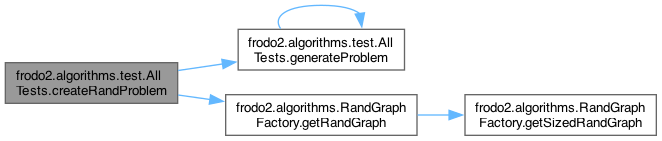
References generateProblem(), and frodo2.algorithms.RandGraphFactory.getRandGraph().
◆ createRandProblem() [4/6]
|
static |
Creates a random problem.
The output document is in XCSP format, with an additional attribute owner for each variable specifying the name of the agent that owns the variable.
- Parameters
-
maxNbrVars maximum number of variables maxNbrEdges maximum number of edges maxNbrAgents maximum number of agents maximize when true generate a maximization problem, when false a minimization problem sign the desired sign for the utilities (if 0, utilities can be either sign) p2 the constraint tightness
- Returns
- a JDOM Document describing the problem
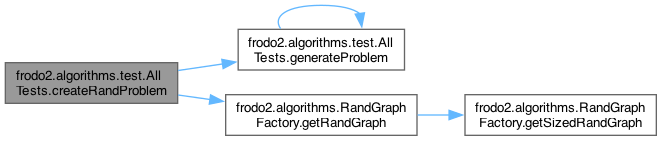
References generateProblem(), and frodo2.algorithms.RandGraphFactory.getRandGraph().
◆ createRandProblem() [5/6]
|
static |
Creates a random problem.
The output document is in XCSP format, with an additional attribute owner for each variable specifying the name of the agent that owns the variable.
- Parameters
-
maxNbrVars maximum number of variables maxNbrEdges maximum number of edges maxNbrAgents maximum number of agents maximize when true generate a maximization problem, when false a minimization problem sign the desired sign for the utilities (if 0, utilities can be either sign) amplitude the amplitude of the utility values
- Returns
- a JDOM Document describing the problem
References generateProblem(), and frodo2.algorithms.RandGraphFactory.getRandGraph().
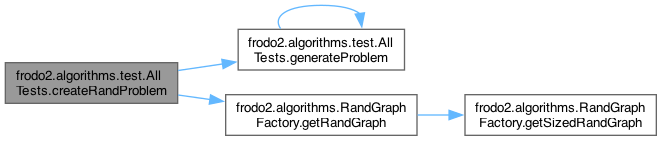
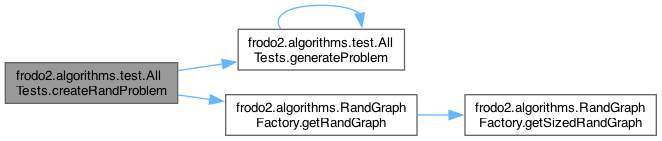
◆ createRandProblem() [6/6]
|
static |
Creates a random problem with random variables.
The output document is in XCSP format, with an additional attribute owner for each variable specifying the name of the agent that owns the variable.
Furthermore, variables can be of type "random" and the new concept of "probabilities" is introduced, in which a probability is the same as a relation, except that any constraint based on it will not be a utility solution space, but rather a probability space.
- Parameters
-
maxNbrVars maximum number of variables maxNbrEdges maximum number of edges maxNbrAgents maximum number of agents maxNbrRandVars maximum number of random variables maximize when true generate a maximization problem, when false a minimization problem
- Returns
- a JDOM Document describing the problem
References generateProblem(), and frodo2.algorithms.RandGraphFactory.getRandGraph().
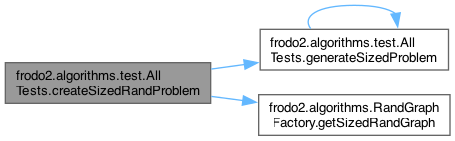
◆ createSizedRandProblem()
|
static |
Creates a random problem with random variables.
The output document is in XCSP format, with an additional attribute owner for each variable specifying the name of the agent that owns the variable.
Furthermore, variables can be of type "random" and the new concept of "probabilities" is introduced, in which a probability is the same as a relation, except that any constraint based on it will not be a utility solution space, but rather a probability space.
- Parameters
-
nbrVars number of variables nbrEdges number of edges nbrAgents number of agents nbrRandVars number of random variables maximize when true generate a maximization problem, when false a minimization problem
- Returns
- a JDOM Document describing the problem
References generateSizedProblem(), and frodo2.algorithms.RandGraphFactory.getSizedRandGraph().
◆ generateProblem() [1/18]
|
static |
Creates a problem description based on the input constraint graph.
- Parameters
-
graph a constraint graph maximize when true generate a maximization problem, when false a minimization problem
- Returns
- a problem description based on the input graph
References generateProblem().

◆ generateProblem() [2/18]
|
static |
Creates a problem description based on the input constraint graph.
- Parameters
-
graph a constraint graph maximize when true generate a maximization problem, when false a minimization problem sign the desired sign for the utilities (if 0, utilities can be either sign)
- Returns
- a problem description based on the input graph
References DEFAULT_P2, and generateProblem().

◆ generateProblem() [3/18]
|
static |
Creates a problem description based on the input constraint graph.
- Parameters
-
graph a constraint graph maximize when true generate a maximization problem, when false a minimization problem sign the desired sign for the utilities (if 0, utilities can be either sign) binary when true, the generated problem should have variables with binary domains
- Returns
- a problem description based on the input graph
References DEFAULT_P2, and generateProblem().

◆ generateProblem() [4/18]
|
static |
Creates a problem description based on the input constraint graph.
- Parameters
-
graph a constraint graph maximize when true generate a maximization problem, when false a minimization problem sign the desired sign for the utilities (if 0, utilities can be either sign) binary when true, the generated problem should have variables with binary domainsp2 the constraint tightness
- Returns
- a problem description based on the input graph
References generateProblem().

◆ generateProblem() [5/18]
|
static |
Creates a problem description based on the input constraint graph.
- Parameters
-
graph a constraint graph maximize when true generate a maximization problem, when false a minimization problem sign the desired sign for the utilities (if 0, utilities can be either sign) binary when true, the generated problem should have variables with binary domainsamplitude the amplitude of the utility values
- Returns
- a problem description based on the input graph
References DEFAULT_P2, and generateProblem().

◆ generateProblem() [6/18]
|
static |
Creates a problem description based on the input constraint graph.
- Parameters
-
graph a constraint graph maxNbrRandVars maximum number of random variables to be added to the graph maximize when true generate a maximization problem, when false a minimization problem
- Returns
- a problem description based on the input graph
References generateProblem().
Referenced by createRandProblem(), createRandProblem(), createRandProblem(), createRandProblem(), generateProblem(), generateProblem(), generateProblem(), generateProblem(), generateProblem(), generateProblem(), generateProblem(), generateProblem(), generateProblem(), generateProblem(), generateProblem(), generateProblem(), generateProblem(), generateProblem(), generateProblem(), generateProblem(), generateSizedProblem(), frodo2.algorithms.dpop.test.UTILpropagationTest< U extends Addable< U > >.Listener.Listener(), frodo2.algorithms.dpop.test.VALUEpropagationTest< U extends Addable< U > >.Listener.Listener(), frodo2.algorithms.dpop.privacy.test.SecureRerootingTest.randomTest(), frodo2.algorithms.adopt.test.testADOPT.setUp(), frodo2.algorithms.adopt.test.testPreprocessing.setUp(), frodo2.algorithms.afb.test.AFBagentTest< V extends Addable< V >, U extends Addable< U > >.setUp(), frodo2.algorithms.asodpop.tests.ASODPOPBinaryTest< V extends Addable< V >, U extends Addable< U > >.setUp(), frodo2.algorithms.asodpop.tests.ASODPOPTest< V extends Addable< V >, U extends Addable< U > >.setUp(), frodo2.algorithms.dpop.count.test.TestCountSolutions.setUp(), frodo2.algorithms.dpop.param.test.ParamDPOPtest< V extends Addable< V >, U extends Addable< U > >.setUp(), frodo2.algorithms.dpop.privacy.test.SecureCircularRoutingTest.setUp(), frodo2.algorithms.dpop.privacy.test.VariableObfuscationTest< V extends Addable< V > >.setUp(), frodo2.algorithms.dpop.stochastic.robust.test.Robust_E_DPOPagentTest< V extends Addable< V > >.setUp(), frodo2.algorithms.dpop.stochastic.test.E_DPOPagentTest< V extends Addable< V > >.setUp(), frodo2.algorithms.dpop.stochastic.test.LowestCommonAncestorsTest.setUp(), frodo2.algorithms.dpop.stochastic.test.SamplingPhaseTest.setUp(), frodo2.algorithms.dpop.test.DPOPagentTest< V extends Addable< V >, U extends Addable< U > >.setUp(), frodo2.algorithms.duct.tests.DUCTagentChildSearchTest.setUp(), frodo2.algorithms.duct.tests.DUCTagentChildTest.setUp(), frodo2.algorithms.duct.tests.DUCTagentPruningSearchTest.setUp(), frodo2.algorithms.duct.tests.DUCTagentPruningTest.setUp(), frodo2.algorithms.duct.tests.DUCTagentTest.setUp(), frodo2.algorithms.duct.tests.NormalizeInfTest.setUp(), frodo2.algorithms.duct.tests.NormalizeTest.setUp(), frodo2.algorithms.localSearch.dsa.tests.TestDSA< U extends Addable< U > >.setUp(), frodo2.algorithms.odpop.tests.UTILpropagationTest< V extends Addable< V >, U extends Addable< U > >.setUp(), frodo2.algorithms.odpop.tests.VALUEpropagationTest< V extends Addable< V >, U extends Addable< U > >.setUp(), frodo2.algorithms.synchbb.test.SynchBBagentTest< V extends Addable< V >, U extends Addable< U > >.setUp(), frodo2.algorithms.test.ProblemTest.setUp(), frodo2.algorithms.test.XCSPparserTest.setUp(), frodo2.algorithms.varOrdering.dfs.tests.DFSgenerationTest.setUp(), frodo2.algorithms.varOrdering.linear.tests.CentralLinearOrderingTest.setUp(), frodo2.controller.TestController.setUp(), frodo2.algorithms.maxsum.tests.MaxSumTests< V extends Addable< V >, U extends Addable< U > >.test(), frodo2.algorithms.dpop.test.UTILpropagationTest< U extends Addable< U > >.testComputeDFS(), and frodo2.algorithms.varOrdering.election.tests.VariableElectionTest< S extends Comparable< S > &Serializable >.testRandom().
◆ generateProblem() [7/18]
|
static |
Creates a problem description based on the input constraint graph.
- Parameters
-
<U> the class of utilities graph a constraint graph maxNbrRandVars maximum number of random variables to be added to the graph maximize when true generate a maximization problem, when false a minimization problem classOfU the class of utilities
- Returns
- a problem description based on the input graph
References generateProblem().

◆ generateProblem() [8/18]
|
static |
Creates a problem description based on the input constraint graph.
- Parameters
-
graph a constraint graph maxNbrRandVars maximum number of random variables to be added to the graph maximize when true generate a maximization problem, when false a minimization problem sign the desired sign for the utilities (if 0, utilities can be either sign)
- Returns
- a problem description based on the input graph
References generateProblem().

◆ generateProblem() [9/18]
|
static |
Creates a problem description based on the input constraint graph.
- Parameters
-
graph a constraint graph maxNbrRandVars maximum number of random variables to be added to the graph solutionSpaces the list to which the randomly generated solution spaces will be added probSpaces the list to which the randomly generated probability spaces will be added maximize when true generate a maximization problem, when false a minimization problem
- Returns
- a problem description based on the input graph
References generateProblem().

◆ generateProblem() [10/18]
|
static |
Creates a problem description based on the input constraint graph.
- Parameters
-
<U> the class for utilities graph a constraint graph maxNbrRandVars maximum number of random variables to be added to the graph solutionSpaces the list to which the randomly generated solution spaces will be added probSpaces the list to which the randomly generated probability spaces will be added maximize when true generate a maximization problem, when false a minimization problem classOfU the class for utilities
- Returns
- a problem description based on the input graph
References generateProblem().

◆ generateProblem() [11/18]
|
static |
Creates a problem description based on the input constraint graph.
- Parameters
-
graph a constraint graph maxNbrRandVars maximum number of random variables to be added to the graph solutionSpaces the list to which the randomly generated solution spaces will be added probSpaces the list to which the randomly generated probability spaces will be added maximize when true generate a maximization problem, when false a minimization problem sign the desired sign for the utilities (if 0, utilities can be either sign)
- Returns
- a problem description based on the input graph
References generateProblem().

◆ generateProblem() [12/18]
|
static |
Creates a problem description based on the input constraint graph.
- Parameters
-
<U> the class used for utilities graph a constraint graph maxNbrRandVars maximum number of random variables to be added to the graph solutionSpaces the list to which the randomly generated solution spaces will be added probSpaces the list to which the randomly generated probability spaces will be added maximize when true generate a maximization problem, when false a minimization problem sign the desired sign for the utilities (if 0, utilities can be either sign) classOfU the class used for utilities
- Returns
- a problem description based on the input graph
References generateSizedProblem().

◆ generateProblem() [13/18]
|
static |
Creates a problem description based on the input constraint graph.
- Parameters
-
graph a constraint graph solutionSpaces list to which the randomly generated hypercubes will be added maximize when true generate a maximization problem, when false a minimization problem
- Returns
- a problem description based on the input graph
References DEFAULT_P2, and generateProblem().

◆ generateProblem() [14/18]
|
static |
Creates a problem description based on the input constraint graph.
- Parameters
-
graph a constraint graph solutionSpaces list to which the randomly generated hypercubes will be added maximize when true generate a maximization problem, when false a minimization problem binary when true, the generated problem should have variables with binary domains
- Returns
- a problem description based on the input graph
References DEFAULT_P2, and generateProblem().

◆ generateProblem() [15/18]
|
static |
Creates a problem description based on the input constraint graph.
- Parameters
-
graph a constraint graph solutionSpaces list to which the randomly generated hypercubes will be added maximize when true generate a maximization problem, when false a minimization problem sign the desired sign for the utilities (if 0, utilities can be either sign)
- Returns
- a problem description based on the input graph
References generateProblem().

◆ generateProblem() [16/18]
|
static |
Creates a problem description based on the input constraint graph.
- Parameters
-
graph a constraint graph solutionSpaces list to which the randomly generated hypercubes will be added maximize when true generate a maximization problem, when false a minimization problem sign the desired sign for the utilities (if 0, utilities can be either sign) binary when true, the generated problem should have variables with binary domainsamplitude the amplitude of the utility values p2 the constraint tightness (i.e. probability of infeasibility)
- Returns
- a problem description based on the input graph
References generateProblem().

◆ generateProblem() [17/18]
|
static |
Creates a problem description based on the input constraint graph.
- Parameters
-
<U> the class used for utilities graph a constraint graph solutionSpaces list to which the randomly generated hypercubes will be added maximize when true generate a maximization problem, when false a minimization problem sign the desired sign for the utilities (if 0, utilities can be either sign) binary when true, the generated problem should have variables with binary domainsamplitude the amplitude of the utility values p2 the constraint tightness (i.e. probability of infeasibility) classOfU the class used for utilities
- Returns
- a problem description based on the input graph
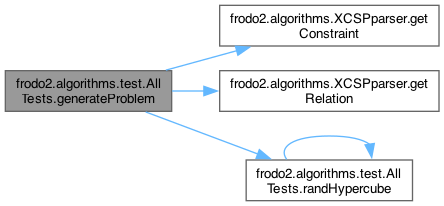
References frodo2.algorithms.RandGraphFactory.Graph.clusterOf, frodo2.algorithms.RandGraphFactory.Graph.clusters, frodo2.algorithms.RandGraphFactory.Edge.dest, frodo2.algorithms.RandGraphFactory.Graph.edges, frodo2.algorithms.XCSPparser< V extends Addable< V >, U extends Addable< U > >.getConstraint(), frodo2.algorithms.XCSPparser< V extends Addable< V >, U extends Addable< U > >.getRelation(), frodo2.algorithms.RandGraphFactory.Graph.neighborhoods, frodo2.algorithms.RandGraphFactory.Graph.nodes, randHypercube(), and frodo2.algorithms.RandGraphFactory.Edge.source.
◆ generateProblem() [18/18]
|
static |
Creates a problem description based on the input constraint graph.
- Parameters
-
<U> the class used for utilities graph a constraint graph solutionSpaces list to which the randomly generated hypercubes will be added maximize when true generate a maximization problem, when false a minimization problem sign the desired sign for the utilities (if 0, utilities can be either sign) classOfU the class used for utilities
- Returns
- a problem description based on the input graph
References DEFAULT_P2, and generateProblem().

◆ generateSizedProblem() [1/4]
|
static |
Creates a problem description based on the input constraint graph.
- Parameters
-
graph a constraint graph nbrRandVars number of random variables to be added to the graph maximize when true generate a maximization problem, when false a minimization problem
- Returns
- a problem description based on the input graph
References generateSizedProblem().
Referenced by createSizedRandProblem(), generateProblem(), generateSizedProblem(), generateSizedProblem(), and generateSizedProblem().
◆ generateSizedProblem() [2/4]
|
static |
Creates a problem description based on the input constraint graph.
- Parameters
-
graph a constraint graph nbrRandVars number of random variables to be added to the graph solutionSpaces the list to which the randomly generated solution spaces will be added probSpaces the list to which the randomly generated probability spaces will be added maximize when true generate a maximization problem, when false a minimization problem
- Returns
- a problem description based on the input graph
References generateSizedProblem().

◆ generateSizedProblem() [3/4]
|
static |
Creates a problem description based on the input constraint graph.
- Parameters
-
graph a constraint graph nbrRandVars number of random variables to be added to the graph solutionSpaces the list to which the randomly generated solution spaces will be added probSpaces the list to which the randomly generated probability spaces will be added maximize when true generate a maximization problem, when false a minimization problem sign the desired sign for the utilities (if 0, utilities can be either sign)
- Returns
- a problem description based on the input graph
References generateSizedProblem().

◆ generateSizedProblem() [4/4]
|
static |
Creates a problem description based on the input constraint graph.
- Parameters
-
<U> the class used for utilities graph a constraint graph nbrRandVars number of random variables to be added to the graph solutionSpaces the list to which the randomly generated solution spaces will be added probSpaces the list to which the randomly generated probability spaces will be added maximize when true generate a maximization problem, when false a minimization problem sign the desired sign for the utilities (if 0, utilities can be either sign) classOfU the class used for utilities
- Returns
- a problem description based on the input graph
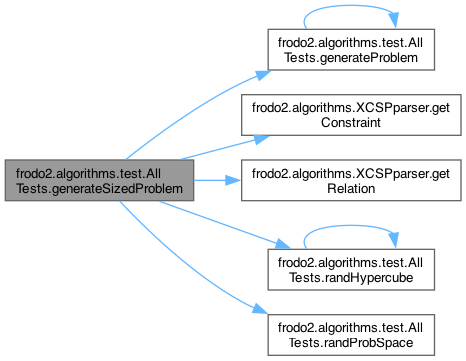
References generateProblem(), frodo2.algorithms.XCSPparser< V extends Addable< V >, U extends Addable< U > >.getConstraint(), frodo2.algorithms.XCSPparser< V extends Addable< V >, U extends Addable< U > >.getRelation(), frodo2.algorithms.RandGraphFactory.Graph.nodes, randHypercube(), and randProbSpace().
◆ main()
|
static |
Generates a random problem and stores it into randProb.xml.
- Parameters
-
args ignored
- Exceptions
-
IOException if an error occurs when writing to the file
References createRandProblem().

◆ randHypercube() [1/8]
|
static |
Generates a random hypercube.
All domains are {1, 2, 3} and utility values are random integers between -50 and +50, with some probability of being infinite.
- Parameters
-
variables list of variables maximize if true, return a maximization problem
- Returns
- a random hypercube
References DEFAULT_P2, and randHypercube().
Referenced by generateProblem(), generateSizedProblem(), randHypercube(), randHypercube(), randHypercube(), randHypercube(), randHypercube(), randHypercube(), and randHypercube().
◆ randHypercube() [2/8]
|
static |
Generates a random hypercube.
All domains are {1, 2, 3} and utility values are random integers between -50 and +50, with some probability of being infinite.
- Parameters
-
variables list of variables maximize if true, return a maximization problembinary when true, the generated problem should have variables with binary domains
- Returns
- a random hypercube
References DEFAULT_P2, and randHypercube().

◆ randHypercube() [3/8]
|
static |
Generates a random hypercube.
All domains are {1, 2, 3} and utility values are random integers
- between -50 and +50, if sign == 0
- between -100 and 0 if sign < 0
- between 0 and +100 if sign > 0 with some probability of being infinite.
- Parameters
-
variables list of variables maximize if true, return a maximization problemsign the desired sign for utilities (if 0, utilities can take both signs)
- Returns
- a random hypercube
References randHypercube().

◆ randHypercube() [4/8]
|
static |
Generates a random hypercube.
All domains are {1, 2, 3} and utility values are random integers
- between -amplitude/2 and +amplitude/2, if sign == 0
- between -amplitude and 0 if sign < 0
- between 0 and +amplitude if sign > 0 with some probability of being infinite.
- Parameters
-
variables list of variables maximize if true, return a maximization problemsign the desired sign for utilities (if 0, utilities can take both signs) binary when true, the generated problem should have variables with binary domainsamplitude the amplitude of the utility values p2 tightness (i.e. probability of infeasibility)
- Returns
- a random hypercube
References randHypercube().

◆ randHypercube() [5/8]
|
static |
Generates a random hypercube.
All domains are {1, 2, 3} and utility values are random integers
- between -amplitude/2 and +amplitude/2, if sign == 0
- between -amplitude and 0 if sign < 0
- between 0 and +amplitude if sign > 0 with some probability of being infinite.
- Parameters
-
<U> the class used for utilities variables list of variables maximize if true, return a maximization problemsign the desired sign for utilities (if 0, utilities can take both signs) binary when true, the generated problem should have variables with binary domainsamplitude the amplitude of the utility values p2 tightness (i.e. probability of infeasibility) classOfU the class used for utilities
- Returns
- a random hypercube
◆ randHypercube() [6/8]
|
static |
Generates a random hypercube.
All domains are {1, 2, 3} and utility values are random integers
- between -50 and +50, if sign == 0
- between -100 and 0 if sign < 0
- between 0 and +100 if sign > 0 with some probability of being infinite.
- Parameters
-
<U> the class used for utilities variables list of variables maximize if true, return a maximization problemsign the desired sign for utilities (if 0, utilities can take both signs) classOfU the class used for utilities
- Returns
- a random hypercube
References DEFAULT_P2, and randHypercube().

◆ randHypercube() [7/8]
|
static |
Generates a random hypercube.
All domains are {1, 2, 3} and utility values are random integers
- between -amplitude/2 and +amplitude/2, if sign == 0
- between -amplitude and 0 if sign < 0
- between 0 and +amplitude if sign > 0 with some probability of being infinite.
- Parameters
-
variables list of variables maximize if true, return a maximization problemsign the desired sign for utilities (if 0, utilities can take both signs) amplitude the amplitude of the utility values
- Returns
- a random hypercube
References DEFAULT_P2, and randHypercube().

◆ randHypercube() [8/8]
|
static |
Generates a random hypercube.
All domains are {1, 2, 3} and utility values are random integers
- between -amplitude/2 and +amplitude/2, if sign == 0
- between -amplitude and 0 if sign < 0
- between 0 and +amplitude if sign > 0 with some probability of being infinite.
- Parameters
-
<U> the class to be used for utility values variables list of variables maximize if true, return a maximization problemsign the desired sign for utilities (if 0, utilities can take both signs) amplitude the amplitude of the utility values classOfU the class to be used for utility values
- Returns
- a random hypercube
References DEFAULT_P2, and randHypercube().

◆ randProbSpace()
|
static |
Generates a random probability space.
All domains are {1, 2, 3} and utility values are random real values that all sum up to 1.
- Parameters
-
variables list of variables
- Returns
- a random probability space
Referenced by generateSizedProblem().
◆ reverse()
|
static |
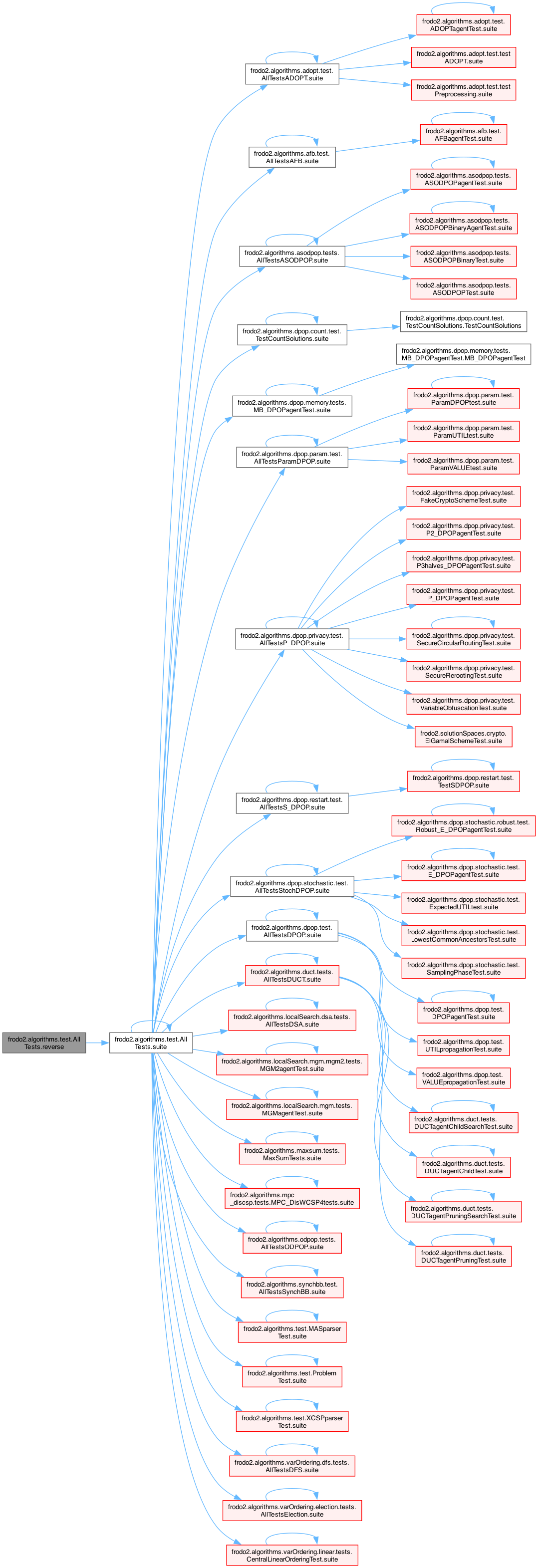
Returns the same suite, but in reverse order.
- Parameters
-
suite the suite to be inverted
- Returns
- a new suite with the same tests as the input suite, but in reverse order
References frodo2.java, and suite().
◆ suite()
|
static |
- Returns
- The suite of unit tests
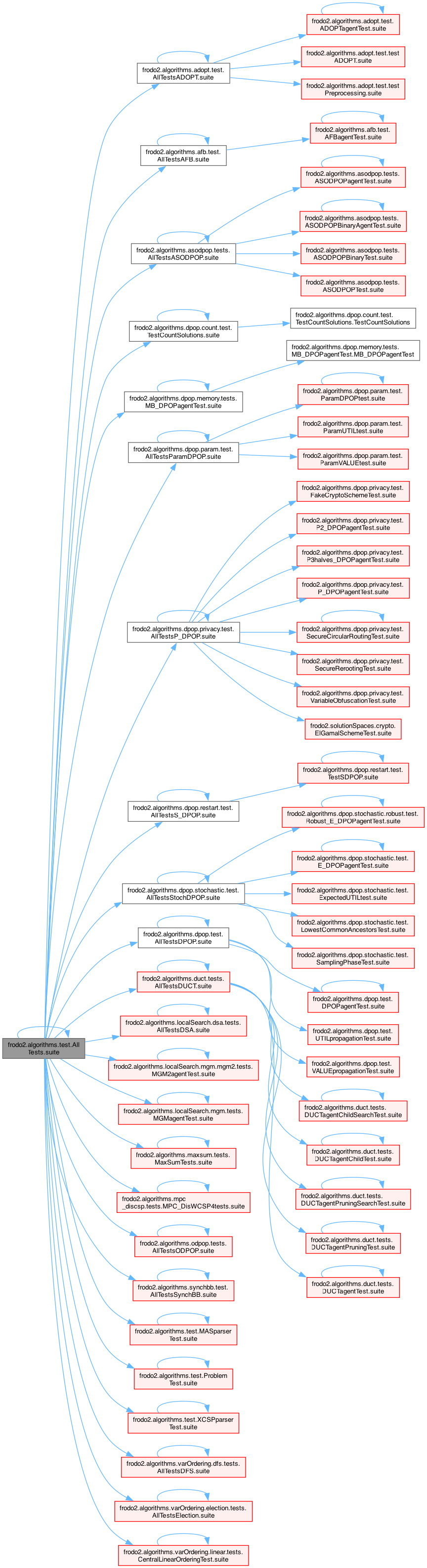
References frodo2.algorithms.adopt.test.AllTestsADOPT.suite(), frodo2.algorithms.afb.test.AllTestsAFB.suite(), frodo2.algorithms.asodpop.tests.AllTestsASODPOP.suite(), frodo2.algorithms.dpop.count.test.TestCountSolutions.suite(), frodo2.algorithms.dpop.memory.tests.MB_DPOPagentTest.suite(), frodo2.algorithms.dpop.param.test.AllTestsParamDPOP.suite(), frodo2.algorithms.dpop.privacy.test.AllTestsP_DPOP.suite(), frodo2.algorithms.dpop.restart.test.AllTestsS_DPOP.suite(), frodo2.algorithms.dpop.stochastic.test.AllTestsStochDPOP.suite(), frodo2.algorithms.dpop.test.AllTestsDPOP.suite(), frodo2.algorithms.duct.tests.AllTestsDUCT.suite(), frodo2.algorithms.localSearch.dsa.tests.AllTestsDSA.suite(), frodo2.algorithms.localSearch.mgm.mgm2.tests.MGM2agentTest< V extends Addable< V >, U extends Addable< U > >.suite(), frodo2.algorithms.localSearch.mgm.tests.MGMagentTest< V extends Addable< V >, U extends Addable< U > >.suite(), frodo2.algorithms.maxsum.tests.MaxSumTests< V extends Addable< V >, U extends Addable< U > >.suite(), frodo2.algorithms.mpc_discsp.tests.MPC_DisWCSP4tests.suite(), frodo2.algorithms.odpop.tests.AllTestsODPOP.suite(), frodo2.algorithms.synchbb.test.AllTestsSynchBB.suite(), suite(), frodo2.algorithms.test.MASparserTest.suite(), frodo2.algorithms.test.ProblemTest.suite(), frodo2.algorithms.test.XCSPparserTest.suite(), frodo2.algorithms.varOrdering.dfs.tests.AllTestsDFS.suite(), frodo2.algorithms.varOrdering.election.tests.AllTestsElection.suite(), and frodo2.algorithms.varOrdering.linear.tests.CentralLinearOrderingTest.suite().
Referenced by reverse(), and suite().
Member Data Documentation
◆ DEFAULT_P2
|
static |
The default constraint tightness.
Referenced by generateProblem(), generateProblem(), generateProblem(), generateProblem(), generateProblem(), generateProblem(), randHypercube(), randHypercube(), randHypercube(), randHypercube(), randHypercube(), and frodo2.algorithms.maxsum.tests.MaxSumTests< V extends Addable< V >, U extends Addable< U > >.suite().
The documentation for this class was generated from the following file:
- src/frodo2/algorithms/test/AllTests.java
