The class representing a hypercube. More...

Classes | |
| class | NullHypercube |
| Class representing a NULL hypercube. More... | |
Public Member Functions | |
| Hypercube () | |
| Empty Hypercube constructor. | |
| Hypercube (String[] variables_order, V[][] variables_domains, Object[] utility_values, U infeasibleUtil) | |
| Construct a new Hypercube with provided variables names, the domains of this variables and the utility values. | |
| Hypercube (String[] variables_order, V[][] variables_domains, U[] utility_values, U infeasibleUtil) | |
| Construct a new Hypercube with provided variables names, the domains of these variables and the utility values. | |
| Hypercube (String name, String[] variables_order, V[][] variables_domains, U[] utility_values, U infeasibleUtil) | |
| Construct a new Hypercube with provided variables names, the domains of these variables and the utility values. | |
| Hypercube (String[] variables_order, V[][] variables_domains, U[] utility_values, U infeasibleUtil, ProblemInterface< V, U > problem) | |
| Construct a new Hypercube with provided variables names, the domains of these variables and the utility values. | |
| Hypercube (String file) | |
| Construct a new Hypercube with the variables names, the domains of this variables and the utility values stored in the provided XML file. | |
| void | saveAsXML (String file) |
| Creates an XML file from the hypercube. | |
| U | getUtility (String[] variables_names, V[] variables_values) |
| U | getUtility (Map< String, V > assignments) |
| UtilitySolutionSpace< V, U > | join (UtilitySolutionSpace< V, U > space, boolean addition, boolean minNCCCs) |
| Computes the join of this hypercube with the input hypercube. | |
| UtilitySolutionSpace< V, U > | join (UtilitySolutionSpace< V, U > space, String[] total_variables) |
| UtilitySolutionSpace< V, U > | join (UtilitySolutionSpace< V, U > space) |
| UtilitySolutionSpace< V, U > | joinMinNCCCs (UtilitySolutionSpace< V, U > space) |
| UtilitySolutionSpace< V, U > | join (UtilitySolutionSpace< V, U >[] spaces) |
| UtilitySolutionSpace< V, U > | joinMinNCCCs (UtilitySolutionSpace< V, U >[] spaces) |
| UtilitySolutionSpace< V, U > | multiply (UtilitySolutionSpace< V, U > space, String[] total_variables) |
| UtilitySolutionSpace< V, U > | multiply (UtilitySolutionSpace< V, U > space) |
| UtilitySolutionSpace< V, U > | multiply (UtilitySolutionSpace< V, U >[] spaces) |
| Hypercube< V, U > | slice (String[] variables_names, V[][] sub_domains) |
| Hypercube< V, U > | slice (String[] variables_names, V[] values) |
| Hypercube< V, U > | slice (String var, V[] subDomain) |
| Hypercube< V, U > | slice (String var, V val) |
| Hypercube< V, U > | slice (V[] variables_values) |
| UtilitySolutionSpace< V, U > | applyJoin (UtilitySolutionSpace< V, U > space, String[] total_variables) |
| Joins this hypercube with the provided hypercube if the utility values array is big enough, this hypercube is modified into the new hypercube, otherwise a new hypercube is created. | |
| UtilitySolutionSpace< V, U > | applyJoin (UtilitySolutionSpace< V, U > space) |
| joins this hypercube with the provided hypercube by using applyJoin method | |
| ProjOutput< V, U > | consensus (final String varOut, final Map< String, UtilitySolutionSpace< V, U > > distributions, final boolean maximum) |
| ProjOutput< V, U > | consensusAllSols (String varOut, Map< String, UtilitySolutionSpace< V, U > > distributions, boolean maximum) |
| ProjOutput< V, U > | consensusExpect (final String varOut, final Map< String, UtilitySolutionSpace< V, U > > distributions, final boolean maximum) |
| ProjOutput< V, U > | consensusAllSolsExpect (String varOut, Map< String, UtilitySolutionSpace< V, U > > distributions, boolean maximum) |
| UtilitySolutionSpace.ProjOutput< V, U > | project (String[] varsOut, final boolean maximum) |
| Returns a Hypercube obtained by projecting some of the variables of the hypercube. | |
| UtilitySolutionSpace< V, U > | blindProject (String varOut, boolean maximize) |
| UtilitySolutionSpace< V, U > | blindProject (String[] varsOut, boolean maximize) |
| U | blindProjectAll (final boolean maximize) |
| Hypercube< V, U > | min (String var) |
| Hypercube< V, U > | max (String var) |
| UtilitySolutionSpace.ProjOutput< V, U > | project (String variable_name, boolean maximum) |
| Returns a Hypercube obtained by projecting the input variable out of the hypercube. | |
| UtilitySolutionSpace.ProjOutput< V, U > | project (int number_to_project, boolean maximum) |
Returns a hypercube obtained by projecting out from this hypercube the last number_to_project variables of the hypercube. | |
| ProjOutput< V, U > | projectAll (boolean maximum) |
| ProjOutput< V, U > | projectAll (boolean maximum, String[] varsOut) |
| UtilitySolutionSpace.ProjOutput< V, U > | applyProject (String[] variables_names, final boolean maximum) |
| Returns a Hypercube obtained by projecting some of the variables of the hypercube this version of project does not create a new hypercube but directly modifies the current utility array. | |
| Hypercube< V, U > | split (U threshold, boolean maximum) |
| Returns a Hypercube containing variables values corresponding to utility values bigger than the provided threshold. | |
| UtilitySolutionSpace< V, U > | expectation (Map< String, UtilitySolutionSpace< V, U > > distributions) |
| ProjOutput< V, U > | projExpectMonotone (final String varOut, Map< String, UtilitySolutionSpace< V, U > > distributions, final boolean maximum) |
| Map< V, Double > | sample (int nbrSamples) |
| Hypercube< V, U > | changeVariablesOrder (String[] variables_order) |
| boolean | equals (Object o) |
| Checks if this hypercube equals the one provided as a parameter (including the order of variables). | |
| Hypercube< V, U > | clone () |
| Hypercube< V, U > | resolve () |
| Hypercube< V, U > | resolve (boolean unused) |
| Hypercube< V, U > | toHypercube () |
| boolean | isIncludedIn (UtilitySolutionSpace< V, U > space) |
| SolutionSpace< V > | join (SolutionSpace< V > space, String[] total_variables) |
| UtilitySolutionSpace< V, U > | compose (String[] varsOut, BasicUtilitySolutionSpace< V, ArrayList< V > > substitution) |
| UtilitySolutionSpace.IteratorBestFirst< V, U > | iteratorBestFirst (boolean maximize) |
| UtilitySolutionSpace.Iterator< V, U > | iterator () |
| UtilitySolutionSpace.SparseIterator< V, U > | sparseIter () |
| UtilitySolutionSpace.Iterator< V, U > | iterator (String[] order) |
| UtilitySolutionSpace.SparseIterator< V, U > | sparseIter (String[] order) |
| UtilitySolutionSpace.Iterator< V, U > | iterator (String[] variables, V[][] domains) |
| UtilitySolutionSpace.SparseIterator< V, U > | sparseIter (String[] variables, V[][] domains) |
| UtilitySolutionSpace.Iterator< V, U > | iterator (String[] variables, V[][] domains, V[] assignment) |
| UtilitySolutionSpace.SparseIterator< V, U > | sparseIter (String[] variables, V[][] domains, V[] assignment) |
| UtilitySolutionSpace.IteratorBestFirst< V, U > | iteratorBestFirst (boolean maximize, String[] fixedVariables, V[] fixedValues) |
| UtilitySolutionSpace< V, U > | rescale (U add, U multiply) |
| Public Member Functions inherited from frodo2.solutionSpaces.hypercube.HypercubeLimited< V, U, U > | |
| HypercubeLimited () | |
| Empty constructor. | |
| HypercubeLimited< V, U, UL > | resolve () |
| HypercubeLimited< V, U, UL > | clone () |
| UtilitySolutionSpaceLimited< V, U, UL > | joinMinNCCCs (UtilitySolutionSpace< V, U > space) |
| UtilitySolutionSpaceLimited< V, U, UL > | join (UtilitySolutionSpace< V, U > space) |
| UtilitySolutionSpaceLimited< V, U, UL > | blindProject (String varOut, boolean maximize) |
| UL | blindProjectAll (final boolean maximize) |
| UtilitySolutionSpaceLimited< V, U, UL > | min (String variable) |
| UtilitySolutionSpaceLimited< V, U, UL > | max (String variable) |
| HypercubeLimited< V, U, UL > | slice (String var, V val) |
| Public Member Functions inherited from frodo2.solutionSpaces.UtilitySolutionSpaceLimited< V, U, U > | |
| UtilitySolutionSpaceLimited< V, U, UL > | join (UtilitySolutionSpace< V, U > space) |
| Binary join operation. | |
| UtilitySolutionSpaceLimited< V, U, UL > | joinMinNCCCs (UtilitySolutionSpace< V, U > space) |
| A version of the join method that minimizes the utility lookups in the caller space and the input space. | |
| UtilitySolutionSpaceLimited< V, U, UL > | blindProject (String varOut, boolean maximize) |
| Projects out the input variable without computing the corresponding optimal assignments. | |
| UL | blindProjectAll (boolean maximize) |
| Projects out all variables without computing the corresponding optimal assignments. | |
| UtilitySolutionSpaceLimited< V, U, UL > | min (String variable) |
| Project out a variable by minimizing over it, without computing the argmin. | |
| UtilitySolutionSpaceLimited< V, U, UL > | max (String variable) |
| Project out a variable by maximizing over it, without computing the argmax. | |
| UtilitySolutionSpaceLimited< V, U, UL > | slice (String var, V val) |
| UtilitySolutionSpaceLimited< V, U, UL > | resolve () |
Static Public Member Functions | |
| static String[] | union (String[] list1, String[] list2) |
| Computes the union of two lists, perserving the order when possible. | |
Protected Member Functions | |
| Hypercube (String[] variables_order, V[][] variables_domains, U[] utility_values, HashMap< V, Integer >[] steps_hashmaps) | |
| Construct a new Hypercube with provided variables names, the domains of these variables and the utility values. | |
| UtilitySolutionSpace< V, U > | join (UtilitySolutionSpace< V, U > utilitySpace, String[] outputVars, final boolean addition, final boolean minNCCCs) |
| Returns a Hypercube object obtained by joining this hypercube with the one provided as a parameter. | |
| UtilitySolutionSpace< V, U > | join (UtilitySolutionSpace< V, U >[] spaces, final boolean addition, final boolean minNCCCs) |
| The join method. | |
| ProjOutput< V, U > | consensus (final String varOut, final Map< String, UtilitySolutionSpace< V, U > > distributions, final boolean maximum, final boolean allSolutions, final boolean expect) |
| A projection operation that uses the consensus approach. | |
| ScalarHypercube< V, U > | scalarHypercube (U utility) |
| Hypercube< V, U > | newInstance (String name, String[] new_variables, V[][] new_domains, U[] new_values, U infeasibleUtil) |
| UtilitySolutionSpace.Iterator< V, U > | newIter (String[] variables, V[][] domains, V[] assignment, U skippedUtil) |
| Protected Member Functions inherited from frodo2.solutionSpaces.hypercube.HypercubeLimited< V, U, U > | |
| void | writeUtilities (ObjectOutput out) throws IOException |
| void | readUtilities (ObjectInput in) throws ClassNotFoundException, IOException, InvocationTargetException, NoSuchMethodException |
| HypercubeLimited< V, U, UL > | newInstance (String name, String[] new_variables, V[][] new_domains, UL[] new_values, UL infeasibleUtil) |
| HypercubeLimited< V, U, UL > | scalarHypercube (UL utility) |
Detailed Description
The class representing a hypercube.
- Parameters
-
<V> type used for the variable values <U> type used for the utility values
- Todo
- When a method makes assumptions on the input parameters (for instance, the order of the variables), use asserts to check if these assumptions hold and document them in the method Doxygen comment.
Constructor & Destructor Documentation
◆ Hypercube() [1/7]
| frodo2.solutionSpaces.hypercube.Hypercube< V extends Addable< V >, U extends Addable< U > >.Hypercube | ( | ) |
Empty Hypercube constructor.
Referenced by applyJoin(), applyJoin(), changeVariablesOrder(), clone(), consensus(), Hypercube(), Hypercube(), Hypercube(), join(), join(), max(), min(), newInstance(), project(), resolve(), resolve(), slice(), slice(), slice(), slice(), slice(), split(), and toHypercube().
◆ Hypercube() [2/7]
|
protected |
Construct a new Hypercube with provided variables names, the domains of these variables and the utility values.
- Parameters
-
variables_order the array containing the variables names ordered according to their order in the hypercube variables_domains the domains of the variables contained in the variables_order array and ordered in the same order. utility_values the utility values contained in a one-dimensional array. there should be a utility value for each possible combination of values that the variables may take. steps_hashmaps steps allowing faster access to utilities of a given assignment.
- Warning
- variables_domains parameter needs to be sorted in ascending order.
- utility_values needs to be properly ordered, the first utility corresponds to the assignment in which each variable is assigned its first value.
References Hypercube().

◆ Hypercube() [3/7]
| frodo2.solutionSpaces.hypercube.Hypercube< V extends Addable< V >, U extends Addable< U > >.Hypercube | ( | String[] | variables_order, |
| V | variables_domains[][], | ||
| Object[] | utility_values, | ||
| U | infeasibleUtil ) |
Construct a new Hypercube with provided variables names, the domains of this variables and the utility values.
- Parameters
-
variables_order the array containing the variables names ordered according to their order in the hypercube variables_domains the domains of the variables contained in the variables_order array and ordered in the same order. utility_values the utility values contained in a multi-dimensional array. there should be a utility value for each possible combination of values that the variables may take. infeasibleUtil -INF if we are maximizing, +INF if we are minimizing
- Todo
- Test this constructor.
- Bug
- Extract the type used for utility values from the multi-dimensional array utility_values
References Hypercube().

◆ Hypercube() [4/7]
| frodo2.solutionSpaces.hypercube.Hypercube< V extends Addable< V >, U extends Addable< U > >.Hypercube | ( | String[] | variables_order, |
| V | variables_domains[][], | ||
| U[] | utility_values, | ||
| U | infeasibleUtil ) |
Construct a new Hypercube with provided variables names, the domains of these variables and the utility values.
- Parameters
-
variables_order the array containing the variables names ordered according to their order in the hypercube variables_domains the domains of the variables contained in the variables_order array and ordered in the same order. utility_values the utility values contained in a one-dimensional array. there should be a utility value for each possible combination of values that the variables may take. infeasibleUtil -INF if we are maximizing, +INF if we are minimizing
- Warning
- variables_domains parameter needs to be sorted in ascending order.
- utility_values needs to be properly ordered, the first utility corresponds to the assignment in which each variable is assigned its first value.
◆ Hypercube() [5/7]
| frodo2.solutionSpaces.hypercube.Hypercube< V extends Addable< V >, U extends Addable< U > >.Hypercube | ( | String | name, |
| String[] | variables_order, | ||
| V | variables_domains[][], | ||
| U[] | utility_values, | ||
| U | infeasibleUtil ) |
Construct a new Hypercube with provided variables names, the domains of these variables and the utility values.
- Parameters
-
name the name of the Hypercube variables_order the array containing the variables names ordered according to their order in the hypercube variables_domains the domains of the variables contained in the variables_order array and ordered in the same order. utility_values the utility values contained in a one-dimensional array. there should be a utility value for each possible combination of values that the variables may take. infeasibleUtil -INF if we are maximizing, +INF if we are minimizing
- Warning
- variables_domains parameter needs to be sorted in ascending order.
- utility_values needs to be properly ordered, the first utility corresponds to the assignment in which each variable is assigned its first value.
◆ Hypercube() [6/7]
| frodo2.solutionSpaces.hypercube.Hypercube< V extends Addable< V >, U extends Addable< U > >.Hypercube | ( | String[] | variables_order, |
| V | variables_domains[][], | ||
| U[] | utility_values, | ||
| U | infeasibleUtil, | ||
| ProblemInterface< V, U > | problem ) |
Construct a new Hypercube with provided variables names, the domains of these variables and the utility values.
- Parameters
-
variables_order the array containing the variables names ordered according to their order in the hypercube variables_domains the domains of the variables contained in the variables_order array and ordered in the same order. utility_values the utility values contained in a one-dimensional array. there should be a utility value for each possible combination of values that the variables may take. infeasibleUtil -INF if we are maximizing, +INF if we are minimizing problem the problem to be notified of constraint checks
- Warning
- variables_domains parameter needs to be sorted in ascending order.
- utility_values needs to be properly ordered, the first utility corresponds to the assignment in which each variable is assigned its first value.
◆ Hypercube() [7/7]
| frodo2.solutionSpaces.hypercube.Hypercube< V extends Addable< V >, U extends Addable< U > >.Hypercube | ( | String | file | ) |
Construct a new Hypercube with the variables names, the domains of this variables and the utility values stored in the provided XML file.
- Parameters
-
file the name of the XML file containing the needed information. the file name may also contain the path to that XML file
- Todo
- We apparently cannot use Array.newInstance here because the file format allows different value types for different variables
- Todo
- Actually, the file doesn't say whether it should be -INF or +INF
References Hypercube().

Member Function Documentation
◆ applyJoin() [1/2]
| UtilitySolutionSpace< V, U > frodo2.solutionSpaces.hypercube.Hypercube< V extends Addable< V >, U extends Addable< U > >.applyJoin | ( | UtilitySolutionSpace< V, U > | space | ) |
joins this hypercube with the provided hypercube by using applyJoin method
- Parameters
-
space hypercube to join this one with
- Returns
- the join of the two hypercubes
- Note
- Depending on the respective sizes of the caller and the input spaces, this method will modify one or the other (it will modify the bigger one).
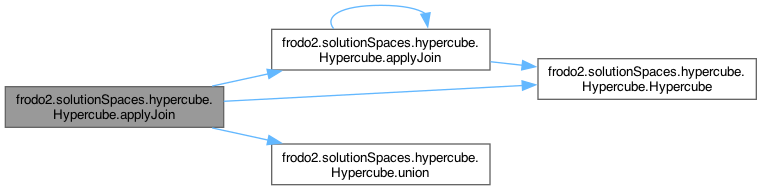
References applyJoin(), Hypercube(), and union().
◆ applyJoin() [2/2]
| UtilitySolutionSpace< V, U > frodo2.solutionSpaces.hypercube.Hypercube< V extends Addable< V >, U extends Addable< U > >.applyJoin | ( | UtilitySolutionSpace< V, U > | space, |
| String[] | total_variables ) |
Joins this hypercube with the provided hypercube if the utility values array is big enough, this hypercube is modified into the new hypercube, otherwise a new hypercube is created.
- Note
- no assumption on the variables order in the two hypercubes is made, but the variables order in the new hypercube is fixed, ie. the first variables will necessarily be the variables present only in the provided variables, then the variables present in this hypercube
- Parameters
-
space the hypercube to join this one with total_variables the list of variables of the two hypercubes
- Returns
- the join of the two hypercubes
References applyJoin(), Hypercube(), and frodo2.solutionSpaces.hypercube.Hypercube< V extends Addable< V >, U extends Addable< U > >.NullHypercube< V extends Addable< V >, U extends Addable< U > >.NULL.
Referenced by applyJoin(), applyJoin(), and frodo2.solutionSpaces.hypercube.tests.HypercubeTest.testApplyJoinRandom().

◆ applyProject()
| UtilitySolutionSpace.ProjOutput< V, U > frodo2.solutionSpaces.hypercube.Hypercube< V extends Addable< V >, U extends Addable< U > >.applyProject | ( | String[] | variables_names, |
| final boolean | maximum ) |
Returns a Hypercube obtained by projecting some of the variables of the hypercube this version of project does not create a new hypercube but directly modifies the current utility array.
- Parameters
-
variables_names the variables that should be removed from this hypercube maximum boolean object indicating whether to use the maximum or the minumum
- Returns
- a ProjOutput object with the modifies hypercube
References applyProject(), clone(), and frodo2.solutionSpaces.hypercube.Hypercube< V extends Addable< V >, U extends Addable< U > >.NullHypercube< V extends Addable< V >, U extends Addable< U > >.NULL.
Referenced by applyProject(), and frodo2.solutionSpaces.hypercube.tests.HypercubeTest.testApplyProjectRandom().

◆ blindProject() [1/2]
| UtilitySolutionSpace< V, U > frodo2.solutionSpaces.hypercube.Hypercube< V extends Addable< V >, U extends Addable< U > >.blindProject | ( | String | varOut, |
| boolean | maximize ) |
- See also
- HypercubeLimited.blindProject(java.lang.String, boolean)
Implements frodo2.solutionSpaces.UtilitySolutionSpace< V extends Addable< V >, U extends Addable< U > >.
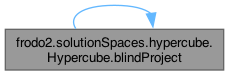
References blindProject().
Referenced by blindProject().
◆ blindProject() [2/2]
| UtilitySolutionSpace< V, U > frodo2.solutionSpaces.hypercube.Hypercube< V extends Addable< V >, U extends Addable< U > >.blindProject | ( | String[] | varsOut, |
| boolean | maximize ) |
- See also
- HypercubeLimited.blindProject(java.lang.String[], boolean)
Implements frodo2.solutionSpaces.UtilitySolutionSpace< V extends Addable< V >, U extends Addable< U > >.
References blindProjectAll().

◆ blindProjectAll()
| U frodo2.solutionSpaces.hypercube.Hypercube< V extends Addable< V >, U extends Addable< U > >.blindProjectAll | ( | final boolean | maximize | ) |
Implements frodo2.solutionSpaces.UtilitySolutionSpace< V extends Addable< V >, U extends Addable< U > >.
References sparseIter().
Referenced by blindProject().

◆ changeVariablesOrder()
| Hypercube< V, U > frodo2.solutionSpaces.hypercube.Hypercube< V extends Addable< V >, U extends Addable< U > >.changeVariablesOrder | ( | String[] | variables_order | ) |
- See also
- BasicHypercube.changeVariablesOrder(java.lang.String[])
Implements frodo2.solutionSpaces.UtilitySolutionSpace< V extends Addable< V >, U extends Addable< U > >.
References changeVariablesOrder(), and Hypercube().
Referenced by changeVariablesOrder(), frodo2.solutionSpaces.hypercube.tests.HypercubeTest.testApplyChangeVariablesOrderRandom(), frodo2.solutionSpaces.hypercube.tests.HypercubeTest.testApplyJoinRandom(), frodo2.solutionSpaces.hypercube.tests.HypercubeTest.testChangeVariablesOrderRandom(), frodo2.solutionSpaces.hypercube.tests.HypercubeTest.testEquivalentRandom(), frodo2.solutionSpaces.hypercube.tests.HypercubeIterTest.testMoreVars(), frodo2.solutionSpaces.hypercube.tests.HypercubeIterTest.testOtherOrder(), and frodo2.solutionSpaces.hypercube.tests.HypercubeTest.testSmartJoinRandom().

◆ clone()
| Hypercube< V, U > frodo2.solutionSpaces.hypercube.Hypercube< V extends Addable< V >, U extends Addable< U > >.clone | ( | ) |
- Returns
- a shallow clone of this hypercube
Implements frodo2.solutionSpaces.UtilitySolutionSpace< V extends Addable< V >, U extends Addable< U > >.
References clone(), and Hypercube().
Referenced by applyProject(), clone(), consensus(), expectation(), project(), project(), project(), frodo2.algorithms.adopt.test.testADOPT.simulateUTIL(), frodo2.algorithms.dpop.test.UTILpropagationTest< U extends Addable< U > >.Listener.simulateUTIL(), frodo2.solutionSpaces.hypercube.tests.HypercubeTest.testApplyChangeVariablesOrderRandom(), frodo2.solutionSpaces.hypercube.tests.HypercubeTest.testApplyJoinRandom(), frodo2.solutionSpaces.hypercube.tests.HypercubeTest.testApplyProjectRandom(), and frodo2.solutionSpaces.hypercube.tests.HypercubeTest.testEqualClonesRandom().

◆ compose()
| UtilitySolutionSpace< V, U > frodo2.solutionSpaces.hypercube.Hypercube< V extends Addable< V >, U extends Addable< U > >.compose | ( | String[] | varsOut, |
| BasicUtilitySolutionSpace< V, ArrayList< V > > | substitution ) |
- See also
- BasicHypercube.compose(java.lang.String[], BasicUtilitySolutionSpace)
Implements frodo2.solutionSpaces.UtilitySolutionSpace< V extends Addable< V >, U extends Addable< U > >.
References frodo2.solutionSpaces.UtilitySolutionSpace< V extends Addable< V >, U extends Addable< U > >.compose().
Referenced by consensus(), and frodo2.solutionSpaces.hypercube.tests.HypercubeTest.testConsensusWeighted().

◆ consensus() [1/2]
| ProjOutput< V, U > frodo2.solutionSpaces.hypercube.Hypercube< V extends Addable< V >, U extends Addable< U > >.consensus | ( | final String | varOut, |
| final Map< String, UtilitySolutionSpace< V, U > > | distributions, | ||
| final boolean | maximum ) |
- See also
- UtilitySolutionSpace.consensus(java.lang.String, java.util.Map, boolean)
Implements frodo2.solutionSpaces.UtilitySolutionSpace< V extends Addable< V >, U extends Addable< U > >.
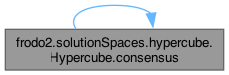
References consensus().
Referenced by consensus(), consensus(), consensusAllSols(), consensusAllSolsExpect(), consensusExpect(), and frodo2.solutionSpaces.hypercube.tests.HypercubeTest.testConsensusWeighted().
◆ consensus() [2/2]
|
protected |
A projection operation that uses the consensus approach.
- Parameters
-
varOut the variable that is projected out distributions for each random variable, its weighted samples/probability distribution maximum trueif we should maximize the utility;falseif it should be minimizedallSolutions if true, use the revised consensus algorithm that considers all optimal solutions to each scenarioexpect whether to compose the consenus operation with the expectation operation
- Returns
- a ProjOutput object that represents the pair resulting space - conditional optimal assignments
- Todo
- Test when the distributions and the caller do not agree on the domains.
- Bug
- Can be 0 even if the true utility of the current solution is worse
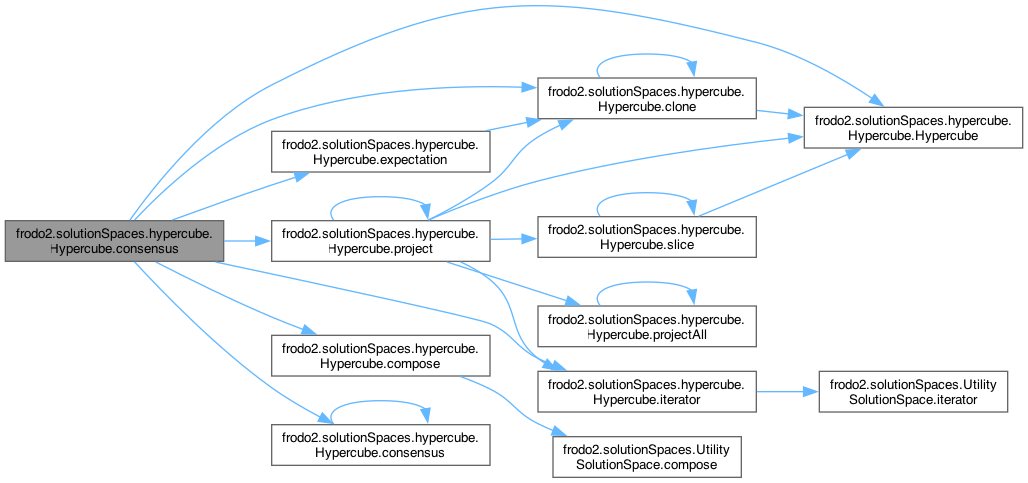
References clone(), compose(), consensus(), expectation(), Hypercube(), iterator(), frodo2.solutionSpaces.hypercube.Hypercube< V extends Addable< V >, U extends Addable< U > >.NullHypercube< V extends Addable< V >, U extends Addable< U > >.NULL, and project().
◆ consensusAllSols()
| ProjOutput< V, U > frodo2.solutionSpaces.hypercube.Hypercube< V extends Addable< V >, U extends Addable< U > >.consensusAllSols | ( | String | varOut, |
| Map< String, UtilitySolutionSpace< V, U > > | distributions, | ||
| boolean | maximum ) |
- See also
- UtilitySolutionSpace.consensusAllSols(java.lang.String, java.util.Map, boolean)
Implements frodo2.solutionSpaces.UtilitySolutionSpace< V extends Addable< V >, U extends Addable< U > >.
References consensus().
Referenced by frodo2.solutionSpaces.hypercube.tests.HypercubeTest.testConsensusWeighted().

◆ consensusAllSolsExpect()
| ProjOutput< V, U > frodo2.solutionSpaces.hypercube.Hypercube< V extends Addable< V >, U extends Addable< U > >.consensusAllSolsExpect | ( | String | varOut, |
| Map< String, UtilitySolutionSpace< V, U > > | distributions, | ||
| boolean | maximum ) |
- See also
- UtilitySolutionSpace.consensusAllSolsExpect(java.lang.String, java.util.Map, boolean)
Implements frodo2.solutionSpaces.UtilitySolutionSpace< V extends Addable< V >, U extends Addable< U > >.
References consensus().

◆ consensusExpect()
| ProjOutput< V, U > frodo2.solutionSpaces.hypercube.Hypercube< V extends Addable< V >, U extends Addable< U > >.consensusExpect | ( | final String | varOut, |
| final Map< String, UtilitySolutionSpace< V, U > > | distributions, | ||
| final boolean | maximum ) |
- See also
- UtilitySolutionSpace.consensusExpect(java.lang.String, java.util.Map, boolean)
Implements frodo2.solutionSpaces.UtilitySolutionSpace< V extends Addable< V >, U extends Addable< U > >.
References consensus().
Referenced by frodo2.solutionSpaces.hypercube.tests.HypercubeTest.testConsensusWeighted().

◆ equals()
| boolean frodo2.solutionSpaces.hypercube.Hypercube< V extends Addable< V >, U extends Addable< U > >.equals | ( | Object | o | ) |
Checks if this hypercube equals the one provided as a parameter (including the order of variables).
- Parameters
-
o the hypercube to compare with
- Returns
- true if this hypercube equals to the provided hypercube and false if else
Referenced by frodo2.solutionSpaces.hypercube.tests.HypercubeTest.testApplyChangeVariablesOrderRandom(), frodo2.solutionSpaces.hypercube.tests.HypercubeTest.testApplySliceRandom(), frodo2.solutionSpaces.hypercube.tests.HypercubeTest.testChangeVariablesOrderRandom(), frodo2.solutionSpaces.hypercube.tests.HypercubeTest.testEqualClonesRandom(), frodo2.solutionSpaces.hypercube.tests.HypercubeTest.testProjection(), frodo2.solutionSpaces.hypercube.tests.HypercubeTest.testSaveAsXMLRandom(), frodo2.solutionSpaces.hypercube.tests.HypercubeTest.testSerializationNullHypercube(), frodo2.solutionSpaces.hypercube.tests.HypercubeTest.testSerializationRandom(), frodo2.solutionSpaces.hypercube.tests.HypercubeTest.testSliceRandom(), and frodo2.solutionSpaces.hypercube.tests.HypercubeTest.testSplittingRandom().
◆ expectation()
| UtilitySolutionSpace< V, U > frodo2.solutionSpaces.hypercube.Hypercube< V extends Addable< V >, U extends Addable< U > >.expectation | ( | Map< String, UtilitySolutionSpace< V, U > > | distributions | ) |
- See also
- UtilitySolutionSpace.expectation(java.util.Map)
Implements frodo2.solutionSpaces.UtilitySolutionSpace< V extends Addable< V >, U extends Addable< U > >.
References clone().
Referenced by consensus(), projExpectMonotone(), and frodo2.solutionSpaces.hypercube.tests.HypercubeTest.testExpectation().

◆ getUtility() [1/2]
| U frodo2.solutionSpaces.hypercube.Hypercube< V extends Addable< V >, U extends Addable< U > >.getUtility | ( | Map< String, V > | assignments | ) |
- See also
- BasicHypercube.getUtility(java.util.Map)
◆ getUtility() [2/2]
| U frodo2.solutionSpaces.hypercube.Hypercube< V extends Addable< V >, U extends Addable< U > >.getUtility | ( | String[] | variables_names, |
| V[] | variables_values ) |
- See also
- BasicHypercube.getUtility(java.lang.String[], Addable[])
- Warning
- returns the utility zero if not all variables in the space have been assigned values
Referenced by frodo2.algorithms.dpop.test.UTILpropagationTest< U extends Addable< U > >.Listener.checkOutput(), frodo2.algorithms.dpop.test.VALUEpropagationTest< U extends Addable< U > >.Listener.checkOutput(), frodo2.solutionSpaces.hypercube.ExpectationOutput< V extends Addable< V >, U extends Addable< U > >.getUtility(), frodo2.solutionSpaces.hypercube.ExpectationOutput< V extends Addable< V >, U extends Addable< U > >.getUtility(), saveAsXML(), split(), frodo2.algorithms.adopt.test.testADOPT.test(), frodo2.solutionSpaces.hypercube.tests.HypercubeTest.testGetUtility(), frodo2.solutionSpaces.hypercube.tests.HypercubeIterBestFirstTest.testMaximize(), frodo2.solutionSpaces.hypercube.tests.HypercubeIterBestFirstTest.testMinimize(), frodo2.solutionSpaces.hypercube.tests.HypercubeIterTest.testMoreVars(), frodo2.solutionSpaces.hypercube.tests.HypercubeIterTest.testOtherOrder(), frodo2.solutionSpaces.hypercube.tests.HypercubeIterTest.testSameOrder(), frodo2.solutionSpaces.hypercube.tests.HypercubeTest.testSplittingRandom(), frodo2.solutionSpaces.hypercube.tests.HypercubeIterTest.testSubDoms(), and frodo2.solutionSpaces.hypercube.tests.HypercubeTest.verifyProjection().
◆ isIncludedIn()
| boolean frodo2.solutionSpaces.hypercube.Hypercube< V extends Addable< V >, U extends Addable< U > >.isIncludedIn | ( | UtilitySolutionSpace< V, U > | space | ) |
- See also
- UtilitySolutionSpace#isIncludedIn(UtilitySolutionSpace)
- Todo
- Auto-generated method stub
Implements frodo2.solutionSpaces.UtilitySolutionSpace< V extends Addable< V >, U extends Addable< U > >.
◆ iterator() [1/4]
| UtilitySolutionSpace.Iterator< V, U > frodo2.solutionSpaces.hypercube.Hypercube< V extends Addable< V >, U extends Addable< U > >.iterator | ( | ) |
- See also
- BasicHypercube.iterator()
Implements frodo2.solutionSpaces.UtilitySolutionSpace< V extends Addable< V >, U extends Addable< U > >.
References frodo2.solutionSpaces.UtilitySolutionSpace< V extends Addable< V >, U extends Addable< U > >.iterator().
Referenced by consensus(), frodo2.benchmarks.maxdiscsp.MaxDisCSPProblemGenerator.generateProblem(), join(), join(), project(), projExpectMonotone(), frodo2.algorithms.test.XCSPparserTest.testGetSolutionSpaces(), frodo2.algorithms.test.XCSPparserTest.testGetSolutionSpacesForVar(), frodo2.solutionSpaces.hypercube.tests.HypercubeTest.testIterator(), frodo2.solutionSpaces.hypercube.tests.HypercubeIterTest.testMoreVars(), frodo2.solutionSpaces.hypercube.tests.HypercubeIterTest.testOtherOrder(), frodo2.solutionSpaces.hypercube.tests.HypercubeIterTest.testSameOrder(), and frodo2.solutionSpaces.hypercube.tests.HypercubeIterTest.testSubDoms().

◆ iterator() [2/4]
| UtilitySolutionSpace.Iterator< V, U > frodo2.solutionSpaces.hypercube.Hypercube< V extends Addable< V >, U extends Addable< U > >.iterator | ( | String[] | order | ) |
- See also
- BasicHypercube.iterator(java.lang.String[])
Implements frodo2.solutionSpaces.UtilitySolutionSpace< V extends Addable< V >, U extends Addable< U > >.
References frodo2.solutionSpaces.UtilitySolutionSpace< V extends Addable< V >, U extends Addable< U > >.iterator().

◆ iterator() [3/4]
| UtilitySolutionSpace.Iterator< V, U > frodo2.solutionSpaces.hypercube.Hypercube< V extends Addable< V >, U extends Addable< U > >.iterator | ( | String[] | variables, |
| V | domains[][] ) |
- See also
- BasicHypercube.iterator(java.lang.String[], Addable[][])
Implements frodo2.solutionSpaces.UtilitySolutionSpace< V extends Addable< V >, U extends Addable< U > >.
References frodo2.solutionSpaces.UtilitySolutionSpace< V extends Addable< V >, U extends Addable< U > >.iterator().

◆ iterator() [4/4]
| UtilitySolutionSpace.Iterator< V, U > frodo2.solutionSpaces.hypercube.Hypercube< V extends Addable< V >, U extends Addable< U > >.iterator | ( | String[] | variables, |
| V | domains[][], | ||
| V[] | assignment ) |
- See also
- BasicHypercube.iterator(java.lang.String[], Addable[][], Addable[])
Implements frodo2.solutionSpaces.UtilitySolutionSpace< V extends Addable< V >, U extends Addable< U > >.
References frodo2.solutionSpaces.UtilitySolutionSpace< V extends Addable< V >, U extends Addable< U > >.iterator().

◆ iteratorBestFirst() [1/2]
| UtilitySolutionSpace.IteratorBestFirst< V, U > frodo2.solutionSpaces.hypercube.Hypercube< V extends Addable< V >, U extends Addable< U > >.iteratorBestFirst | ( | boolean | maximize | ) |
◆ iteratorBestFirst() [2/2]
| UtilitySolutionSpace.IteratorBestFirst< V, U > frodo2.solutionSpaces.hypercube.Hypercube< V extends Addable< V >, U extends Addable< U > >.iteratorBestFirst | ( | boolean | maximize, |
| String[] | fixedVariables, | ||
| V[] | fixedValues ) |
- See also
- UtilitySolutionSpace.iteratorBestFirst(boolean, java.lang.String[], Addable[])
- Todo
- Auto-generated method stub
Implements frodo2.solutionSpaces.UtilitySolutionSpace< V extends Addable< V >, U extends Addable< U > >.
◆ join() [1/7]
| SolutionSpace< V > frodo2.solutionSpaces.hypercube.Hypercube< V extends Addable< V >, U extends Addable< U > >.join | ( | SolutionSpace< V > | space, |
| String[] | total_variables ) |
- See also
- BasicHypercube.join(SolutionSpace, java.lang.String[])
- Todo
- Implement join if space is not UtilitySolutionSpace
References join().
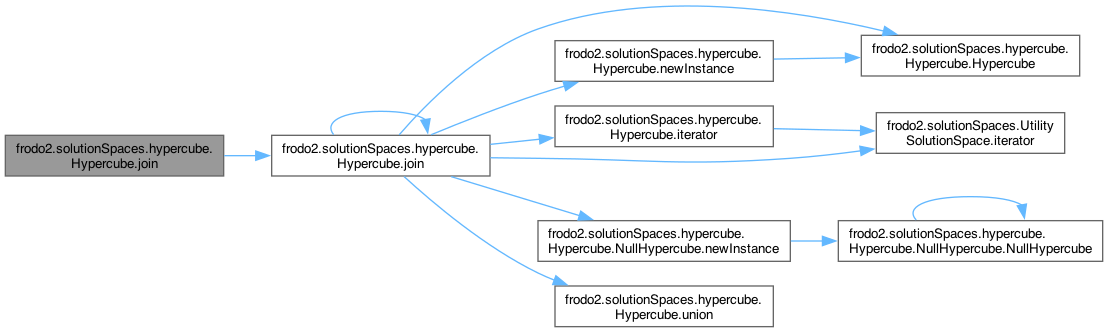
◆ join() [2/7]
| UtilitySolutionSpace< V, U > frodo2.solutionSpaces.hypercube.Hypercube< V extends Addable< V >, U extends Addable< U > >.join | ( | UtilitySolutionSpace< V, U > | space | ) |
- See also
- UtilitySolutionSpace#join(UtilitySolutionSpace)
Implements frodo2.solutionSpaces.UtilitySolutionSpace< V extends Addable< V >, U extends Addable< U > >.
References join(), and frodo2.solutionSpaces.UtilitySolutionSpace< V extends Addable< V >, U extends Addable< U > >.join().
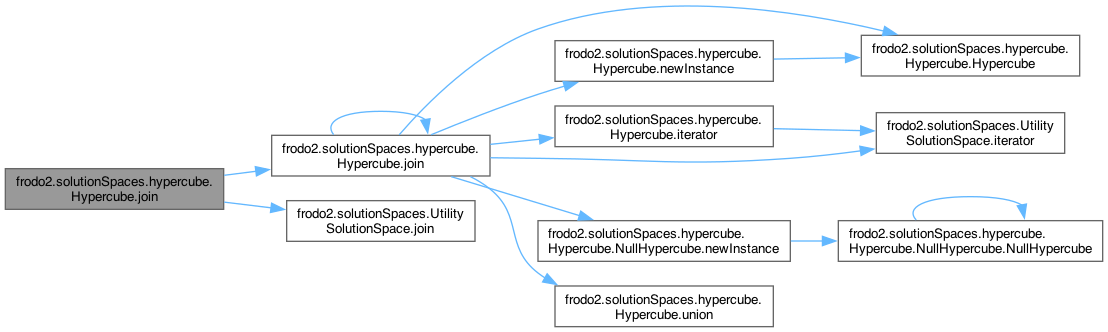
◆ join() [3/7]
| UtilitySolutionSpace< V, U > frodo2.solutionSpaces.hypercube.Hypercube< V extends Addable< V >, U extends Addable< U > >.join | ( | UtilitySolutionSpace< V, U > | space, |
| boolean | addition, | ||
| boolean | minNCCCs ) |
Computes the join of this hypercube with the input hypercube.
- Parameters
-
space input hypercube addition trueif utilities should be added,falseif they should be multipliedminNCCCs whether to optimize runtime or NCCC count
- Returns
- join of the two hypercubes
- Note
- The variable order used is the one returned by the union() method.
References join(), and union().
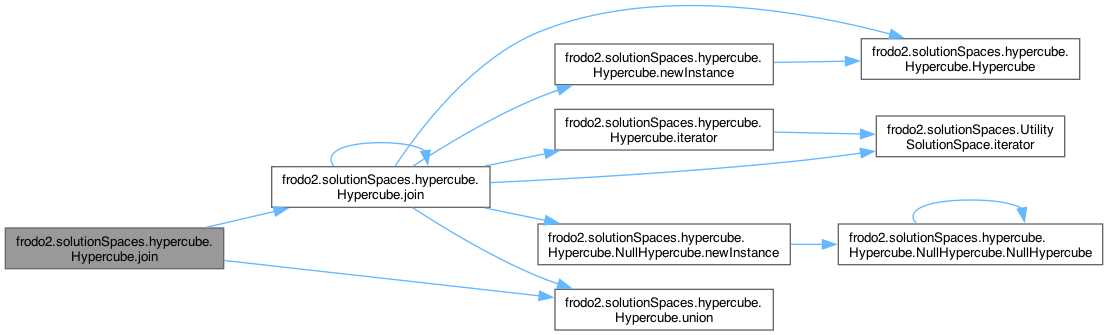
◆ join() [4/7]
| UtilitySolutionSpace< V, U > frodo2.solutionSpaces.hypercube.Hypercube< V extends Addable< V >, U extends Addable< U > >.join | ( | UtilitySolutionSpace< V, U > | space, |
| String[] | total_variables ) |
- See also
- UtilitySolutionSpace.join(UtilitySolutionSpace, java.lang.String[])
Implements frodo2.solutionSpaces.UtilitySolutionSpace< V extends Addable< V >, U extends Addable< U > >.
References join(), and frodo2.solutionSpaces.UtilitySolutionSpace< V extends Addable< V >, U extends Addable< U > >.join().
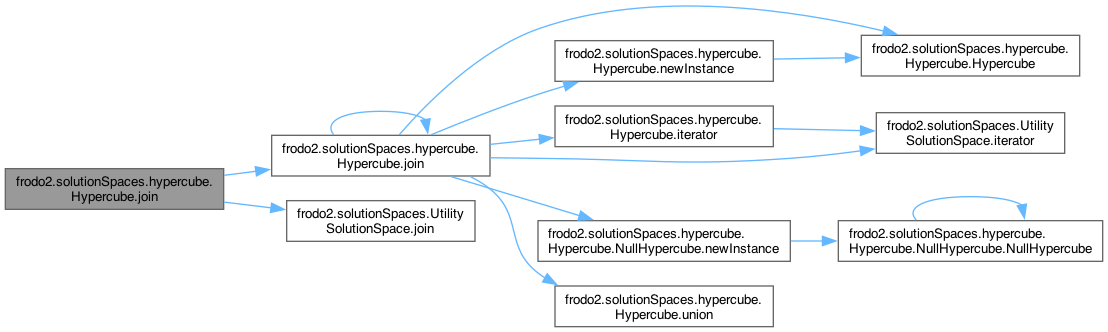
◆ join() [5/7]
|
protected |
Returns a Hypercube object obtained by joining this hypercube with the one provided as a parameter.
- Parameters
-
utilitySpace the hypercube to join this one with outputVars the desired order in the output hypercube addition trueif utilities should be added,falseif they should be multipliedminNCCCs whether to optimize runtime or NCCC count
- Returns
- Hypercube object obtained by joining this hypercube with the one provided as a parameter
- Warning
- Assumes that each variable in outputVars is contained in either of the two hypercubes.
References Hypercube(), iterator(), frodo2.solutionSpaces.UtilitySolutionSpace< V extends Addable< V >, U extends Addable< U > >.iterator(), join(), newInstance(), frodo2.solutionSpaces.hypercube.Hypercube< V extends Addable< V >, U extends Addable< U > >.NullHypercube< V extends Addable< V >, U extends Addable< U > >.newInstance(), frodo2.solutionSpaces.hypercube.Hypercube< V extends Addable< V >, U extends Addable< U > >.NullHypercube< V extends Addable< V >, U extends Addable< U > >.NULL, and union().
Referenced by join(), join(), join(), join(), join(), join(), join(), joinMinNCCCs(), joinMinNCCCs(), multiply(), multiply(), multiply(), frodo2.solutionSpaces.hypercube.tests.HypercubeTest.testApplyJoinRandom(), frodo2.solutionSpaces.hypercube.tests.HypercubeTest.testJoinRandom(), frodo2.solutionSpaces.hypercube.tests.HypercubeTest.testProjectionRandom(), frodo2.solutionSpaces.hypercube.tests.HypercubeTest.testSliceRandom(), and frodo2.solutionSpaces.hypercube.tests.HypercubeTest.testSmartJoinRandom().

◆ join() [6/7]
| UtilitySolutionSpace< V, U > frodo2.solutionSpaces.hypercube.Hypercube< V extends Addable< V >, U extends Addable< U > >.join | ( | UtilitySolutionSpace< V, U >[] | spaces | ) |
- See also
- UtilitySolutionSpace#join(UtilitySolutionSpace[])
Implements frodo2.solutionSpaces.UtilitySolutionSpace< V extends Addable< V >, U extends Addable< U > >.
References join().
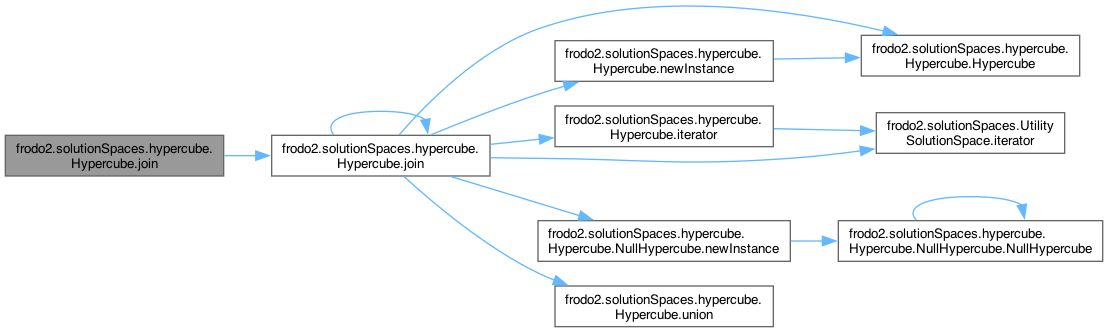
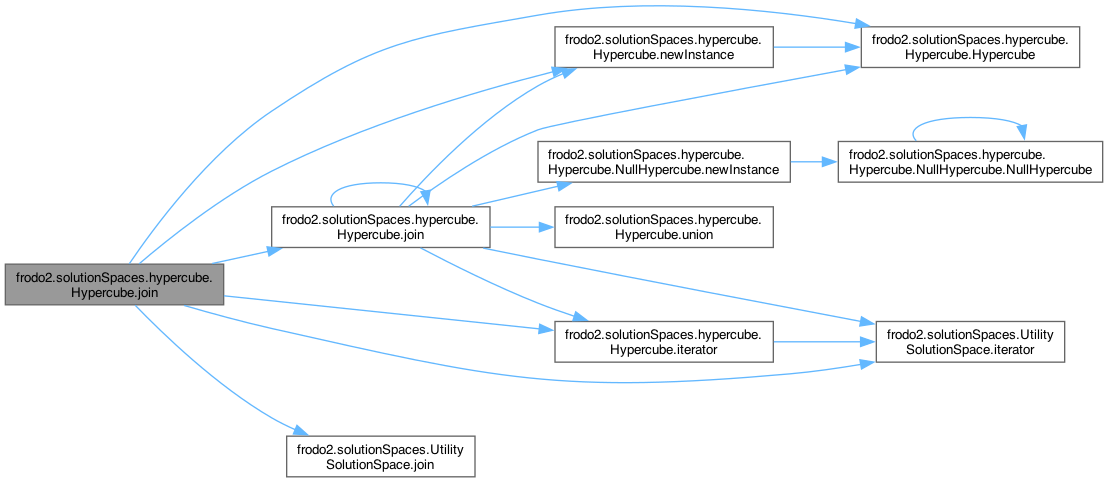
◆ join() [7/7]
|
protected |
The join method.
- Parameters
-
spaces input spaces addition trueif utilities should be added,falseif they should be multipliedminNCCCs whether to optimize runtime or NCCC count
- Returns
- the joint hypercube
References Hypercube(), iterator(), frodo2.solutionSpaces.UtilitySolutionSpace< V extends Addable< V >, U extends Addable< U > >.iterator(), join(), frodo2.solutionSpaces.UtilitySolutionSpace< V extends Addable< V >, U extends Addable< U > >.join(), and newInstance().
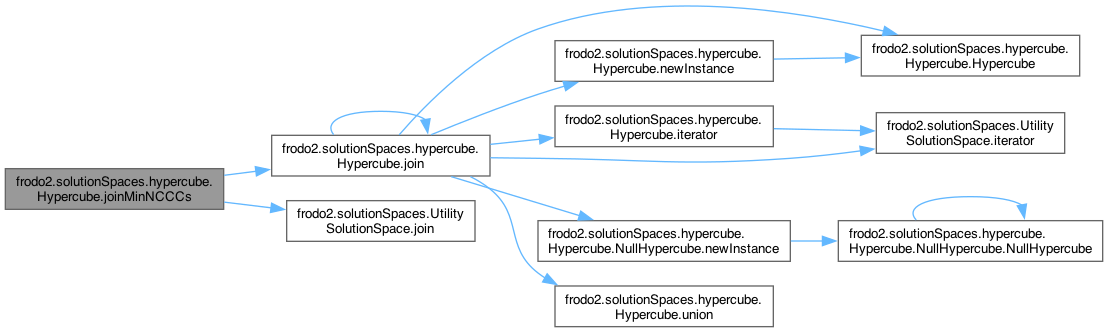
◆ joinMinNCCCs() [1/2]
| UtilitySolutionSpace< V, U > frodo2.solutionSpaces.hypercube.Hypercube< V extends Addable< V >, U extends Addable< U > >.joinMinNCCCs | ( | UtilitySolutionSpace< V, U > | space | ) |
- See also
- UtilitySolutionSpace#joinMinNCCCs(UtilitySolutionSpace)
Implements frodo2.solutionSpaces.UtilitySolutionSpace< V extends Addable< V >, U extends Addable< U > >.
References join(), and frodo2.solutionSpaces.UtilitySolutionSpace< V extends Addable< V >, U extends Addable< U > >.join().
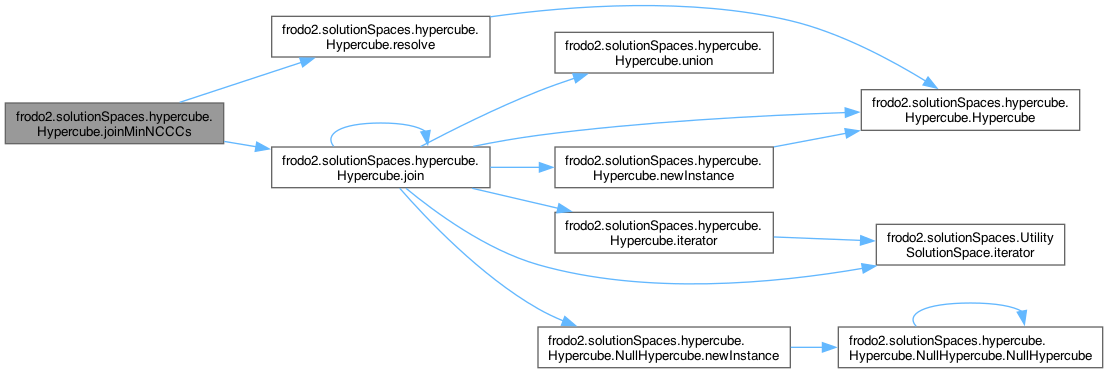
◆ joinMinNCCCs() [2/2]
| UtilitySolutionSpace< V, U > frodo2.solutionSpaces.hypercube.Hypercube< V extends Addable< V >, U extends Addable< U > >.joinMinNCCCs | ( | UtilitySolutionSpace< V, U >[] | spaces | ) |
- See also
- UtilitySolutionSpace#joinMinNCCCs(UtilitySolutionSpace[])
Implements frodo2.solutionSpaces.UtilitySolutionSpace< V extends Addable< V >, U extends Addable< U > >.
References join(), and resolve().
◆ max()
| Hypercube< V, U > frodo2.solutionSpaces.hypercube.Hypercube< V extends Addable< V >, U extends Addable< U > >.max | ( | String | var | ) |
- See also
- HypercubeLimited.max(java.lang.String)
Implements frodo2.solutionSpaces.UtilitySolutionSpace< V extends Addable< V >, U extends Addable< U > >.
References Hypercube(), and max().
Referenced by max().

◆ min()
| Hypercube< V, U > frodo2.solutionSpaces.hypercube.Hypercube< V extends Addable< V >, U extends Addable< U > >.min | ( | String | var | ) |
- See also
- HypercubeLimited.min(java.lang.String)
Implements frodo2.solutionSpaces.UtilitySolutionSpace< V extends Addable< V >, U extends Addable< U > >.
References Hypercube(), and min().
Referenced by min().

◆ multiply() [1/3]
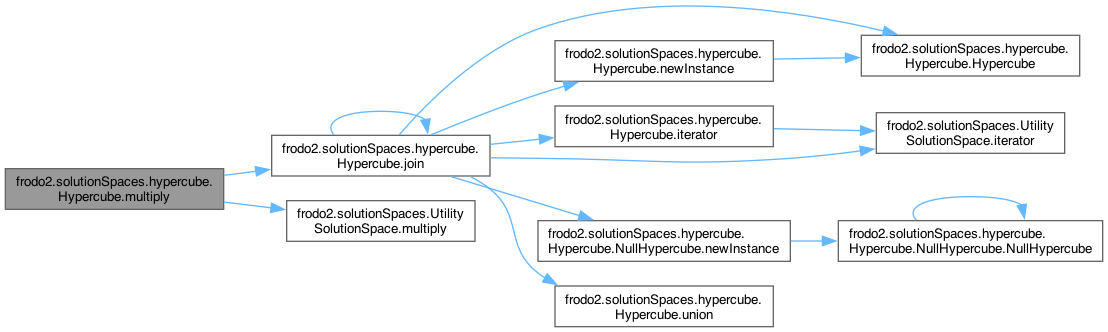
| UtilitySolutionSpace< V, U > frodo2.solutionSpaces.hypercube.Hypercube< V extends Addable< V >, U extends Addable< U > >.multiply | ( | UtilitySolutionSpace< V, U > | space | ) |
- See also
- UtilitySolutionSpace#multiply(UtilitySolutionSpace)
Implements frodo2.solutionSpaces.UtilitySolutionSpace< V extends Addable< V >, U extends Addable< U > >.
References join(), and frodo2.solutionSpaces.UtilitySolutionSpace< V extends Addable< V >, U extends Addable< U > >.multiply().
◆ multiply() [2/3]
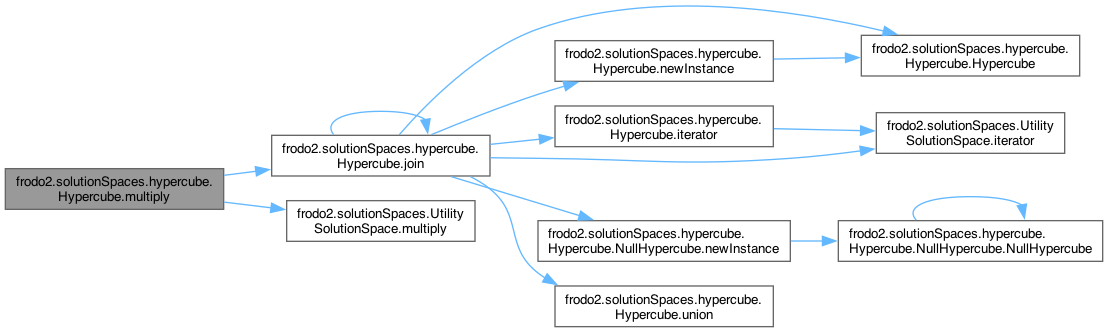
| UtilitySolutionSpace< V, U > frodo2.solutionSpaces.hypercube.Hypercube< V extends Addable< V >, U extends Addable< U > >.multiply | ( | UtilitySolutionSpace< V, U > | space, |
| String[] | total_variables ) |
- See also
- UtilitySolutionSpace.multiply(UtilitySolutionSpace, java.lang.String[])
Implements frodo2.solutionSpaces.UtilitySolutionSpace< V extends Addable< V >, U extends Addable< U > >.
References join(), and frodo2.solutionSpaces.UtilitySolutionSpace< V extends Addable< V >, U extends Addable< U > >.multiply().
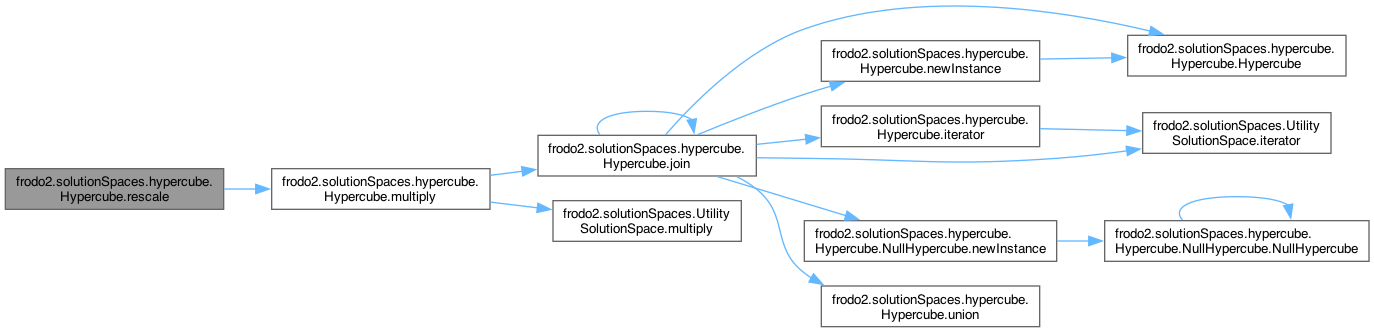
Referenced by rescale(), and frodo2.solutionSpaces.hypercube.tests.HypercubeTest.testSmartJoinRandom().
◆ multiply() [3/3]
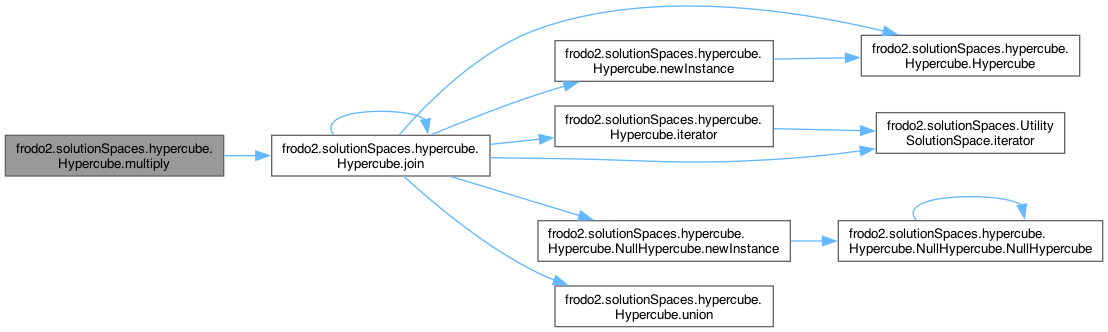
| UtilitySolutionSpace< V, U > frodo2.solutionSpaces.hypercube.Hypercube< V extends Addable< V >, U extends Addable< U > >.multiply | ( | UtilitySolutionSpace< V, U >[] | spaces | ) |
- See also
- UtilitySolutionSpace#multiply(UtilitySolutionSpace[])
Implements frodo2.solutionSpaces.UtilitySolutionSpace< V extends Addable< V >, U extends Addable< U > >.
References join().
◆ newInstance()
|
protected |
- See also
- BasicHypercube.newInstance(String, java.lang.String[], Addable[][], Serializable[], Serializable)
References Hypercube().
Referenced by join(), join(), projExpectMonotone(), frodo2.solutionSpaces.hypercube.BlindProjectOutput< V extends Addable< V >, U extends Addable< U > >.resolve(), and frodo2.solutionSpaces.hypercube.ExpectationOutput< V extends Addable< V >, U extends Addable< U > >.resolve().

◆ newIter()
|
protected |
- See also
- BasicHypercube.newIter(java.lang.String[], Addable[][], Addable[], Serializable)
◆ project() [1/3]
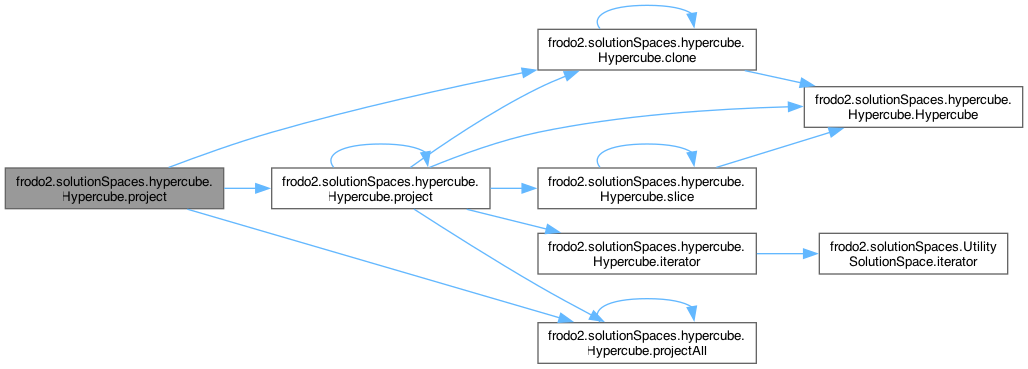
| UtilitySolutionSpace.ProjOutput< V, U > frodo2.solutionSpaces.hypercube.Hypercube< V extends Addable< V >, U extends Addable< U > >.project | ( | int | number_to_project, |
| boolean | maximum ) |
Returns a hypercube obtained by projecting out from this hypercube the last number_to_project variables of the hypercube.
- Parameters
-
number_to_project number of the varibles of the hypercube to project out maximum indicates wether to take the maximum or minimum among the utility values that will be mapped into the the same utility value in the new hypercube
- Returns
- a ProjOutput object
- Todo
- Implement an on-the-fly version of this method.
Implements frodo2.solutionSpaces.UtilitySolutionSpace< V extends Addable< V >, U extends Addable< U > >.
References clone(), frodo2.solutionSpaces.hypercube.Hypercube< V extends Addable< V >, U extends Addable< U > >.NullHypercube< V extends Addable< V >, U extends Addable< U > >.NULL, project(), and projectAll().
◆ project() [2/3]
| UtilitySolutionSpace.ProjOutput< V, U > frodo2.solutionSpaces.hypercube.Hypercube< V extends Addable< V >, U extends Addable< U > >.project | ( | String | variable_name, |
| boolean | maximum ) |
Returns a Hypercube obtained by projecting the input variable out of the hypercube.
- Parameters
-
variable_name the variable that should have been removed in the resulting hypercube maximum indicates whether one should take the maximum ( true) or the minimum (false)
- Returns
- a ProjOutput object
- Todo
- Implement an on-the-fly version of argProject().
Implements frodo2.solutionSpaces.UtilitySolutionSpace< V extends Addable< V >, U extends Addable< U > >.
References clone(), frodo2.solutionSpaces.hypercube.Hypercube< V extends Addable< V >, U extends Addable< U > >.NullHypercube< V extends Addable< V >, U extends Addable< U > >.NULL, and project().
◆ project() [3/3]
| UtilitySolutionSpace.ProjOutput< V, U > frodo2.solutionSpaces.hypercube.Hypercube< V extends Addable< V >, U extends Addable< U > >.project | ( | String[] | varsOut, |
| final boolean | maximum ) |
Returns a Hypercube obtained by projecting some of the variables of the hypercube.
- Parameters
-
varsOut the variables that should be removed from this hypercube maximum boolean indicating whether to use the maximum or the minumum
- Returns
- a ProjOutput object
Implements frodo2.solutionSpaces.UtilitySolutionSpace< V extends Addable< V >, U extends Addable< U > >.
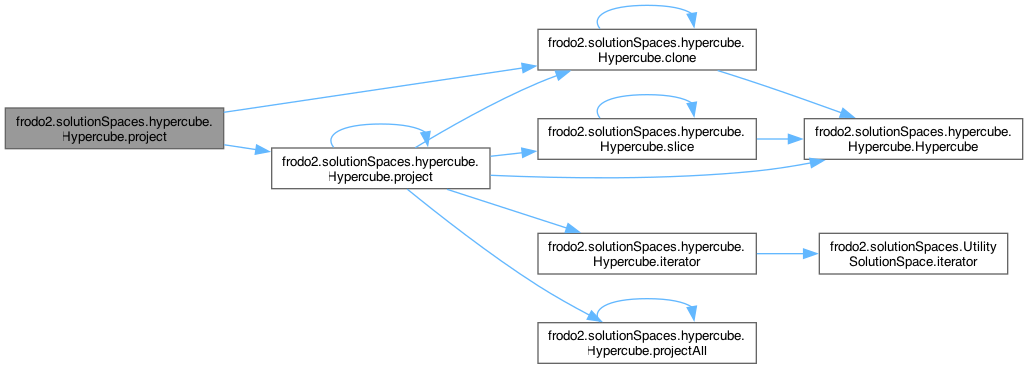
References clone(), Hypercube(), iterator(), frodo2.solutionSpaces.hypercube.Hypercube< V extends Addable< V >, U extends Addable< U > >.NullHypercube< V extends Addable< V >, U extends Addable< U > >.NULL, project(), projectAll(), and slice().
Referenced by consensus(), project(), project(), project(), projExpectMonotone(), frodo2.solutionSpaces.hypercube.tests.HypercubeTest.testApplyProjectRandom(), frodo2.solutionSpaces.hypercube.tests.HypercubeTest.testProjection(), frodo2.solutionSpaces.hypercube.tests.HypercubeTest.testProjectionRandom(), and frodo2.solutionSpaces.hypercube.tests.HypercubeTest.testSplittingRandom().
◆ projectAll() [1/2]
| ProjOutput< V, U > frodo2.solutionSpaces.hypercube.Hypercube< V extends Addable< V >, U extends Addable< U > >.projectAll | ( | boolean | maximum | ) |
Implements frodo2.solutionSpaces.UtilitySolutionSpace< V extends Addable< V >, U extends Addable< U > >.
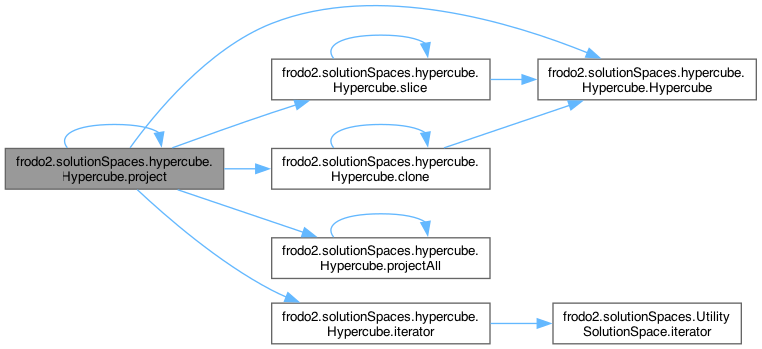
References projectAll().
Referenced by project(), project(), projectAll(), and projectAll().
◆ projectAll() [2/2]
| ProjOutput< V, U > frodo2.solutionSpaces.hypercube.Hypercube< V extends Addable< V >, U extends Addable< U > >.projectAll | ( | boolean | maximum, |
| String[] | varsOut ) |
Implements frodo2.solutionSpaces.UtilitySolutionSpace< V extends Addable< V >, U extends Addable< U > >.
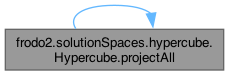
References projectAll().

◆ projExpectMonotone()
| ProjOutput< V, U > frodo2.solutionSpaces.hypercube.Hypercube< V extends Addable< V >, U extends Addable< U > >.projExpectMonotone | ( | final String | varOut, |
| Map< String, UtilitySolutionSpace< V, U > > | distributions, | ||
| final boolean | maximum ) |
- See also
- UtilitySolutionSpace.projExpectMonotone(java.lang.String, java.util.Map, boolean)
- Todo
- Implement an on-the-fly version of argProjExpectMonotone() like for the join.
Implements frodo2.solutionSpaces.UtilitySolutionSpace< V extends Addable< V >, U extends Addable< U > >.
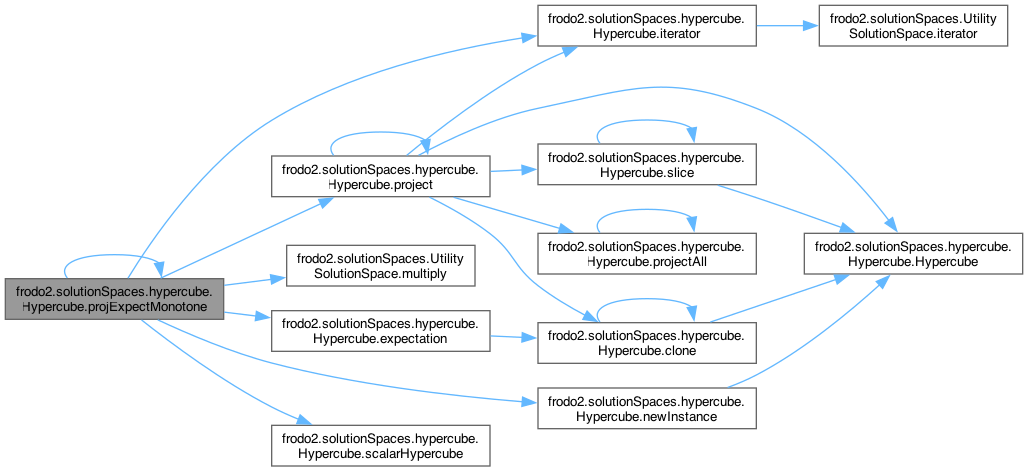
References expectation(), iterator(), frodo2.solutionSpaces.UtilitySolutionSpace< V extends Addable< V >, U extends Addable< U > >.multiply(), newInstance(), frodo2.solutionSpaces.hypercube.Hypercube< V extends Addable< V >, U extends Addable< U > >.NullHypercube< V extends Addable< V >, U extends Addable< U > >.NULL, project(), projExpectMonotone(), and scalarHypercube().
Referenced by projExpectMonotone().
◆ rescale()
| UtilitySolutionSpace< V, U > frodo2.solutionSpaces.hypercube.Hypercube< V extends Addable< V >, U extends Addable< U > >.rescale | ( | U | add, |
| U | multiply ) |
- See also
- frodo2.solutionSpaces.UtilitySolutionSpace.rescale(frodo2.solutionSpaces.Addable, frodo2.solutionSpaces.Addable)
Implements frodo2.solutionSpaces.UtilitySolutionSpace< V extends Addable< V >, U extends Addable< U > >.
References multiply().
◆ resolve() [1/2]
| Hypercube< V, U > frodo2.solutionSpaces.hypercube.Hypercube< V extends Addable< V >, U extends Addable< U > >.resolve | ( | ) |
- See also
- BasicHypercube.resolve()
Implements frodo2.solutionSpaces.UtilitySolutionSpace< V extends Addable< V >, U extends Addable< U > >.
References Hypercube().
Referenced by joinMinNCCCs(), and toHypercube().

◆ resolve() [2/2]
| Hypercube< V, U > frodo2.solutionSpaces.hypercube.Hypercube< V extends Addable< V >, U extends Addable< U > >.resolve | ( | boolean | unused | ) |
- See also
- BasicHypercube.resolve(boolean)
Implements frodo2.solutionSpaces.UtilitySolutionSpace< V extends Addable< V >, U extends Addable< U > >.
References Hypercube().

◆ sample()
| Map< V, Double > frodo2.solutionSpaces.hypercube.Hypercube< V extends Addable< V >, U extends Addable< U > >.sample | ( | int | nbrSamples | ) |
- See also
- UtilitySolutionSpace.sample(int)
- Warning
- Assumes that the hypercube contains a single variable, and that utilities sum up to 1.0.
Implements frodo2.solutionSpaces.UtilitySolutionSpace< V extends Addable< V >, U extends Addable< U > >.
Referenced by frodo2.solutionSpaces.hypercube.tests.HypercubeTest.testSample().
◆ saveAsXML()
| void frodo2.solutionSpaces.hypercube.Hypercube< V extends Addable< V >, U extends Addable< U > >.saveAsXML | ( | String | file | ) |
Creates an XML file from the hypercube.
- Parameters
-
file the name of the XML file in which the hypercube will be saved
References getUtility(), frodo2.output, and saveAsXML().
Referenced by saveAsXML(), and frodo2.solutionSpaces.hypercube.tests.HypercubeTest.testSaveAsXMLRandom().

◆ scalarHypercube()
|
protected |
- See also
- BasicHypercube.scalarHypercube(java.io.Serializable)
Referenced by projExpectMonotone().
◆ slice() [1/5]
| Hypercube< V, U > frodo2.solutionSpaces.hypercube.Hypercube< V extends Addable< V >, U extends Addable< U > >.slice | ( | String | var, |
| V | val ) |
- See also
- BasicHypercube#slice(String, Addable)
Implements frodo2.solutionSpaces.UtilitySolutionSpace< V extends Addable< V >, U extends Addable< U > >.
References Hypercube(), and slice().

◆ slice() [2/5]
| Hypercube< V, U > frodo2.solutionSpaces.hypercube.Hypercube< V extends Addable< V >, U extends Addable< U > >.slice | ( | String | var, |
| V[] | subDomain ) |
- See also
- BasicHypercube#slice(String, Addable[])
Implements frodo2.solutionSpaces.UtilitySolutionSpace< V extends Addable< V >, U extends Addable< U > >.
References Hypercube(), and slice().

◆ slice() [3/5]
| Hypercube< V, U > frodo2.solutionSpaces.hypercube.Hypercube< V extends Addable< V >, U extends Addable< U > >.slice | ( | String[] | variables_names, |
| V[] | values ) |
- See also
- BasicHypercube.slice(java.lang.String[], Addable[])
Implements frodo2.solutionSpaces.UtilitySolutionSpace< V extends Addable< V >, U extends Addable< U > >.
References Hypercube(), and slice().

◆ slice() [4/5]
| Hypercube< V, U > frodo2.solutionSpaces.hypercube.Hypercube< V extends Addable< V >, U extends Addable< U > >.slice | ( | String[] | variables_names, |
| V | sub_domains[][] ) |
- See also
- BasicHypercube.slice(java.lang.String[], Addable[][])
Implements frodo2.solutionSpaces.UtilitySolutionSpace< V extends Addable< V >, U extends Addable< U > >.
References Hypercube(), and slice().
Referenced by frodo2.solutionSpaces.JaCoP.JaCoPutilSpace< V extends Addable< V > >.join(), project(), slice(), slice(), slice(), slice(), slice(), frodo2.solutionSpaces.hypercube.tests.HypercubeTest.testApplySliceRandom(), frodo2.solutionSpaces.hypercube.tests.HypercubeTest.testConsensusWeighted(), frodo2.solutionSpaces.hypercube.tests.HypercubeTest.testSliceRandom(), and frodo2.solutionSpaces.hypercube.tests.HypercubeIterTest.testSubDoms().

◆ slice() [5/5]
| Hypercube< V, U > frodo2.solutionSpaces.hypercube.Hypercube< V extends Addable< V >, U extends Addable< U > >.slice | ( | V[] | variables_values | ) |
- See also
- BasicHypercube#slice(Addable[])
Implements frodo2.solutionSpaces.UtilitySolutionSpace< V extends Addable< V >, U extends Addable< U > >.
References Hypercube(), and slice().

◆ sparseIter() [1/4]
| UtilitySolutionSpace.SparseIterator< V, U > frodo2.solutionSpaces.hypercube.Hypercube< V extends Addable< V >, U extends Addable< U > >.sparseIter | ( | ) |
- See also
- BasicHypercube.sparseIter()
Implements frodo2.solutionSpaces.UtilitySolutionSpace< V extends Addable< V >, U extends Addable< U > >.
References frodo2.solutionSpaces.UtilitySolutionSpace< V extends Addable< V >, U extends Addable< U > >.sparseIter().
Referenced by blindProjectAll(), and frodo2.solutionSpaces.JaCoP.JaCoPutilSpace< V extends Addable< V > >.join().

◆ sparseIter() [2/4]
| UtilitySolutionSpace.SparseIterator< V, U > frodo2.solutionSpaces.hypercube.Hypercube< V extends Addable< V >, U extends Addable< U > >.sparseIter | ( | String[] | order | ) |
- See also
- BasicHypercube.sparseIter(java.lang.String[])
Implements frodo2.solutionSpaces.UtilitySolutionSpace< V extends Addable< V >, U extends Addable< U > >.
References frodo2.solutionSpaces.UtilitySolutionSpace< V extends Addable< V >, U extends Addable< U > >.sparseIter().

◆ sparseIter() [3/4]
| UtilitySolutionSpace.SparseIterator< V, U > frodo2.solutionSpaces.hypercube.Hypercube< V extends Addable< V >, U extends Addable< U > >.sparseIter | ( | String[] | variables, |
| V | domains[][] ) |
- See also
- BasicHypercube.sparseIter(java.lang.String[], Addable[][])
Implements frodo2.solutionSpaces.UtilitySolutionSpace< V extends Addable< V >, U extends Addable< U > >.
References frodo2.solutionSpaces.UtilitySolutionSpace< V extends Addable< V >, U extends Addable< U > >.sparseIter().

◆ sparseIter() [4/4]
| UtilitySolutionSpace.SparseIterator< V, U > frodo2.solutionSpaces.hypercube.Hypercube< V extends Addable< V >, U extends Addable< U > >.sparseIter | ( | String[] | variables, |
| V | domains[][], | ||
| V[] | assignment ) |
- See also
- BasicHypercube.sparseIter(java.lang.String[], Addable[][], Addable[])
Implements frodo2.solutionSpaces.UtilitySolutionSpace< V extends Addable< V >, U extends Addable< U > >.
References frodo2.solutionSpaces.UtilitySolutionSpace< V extends Addable< V >, U extends Addable< U > >.sparseIter().

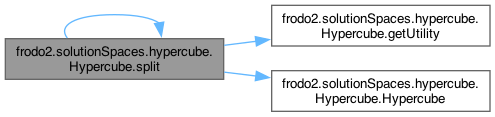
◆ split()
| Hypercube< V, U > frodo2.solutionSpaces.hypercube.Hypercube< V extends Addable< V >, U extends Addable< U > >.split | ( | U | threshold, |
| boolean | maximum ) |
Returns a Hypercube containing variables values corresponding to utility values bigger than the provided threshold.
- Parameters
-
threshold the threshold maximum boolean
- Returns
- Hypercube object obtained by removing utility values less than the threshold from the this hypercube
Implements frodo2.solutionSpaces.UtilitySolutionSpace< V extends Addable< V >, U extends Addable< U > >.
References getUtility(), Hypercube(), frodo2.java, frodo2.solutionSpaces.hypercube.Hypercube< V extends Addable< V >, U extends Addable< U > >.NullHypercube< V extends Addable< V >, U extends Addable< U > >.NULL, and split().
Referenced by split(), and frodo2.solutionSpaces.hypercube.tests.HypercubeTest.testSplittingRandom().
◆ toHypercube()
| Hypercube< V, U > frodo2.solutionSpaces.hypercube.Hypercube< V extends Addable< V >, U extends Addable< U > >.toHypercube | ( | ) |
Implements frodo2.solutionSpaces.UtilitySolutionSpace< V extends Addable< V >, U extends Addable< U > >.
References Hypercube(), and resolve().

◆ union()
|
static |
Computes the union of two lists, perserving the order when possible.
- Parameters
-
list1 first list list2 second list
- Returns
- the union of the two lists
- Note
- When the two lists disaggree on the order, list1 wins. When the two lists don't care, list2's elements have the priority.
Referenced by applyJoin(), join(), join(), frodo2.solutionSpaces.hypercube.HypercubeLimited< V extends Addable< V >, U extends Addable< U >, UL extends AddableLimited< U, UL >.join(), frodo2.solutionSpaces.vehiclerouting.VehicleRoutingSpace< U extends Addable< U > >.join(), and frodo2.solutionSpaces.hypercube.tests.HypercubeTest.testUnion().
The documentation for this class was generated from the following file:
- src/frodo2/solutionSpaces/hypercube/Hypercube.java
