A Hypercube whose utilities are AddableLimited's. More...

Public Member Functions | |
| HypercubeLimited () | |
| Empty constructor. | |
| HypercubeLimited (String[] variablesOrder, V[][] variablesDomains, UL[] utilityValues, UL infeasibleUtil) | |
| Constructor. | |
| HypercubeLimited (String name, String[] variablesOrder, V[][] variablesDomains, UL[] utilityValues, UL infeasibleUtil) | |
| Constructor. | |
| HypercubeLimited (String[] variablesOrder, V[][] variablesDomains, UL[] utilityValues, UL infeasibleUtil, ProblemInterface< V, U > problem) | |
| Constructor. | |
| HypercubeLimited< V, U, UL > | resolve () |
| HypercubeLimited< V, U, UL > | resolve (boolean unused) |
| HypercubeLimited< V, U, UL > | clone () |
| UtilitySolutionSpaceLimited< V, U, UL > | joinMinNCCCs (UtilitySolutionSpace< V, U > space) |
| UtilitySolutionSpaceLimited< V, U, UL > | join (UtilitySolutionSpace< V, U > space) |
| UtilitySolutionSpaceLimited< V, U, UL > | join (UtilitySolutionSpace< V, U > space, final boolean minNCCCs) |
| The join operation. | |
| UtilitySolutionSpaceLimited< V, U, UL > | blindProject (String varOut, boolean maximize) |
| UtilitySolutionSpaceLimited< V, U, UL > | blindProject (String[] varsOut, final boolean maximize) |
| UL | blindProjectAll (final boolean maximize) |
| UtilitySolutionSpaceLimited< V, U, UL > | min (String variable) |
| UtilitySolutionSpaceLimited< V, U, UL > | max (String variable) |
| HypercubeLimited< V, U, UL > | slice (String var, V val) |
| Public Member Functions inherited from frodo2.solutionSpaces.hypercube.BasicHypercube< V, UL > | |
| BasicHypercube (String[] variables_order, V[][] variables_domains, U[] utility_values, U infeasibleUtil) | |
| Construct a new BasicHypercube with provided variables names, the domains of these variables and the utility values. | |
| void | writeExternal (ObjectOutput out) throws IOException |
| void | readExternal (ObjectInput in) throws IOException, ClassNotFoundException |
| void | setProblem (ProblemInterface< V, ?> problem) |
| boolean | countsCCs () |
| long | getNumberOfSolutions () |
| Returns the number of utility values in the hypercube. | |
| U | getUtility (V[] variables_values) |
| U | getUtilityValueSameOrder (String[] variables_names, V[] variables_values) |
| Returns an object representing the utility value corresponding to the provided variables values. | |
| Class< U > | getClassOfU () |
| boolean | setUtility (V[] variables_values, U utility) |
| Sets the utility value corresponding to a given assignment to variables. | |
| String[] | getVariables () |
| Returns the names of the variables of the hypercube. | |
| int | getNumberOfVariables () |
| Returns the number of variables in the hypercube. | |
| String | getVariable (int index) |
| Returns the variable corresponding to the provided index. | |
| void | renameVariable (String oldName, String newName) |
| BasicHypercube< V, U > | renameAllVars (String[] newVarNames) |
| int | getIndex (String variable) |
| Return the index of the input variable in this hypercube. | |
| V[][] | getDomains () |
| Returns the array containing the domains of the variables. | |
| V[] | getDomain (String variable) |
| Returns an array all the possible values that the variable provided as a parameter can take in this hypercube. | |
| void | setDomain (String var, V[] dom) |
| String | toString () |
| String | prettyPrint (U ignoredUtil) |
| boolean | isNull () |
| Check if this hypercube is the NULL hypercube. | |
| void | augment (V[] variables_values, U utility_value) |
| BasicHypercube< V, U > | changeVariablesOrder (String[] variables_order) |
| Return a new BasicHypercube by changing the order of the variables of the hypercube. | |
| void | applyChangeVariablesOrder (String[] variables_order) |
| Changes the variable order of the hypercube by reordering the current utility array. | |
| BasicHypercube< V, U > | applyAugment (String[] new_variables, V[][] new_domains) |
| Augments the hypercube by adding new variables at the beginning of its variables list. | |
| boolean | equivalent (final BasicUtilitySolutionSpace< V, U > space) |
| boolean | isIncludedIn (BasicUtilitySolutionSpace< V, U > space) |
| Iterator< V, U > | iterator () |
| SparseIterator< V, U > | sparseIter () |
| SolutionSpace< V > | join (SolutionSpace< V > space, String[] total_variables) |
| BasicHypercube< V, U > | slice (String[] variables_names, V[][] sub_domains) |
| Return a slice of this hypercube. | |
| BasicHypercube< V, U > | applySlice (String[] variables_names, V[][] sub_domains) |
| Return a slice of this hypercube this version of slice does not create a new hypercube but directly modifies the current utility array. | |
| boolean | equals (Object o) |
| int | hashCode () |
| BasicHypercube< V, U > | clone () |
| BasicHypercube< V, U > | resolve () |
| BasicUtilitySolutionSpace< V, U > | compose (final String[] varsOut, final BasicUtilitySolutionSpace< V, ArrayList< V > > subst) |
| The composition operation. | |
| boolean | orderedDomains () |
| checks that the domains of the hypercube are ordered | |
| U | getDefaultUtility () |
| void | setDefaultUtility (U utility) |
| void | setInfeasibleUtility (U utility) |
| boolean | knows (Class<?> spaceClass) |
| String | getName () |
| void | setName (String name) |
| String | getRelationName () |
| void | setRelationName (String name) |
| String | getOwner () |
| void | setOwner (String owner) |
| Sets the owner. | |
| Public Member Functions inherited from frodo2.solutionSpaces.BasicUtilitySolutionSpace< V, UL > | |
| BasicUtilitySolutionSpace< V, U > | clone () |
| BasicUtilitySolutionSpace< V, U > | resolve () |
| String | prettyPrint (U ignoredUtil) |
| A human-friendly version of toString(). | |
| U | getUtility (V[] variables_values) |
| Returns an object representing the utility value corresponding to the provided variables values representing a solution. | |
| Class< U > | getClassOfU () |
| boolean | setUtility (V[] variables_values, U utility) |
| Sets the utility value corresponding to a given assignment to variables. | |
| void | setDefaultUtility (U utility) |
| Sets the default utility value. | |
| U | getDefaultUtility () |
| void | setInfeasibleUtility (U utility) |
| Sets the utility associated with infeasible solutions. | |
| void | augment (V[] variables_values, U utility_value) |
| Augments this BasicUtilitySolutionSpace with a new combination of variables values associated with a given utility. | |
| boolean | equivalent (BasicUtilitySolutionSpace< V, U > space) |
| Returns whether the input BasicUtilitySolutionSpace represents the same space as this BasicUtilitySolutionSpace. | |
| boolean | isIncludedIn (BasicUtilitySolutionSpace< V, U > space) |
| Checks if this BasicUtilitySolutionSpace is included in the provided BasicUtilitySolutionSpace. | |
| BasicUtilitySolutionSpace< V, U > | changeVariablesOrder (String[] variables_order) |
| Returns a new BasicUtilitySolutionSpace by changing the order of the variables of this BasicUtilitySolutionSpace. | |
| BasicUtilitySolutionSpace< V, U > | slice (String[] variables_names, V[][] sub_domains) |
| Returns a slice of this BasicUtilitySolutionSpace. | |
| BasicUtilitySolutionSpace< V, U > | compose (String[] vars, BasicUtilitySolutionSpace< V, ArrayList< V > > substitution) |
| Substitutes some of the variables in this utility space with functions. | |
| SparseIterator< V, U > | sparseIter () |
| Iterator< V, U > | iterator () |
Protected Member Functions | |
| void | writeUtilities (ObjectOutput out) throws IOException |
| void | readUtilities (ObjectInput in) throws ClassNotFoundException, IOException, InvocationTargetException, NoSuchMethodException |
| HypercubeLimited< V, U, UL > | newInstance (String name, String[] new_variables, V[][] new_domains, UL[] new_values, UL infeasibleUtil) |
| HypercubeLimited< V, U, UL > | scalarHypercube (UL utility) |
| Protected Member Functions inherited from frodo2.solutionSpaces.hypercube.BasicHypercube< V, UL > | |
| void | writeUtilities (ObjectOutput out) throws IOException |
| Serializes the utilities. | |
| void | readUtilities (ObjectInput in) throws ClassNotFoundException, IOException, InvocationTargetException, NoSuchMethodException |
| Deserializes the utilities. | |
| void | setNumberOfSolutions (int new_number_of_utilities) |
| Modifies the number of utility values in the hypercube (in case the utility array is bigger then the actual number of elements). | |
| void | incrNCCCs (long incr) |
| Increments the number of constraint checks. | |
| int | getIndexOfUtilityValue (V[] variables_values) |
| Returns the index of the utility value corresponding to the provided variables values. | |
| Iterator< V, U > | newIter (String[] variables, V[][] domains, V[] assignment, final U skippedUtil) |
| Creates a new iterator for this space. | |
| BasicHypercube< V, U > | newInstance (String name, String[] new_variables, V[][] new_domains, U[] new_values, U infeasibleUtil) |
| Creates a new instance of a BasicHypercube. | |
| BasicHypercube< V, U > | scalarHypercube (U utility) |
| Creates a new instance of a ScalarBasicHypercube. | |
| boolean | contains (String[] variables_names) |
| Checks if this hypercube contains the provided variables. | |
| boolean | notEmptyDomains (V[][] domains) |
| Checks that there is no empty domain in an array of domains. | |
| boolean | consistentOrder (BasicHypercube< V, U >[] hypercubes) |
| Checks that the variables order is consistent in all hypercubes. | |
Additional Inherited Members | |
| Static Public Member Functions inherited from frodo2.solutionSpaces.hypercube.BasicHypercube< V, UL > | |
| static< T > T[] | sub (T[] array1, T[] array2) |
| Computes the subtraction of two arrays. | |
| static< V extends Addable< V > V[] | intersection (V[] array1, V[] array2) |
| Computes the intersection between two arrays. | |
| Protected Attributes inherited from frodo2.solutionSpaces.hypercube.BasicHypercube< V, UL > | |
| String[] | variables |
| The names of the variables of the hypercube ordered according to their order in the hypercube. | |
| V[][] | domains |
| The domains of the variables of the hypercube. | |
| transient Class< V > | classOfV |
| The class of V. | |
| transient V[] | assignment |
| An array of size variables.length that can be reused, instead of creating a new array each time we need one. | |
| U[] | values |
| The utility values. | |
| ProblemInterface< V, ?> | problem |
| The problem that should be notified of constraint checks. | |
| int | number_of_utility_values |
| The actual number of utilities values in the array. | |
| transient HashMap< V, Integer >[] | steps_hashmaps |
| For each variable, a hashmap that maps every value in the domain of this variable to a step in the utility values array. | |
| String | name |
| The name of this space, if any. | |
| U | infeasibleUtil |
| -INF if we are maximizing, +INF if we are minimizing | |
| Package Functions inherited from frodo2.solutionSpaces.hypercube.BasicHypercube< V, UL > | |
| void | setStepsHashmaps () |
| Based on the hypercube parameters this method fills the steps Hashmap that maps each variable of the hypercube to another Hashmaps that maps each possible value of this variable to a step in the utility values array. | |
| Static Package Functions inherited from frodo2.solutionSpaces.hypercube.BasicHypercube< V, UL > | |
| [static initializer] | |
Detailed Description
A Hypercube whose utilities are AddableLimited's.
- Parameters
-
<V> the type used for variable values <U> the type used for Addable utilities <UL> the type used for AddableLimited utilities
Constructor & Destructor Documentation
◆ HypercubeLimited() [1/4]
| frodo2.solutionSpaces.hypercube.HypercubeLimited< V extends Addable< V >, U extends Addable< U >, UL extends AddableLimited< U, UL >.HypercubeLimited | ( | ) |
Empty constructor.
Referenced by clone(), newInstance(), resolve(), resolve(), scalarHypercube(), and slice().
◆ HypercubeLimited() [2/4]
| frodo2.solutionSpaces.hypercube.HypercubeLimited< V extends Addable< V >, U extends Addable< U >, UL extends AddableLimited< U, UL >.HypercubeLimited | ( | String[] | variablesOrder, |
| V | variablesDomains[][], | ||
| UL[] | utilityValues, | ||
| UL | infeasibleUtil ) |
Constructor.
- Parameters
-
variablesOrder the array containing the variables names ordered according to their order in the hypercube variablesDomains the domains of the variables contained in the variables_order array and ordered in the same order. utilityValues the utility values contained in a one-dimensional array. there should be a utility value for each possible combination of values that the variables may take. infeasibleUtil -INF if we are maximizing, +INF if we are minimizing
References frodo2.solutionSpaces.hypercube.BasicHypercube< V, UL >.infeasibleUtil.
◆ HypercubeLimited() [3/4]
| frodo2.solutionSpaces.hypercube.HypercubeLimited< V extends Addable< V >, U extends Addable< U >, UL extends AddableLimited< U, UL >.HypercubeLimited | ( | String | name, |
| String[] | variablesOrder, | ||
| V | variablesDomains[][], | ||
| UL[] | utilityValues, | ||
| UL | infeasibleUtil ) |
Constructor.
- Parameters
-
name the name of this HypercubeLimited variablesOrder the array containing the variables names ordered according to their order in the hypercube variablesDomains the domains of the variables contained in the variables_order array and ordered in the same order. utilityValues the utility values contained in a one-dimensional array. there should be a utility value for each possible combination of values that the variables may take. infeasibleUtil -INF if we are maximizing, +INF if we are minimizing
References frodo2.solutionSpaces.hypercube.BasicHypercube< V, UL >.infeasibleUtil, and frodo2.solutionSpaces.hypercube.BasicHypercube< V, UL >.name.
◆ HypercubeLimited() [4/4]
| frodo2.solutionSpaces.hypercube.HypercubeLimited< V extends Addable< V >, U extends Addable< U >, UL extends AddableLimited< U, UL >.HypercubeLimited | ( | String[] | variablesOrder, |
| V | variablesDomains[][], | ||
| UL[] | utilityValues, | ||
| UL | infeasibleUtil, | ||
| ProblemInterface< V, U > | problem ) |
Constructor.
- Parameters
-
variablesOrder the array containing the variables names ordered according to their order in the hypercube variablesDomains the domains of the variables contained in the variables_order array and ordered in the same order. utilityValues the utility values contained in a one-dimensional array. there should be a utility value for each possible combination of values that the variables may take. infeasibleUtil -INF if we are maximizing, +INF if we are minimizing problem the problem to be notified of constraint checks
References frodo2.solutionSpaces.hypercube.BasicHypercube< V, UL >.infeasibleUtil, and frodo2.solutionSpaces.hypercube.BasicHypercube< V, UL >.problem.
Member Function Documentation
◆ blindProject() [1/2]
| UtilitySolutionSpaceLimited< V, U, UL > frodo2.solutionSpaces.hypercube.HypercubeLimited< V extends Addable< V >, U extends Addable< U >, UL extends AddableLimited< U, UL >.blindProject | ( | String | varOut, |
| boolean | maximize ) |
References blindProject().
Referenced by blindProject(), blindProject(), max(), and min().
◆ blindProject() [2/2]
| UtilitySolutionSpaceLimited< V, U, UL > frodo2.solutionSpaces.hypercube.HypercubeLimited< V extends Addable< V >, U extends Addable< U >, UL extends AddableLimited< U, UL >.blindProject | ( | String[] | varsOut, |
| final boolean | maximize ) |
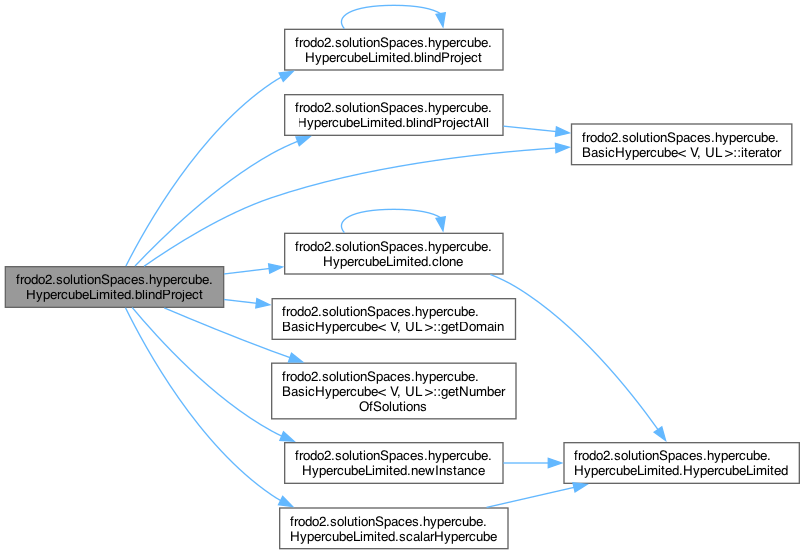
References blindProject(), blindProjectAll(), clone(), frodo2.solutionSpaces.hypercube.BasicHypercube< V, UL >.domains, frodo2.solutionSpaces.hypercube.BasicHypercube< V, UL >.getDomain(), frodo2.solutionSpaces.hypercube.BasicHypercube< V, UL >.getNumberOfSolutions(), frodo2.solutionSpaces.hypercube.BasicHypercube< V, UL >.infeasibleUtil, frodo2.solutionSpaces.hypercube.BasicHypercube< V, UL >.iterator(), frodo2.solutionSpaces.hypercube.BasicHypercube< V, UL >.name, newInstance(), scalarHypercube(), and frodo2.solutionSpaces.hypercube.BasicHypercube< V, UL >.variables.
◆ blindProjectAll()
| UL frodo2.solutionSpaces.hypercube.HypercubeLimited< V extends Addable< V >, U extends Addable< U >, UL extends AddableLimited< U, UL >.blindProjectAll | ( | final boolean | maximize | ) |
References frodo2.solutionSpaces.hypercube.BasicHypercube< V, UL >.iterator().
Referenced by blindProject().

◆ clone()
| HypercubeLimited< V, U, UL > frodo2.solutionSpaces.hypercube.HypercubeLimited< V extends Addable< V >, U extends Addable< U >, UL extends AddableLimited< U, UL >.clone | ( | ) |
- See also
- BasicHypercube.clone()
References clone(), and HypercubeLimited().
Referenced by blindProject(), and clone().

◆ join() [1/2]
| UtilitySolutionSpaceLimited< V, U, UL > frodo2.solutionSpaces.hypercube.HypercubeLimited< V extends Addable< V >, U extends Addable< U >, UL extends AddableLimited< U, UL >.join | ( | UtilitySolutionSpace< V, U > | space | ) |
- See also
- UtilitySolutionSpaceLimited#join(UtilitySolutionSpace)
References join().
Referenced by join(), join(), and joinMinNCCCs().
◆ join() [2/2]
| UtilitySolutionSpaceLimited< V, U, UL > frodo2.solutionSpaces.hypercube.HypercubeLimited< V extends Addable< V >, U extends Addable< U >, UL extends AddableLimited< U, UL >.join | ( | UtilitySolutionSpace< V, U > | space, |
| final boolean | minNCCCs ) |
The join operation.
- Parameters
-
space input space minNCCCs whether to optimize runtime or NCCC count
- Returns
- the join of the two spaces
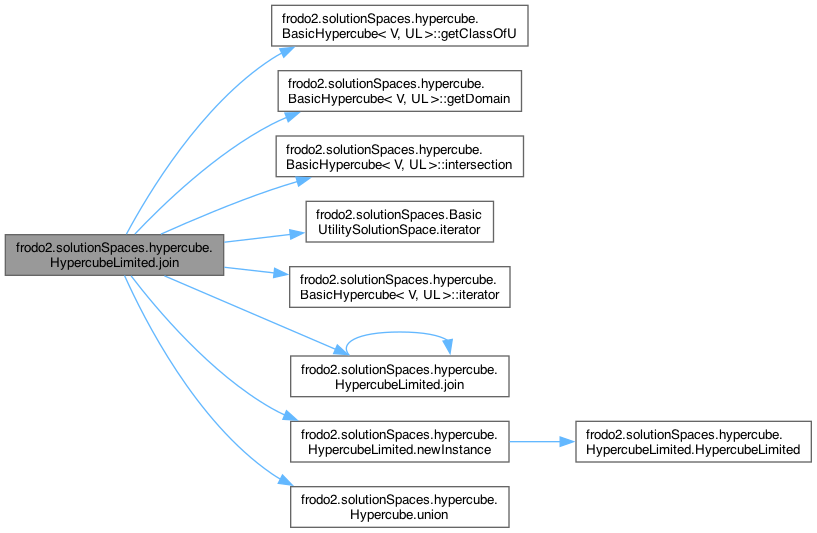
References frodo2.solutionSpaces.hypercube.BasicHypercube< V, UL >.domains, frodo2.solutionSpaces.hypercube.BasicHypercube< V, UL >.getClassOfU(), frodo2.solutionSpaces.hypercube.BasicHypercube< V, UL >.getDomain(), frodo2.solutionSpaces.hypercube.BasicHypercube< V, UL >.intersection(), frodo2.solutionSpaces.BasicUtilitySolutionSpace< V extends Addable< V >, U extends Serializable >.iterator(), frodo2.solutionSpaces.hypercube.BasicHypercube< V, UL >.iterator(), join(), frodo2.solutionSpaces.hypercube.BasicHypercube< V, UL >.name, newInstance(), frodo2.solutionSpaces.hypercube.Hypercube< V extends Addable< V >, U extends Addable< U > >.NullHypercube< V extends Addable< V >, U extends Addable< U > >.NULL, frodo2.solutionSpaces.hypercube.Hypercube< V extends Addable< V >, U extends Addable< U > >.union(), and frodo2.solutionSpaces.hypercube.BasicHypercube< V, UL >.variables.
◆ joinMinNCCCs()
| UtilitySolutionSpaceLimited< V, U, UL > frodo2.solutionSpaces.hypercube.HypercubeLimited< V extends Addable< V >, U extends Addable< U >, UL extends AddableLimited< U, UL >.joinMinNCCCs | ( | UtilitySolutionSpace< V, U > | space | ) |
- See also
- UtilitySolutionSpaceLimited#joinMinNCCCs(UtilitySolutionSpace)
References join().

◆ max()
| UtilitySolutionSpaceLimited< V, U, UL > frodo2.solutionSpaces.hypercube.HypercubeLimited< V extends Addable< V >, U extends Addable< U >, UL extends AddableLimited< U, UL >.max | ( | String | variable | ) |

◆ min()
| UtilitySolutionSpaceLimited< V, U, UL > frodo2.solutionSpaces.hypercube.HypercubeLimited< V extends Addable< V >, U extends Addable< U >, UL extends AddableLimited< U, UL >.min | ( | String | variable | ) |

◆ newInstance()
|
protected |
- See also
- BasicHypercube#newInstance(String, String[], Addable[][], Serializable[], Serializable)
References HypercubeLimited(), frodo2.solutionSpaces.hypercube.BasicHypercube< V, UL >.infeasibleUtil, and frodo2.solutionSpaces.hypercube.BasicHypercube< V, UL >.name.
Referenced by blindProject(), and join().

◆ readUtilities()
|
protected |
◆ resolve() [1/2]
| HypercubeLimited< V, U, UL > frodo2.solutionSpaces.hypercube.HypercubeLimited< V extends Addable< V >, U extends Addable< U >, UL extends AddableLimited< U, UL >.resolve | ( | ) |
- See also
- BasicHypercube.resolve()
References HypercubeLimited().

◆ resolve() [2/2]
| HypercubeLimited< V, U, UL > frodo2.solutionSpaces.hypercube.HypercubeLimited< V extends Addable< V >, U extends Addable< U >, UL extends AddableLimited< U, UL >.resolve | ( | boolean | unused | ) |
- See also
- BasicHypercube.resolve(boolean)
References HypercubeLimited().

◆ scalarHypercube()
|
protected |
- See also
- BasicHypercube#scalarHypercube(Serializable)
References frodo2.solutionSpaces.hypercube.BasicHypercube< V, UL >.assignment, HypercubeLimited(), and frodo2.solutionSpaces.hypercube.BasicHypercube< V, UL >.infeasibleUtil.
Referenced by blindProject().

◆ slice()
| HypercubeLimited< V, U, UL > frodo2.solutionSpaces.hypercube.HypercubeLimited< V extends Addable< V >, U extends Addable< U >, UL extends AddableLimited< U, UL >.slice | ( | String | var, |
| V | val ) |
- See also
- BasicHypercube#slice(String, Addable)
References HypercubeLimited(), and slice().
Referenced by slice().

◆ writeUtilities()
|
protected |
- See also
- BasicHypercube.writeUtilities(java.io.ObjectOutput)
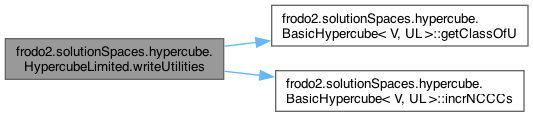
References frodo2.solutionSpaces.hypercube.BasicHypercube< V, UL >.getClassOfU(), frodo2.solutionSpaces.hypercube.BasicHypercube< V, UL >.incrNCCCs(), frodo2.solutionSpaces.hypercube.BasicHypercube< V, UL >.infeasibleUtil, frodo2.solutionSpaces.hypercube.BasicHypercube< V, UL >.number_of_utility_values, and frodo2.solutionSpaces.hypercube.BasicHypercube< V, UL >.values.
The documentation for this class was generated from the following file:
- src/frodo2/solutionSpaces/hypercube/HypercubeLimited.java
