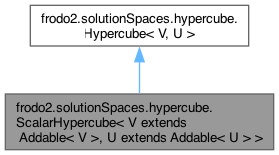
A hypercube that contains no variables, but a single utility value. More...
Public Member Functions | |
| ScalarHypercube () | |
| Empty constructor. | |
| ScalarHypercube (U utility, U infeasibleUtil, Class<? extends V[]> classOfDom) | |
| Constructor. | |
| ScalarHypercube (String name, U utility, U infeasibleUtil, Class<? extends V[]> classOfDom) | |
| Constructor. | |
| void | writeExternal (ObjectOutput out) throws IOException |
| void | readExternal (ObjectInput in) throws IOException, ClassNotFoundException |
| long | getNumberOfSolutions () |
| Always returns 1. | |
| U | getUtility (V[] variables_values) |
| Always returns this ScalarHypercube's utility. | |
| U | getUtility (String[] variables_names, V[] variables_values) |
| Always returns this ScalarHypercube's utility. | |
| U | getUtility (long index) |
| Always returns this ScalarHypercube's utility. | |
| boolean | setUtility (V[] variables_values, U utility) |
| Ignores variables_values and sets this scalar hypercube's utility to utility. | |
| void | setUtility (long index, U utility) |
| Ignores index and sets this scalar hypercube's utility to utility. | |
| int | getNumberOfVariables () |
| Always returns 0. | |
| String | getVariable (int index) |
Always returns null. | |
| int | getIndex (String variable) |
| Always returns -1. | |
| V[][] | getDomains () |
Always returns null. | |
| V[] | getDomain (String variable) |
Always returns null. | |
| V[] | getDomain (int index) |
Always returns null. | |
| V[] | getDomain (String variable, int index) |
Always returns null. | |
| void | setDomain (String var, V[] dom) |
| Does nothing. | |
| String | toString () |
| String | prettyPrint (U unused) |
| void | saveAsXML (String file) |
| SolutionSpace< V > | join (SolutionSpace< V > space, String[] total_variables) |
| Return a SolutionSpace object obtained by joining this solutionSpace object with the one provided as a parameter. | |
| ProjOutput< V, U > | project (String[] variables_names, boolean maximum) |
| Returns a clone of this ScalarHypercube as the return hypercube, and NullHypercube.NULL as the optimal assignments. | |
| ProjOutput< V, U > | project (String variable_name, boolean maximum) |
| Returns a clone of this ScalarHypercube as the return hypercube, and NullHypercube.NULL as the optimal assignments. | |
| ProjOutput< V, U > | project (int number_to_project, boolean maximum) |
| Returns a clone of this ScalarHypercube as the return hypercube, and NullHypercube.NULL as the optimal assignments. | |
| ProjOutput< V, U > | projectAll (boolean maximum) |
| Returns a clone of this ScalarHypercube as the return hypercube, and NullHypercube.NULL as the optimal assignments. | |
| ScalarHypercube< V, U > | blindProject (String varOut, boolean maximize) |
| ScalarHypercube< V, U > | blindProject (String[] varsOut, boolean maximize) |
| U | blindProjectAll (boolean maximize) |
| ScalarHypercube< V, U > | min (String variable) |
| ScalarHypercube< V, U > | max (String variable) |
| ScalarHypercube< V, U > | slice (String var, V val) |
| Returns a clone of this ScalarHypercube, without modifications. | |
| ScalarHypercube< V, U > | slice (String[] variables_names, V[][] sub_domains) |
| Returns a clone of this ScalarHypercube, without modifications. | |
| Hypercube< V, U > | slice (String[] variables_names, V[] values) |
| Returns a clone of this ScalarHypercube, without modifications. | |
| ScalarHypercube< V, U > | slice (V[] variables_values) |
| Returns a clone of this ScalarHypercube, without modifications. | |
| Hypercube< V, U > | compose (String[] vars, BasicUtilitySolutionSpace< V, ArrayList< V > > substitution) |
| Hypercube< V, U > | split (U threshold, boolean maximum) |
Returns a clone of this SclararHypercube if its utility is higher that the threshold; null otherwise. | |
| ScalarHypercube< V, U > | changeVariablesOrder (String[] variables_order) |
| Returns a clone of this ScalarHypercube, without modifications. | |
| boolean | equals (Object hypercube) |
| ScalarHypercube< V, U > | clone () |
| String[] | getVariables () |
| It returns the internal order of variables used within a solutionSpace. | |
| void | renameVariable (String oldName, String newName) |
| Does nothing. | |
| BasicHypercube< V, U > | renameAllVars (String[] newVarNames) |
| void | augment (V[] variables_values) |
| Augments solutionSpace (new combination of variables values) and the corresponding utility. | |
| SolutionSpace< V > | join (SolutionSpace< V > space) |
| Computes the join of this solutionSpace with the input solutionSpace. | |
| SolutionSpace< V > | join (SolutionSpace< V >[] spaces, String[] total_variables_order) |
| Returns a SolutionSpace object obtained by joining the SolutionSpace for which this method is called and the SolutionSpaces present in the array of SolutionSpaces given to this method as a parameter. | |
| void | augment (V[] variables_values, U utility_value) |
| Augments solutionSpace (new combination of variables values) and the corresponding utility. | |
| boolean | isIncludedIn (UtilitySolutionSpace< V, U > space) |
| Checks if this solutionSpace is included in the provided SolutionSpace (i.e. | |
| UtilitySolutionSpace< V, U > | join (UtilitySolutionSpace< V, U > space, boolean addition, boolean minNCCCs) |
| UtilitySolutionSpace< V, U > | expectation (Map< String, UtilitySolutionSpace< V, U > > distributions) |
| Map< V, Double > | sample (int nbrSamples) |
| Returns an empty sample set. | |
| UtilitySolutionSpace.Iterator< V, U > | iterator () |
| UtilitySolutionSpace.Iterator< V, U > | iterator (String[] variables) |
| UtilitySolutionSpace.Iterator< V, U > | iterator (String[] variables, V[][] domains) |
| UtilitySolutionSpace.Iterator< V, U > | iterator (String[] variables, V[][] domains, V[] assignment) |
| UtilitySolutionSpace.SparseIterator< V, U > | sparseIter () |
| UtilitySolutionSpace.SparseIterator< V, U > | sparseIter (String[] variables) |
| UtilitySolutionSpace.SparseIterator< V, U > | sparseIter (String[] variables, V[][] domains) |
| UtilitySolutionSpace.SparseIterator< V, U > | sparseIter (String[] variables, V[][] domains, V[] assignment) |
| U | getDefaultUtility () |
| void | setDefaultUtility (U utility) |
| Public Member Functions inherited from frodo2.solutionSpaces.hypercube.Hypercube< V, U > | |
| Hypercube () | |
| Empty Hypercube constructor. | |
| void | saveAsXML (String file) |
| Creates an XML file from the hypercube. | |
| U | getUtility (String[] variables_names, V[] variables_values) |
| UtilitySolutionSpace< V, U > | joinMinNCCCs (UtilitySolutionSpace< V, U > space) |
| UtilitySolutionSpace< V, U > | multiply (UtilitySolutionSpace< V, U > space, String[] total_variables) |
| Hypercube< V, U > | slice (String[] variables_names, V[][] sub_domains) |
| UtilitySolutionSpace< V, U > | applyJoin (UtilitySolutionSpace< V, U > space, String[] total_variables) |
| Joins this hypercube with the provided hypercube if the utility values array is big enough, this hypercube is modified into the new hypercube, otherwise a new hypercube is created. | |
| ProjOutput< V, U > | consensus (final String varOut, final Map< String, UtilitySolutionSpace< V, U > > distributions, final boolean maximum) |
| ProjOutput< V, U > | consensusAllSols (String varOut, Map< String, UtilitySolutionSpace< V, U > > distributions, boolean maximum) |
| ProjOutput< V, U > | consensusExpect (final String varOut, final Map< String, UtilitySolutionSpace< V, U > > distributions, final boolean maximum) |
| ProjOutput< V, U > | consensusAllSolsExpect (String varOut, Map< String, UtilitySolutionSpace< V, U > > distributions, boolean maximum) |
| UtilitySolutionSpace.ProjOutput< V, U > | project (String[] varsOut, final boolean maximum) |
| Returns a Hypercube obtained by projecting some of the variables of the hypercube. | |
| UtilitySolutionSpace< V, U > | blindProject (String varOut, boolean maximize) |
| U | blindProjectAll (final boolean maximize) |
| Hypercube< V, U > | min (String var) |
| Hypercube< V, U > | max (String var) |
| ProjOutput< V, U > | projectAll (boolean maximum) |
| UtilitySolutionSpace.ProjOutput< V, U > | applyProject (String[] variables_names, final boolean maximum) |
| Returns a Hypercube obtained by projecting some of the variables of the hypercube this version of project does not create a new hypercube but directly modifies the current utility array. | |
| Hypercube< V, U > | split (U threshold, boolean maximum) |
| Returns a Hypercube containing variables values corresponding to utility values bigger than the provided threshold. | |
| UtilitySolutionSpace< V, U > | expectation (Map< String, UtilitySolutionSpace< V, U > > distributions) |
| ProjOutput< V, U > | projExpectMonotone (final String varOut, Map< String, UtilitySolutionSpace< V, U > > distributions, final boolean maximum) |
| Map< V, Double > | sample (int nbrSamples) |
| Hypercube< V, U > | changeVariablesOrder (String[] variables_order) |
| boolean | equals (Object o) |
| Checks if this hypercube equals the one provided as a parameter (including the order of variables). | |
| Hypercube< V, U > | clone () |
| Hypercube< V, U > | resolve () |
| Hypercube< V, U > | toHypercube () |
| boolean | isIncludedIn (UtilitySolutionSpace< V, U > space) |
| UtilitySolutionSpace< V, U > | compose (String[] varsOut, BasicUtilitySolutionSpace< V, ArrayList< V > > substitution) |
| UtilitySolutionSpace.IteratorBestFirst< V, U > | iteratorBestFirst (boolean maximize) |
| UtilitySolutionSpace.Iterator< V, U > | iterator () |
| UtilitySolutionSpace.SparseIterator< V, U > | sparseIter () |
| UtilitySolutionSpace< V, U > | rescale (U add, U multiply) |
Protected Member Functions | |
| ScalarHypercube< V, U > | scalarHypercube (U utility) |
| UtilitySolutionSpace< V, U > | join (UtilitySolutionSpace< V, U > space, String[] total_variables, final boolean addition, boolean minNCCCs) |
| ProjOutput< V, U > | consensus (String varOut, Map< String, UtilitySolutionSpace< V, U > > distributions, boolean maximum, boolean allSolutions, final boolean expect) |
| Returns a clone of this ScalarHypercube as the return hypercube, and NullHypercube.NULL as the optimal assignments. | |
| Protected Member Functions inherited from frodo2.solutionSpaces.hypercube.Hypercube< V, U > | |
| UtilitySolutionSpace< V, U > | join (UtilitySolutionSpace< V, U > utilitySpace, String[] outputVars, final boolean addition, final boolean minNCCCs) |
| Returns a Hypercube object obtained by joining this hypercube with the one provided as a parameter. | |
| ScalarHypercube< V, U > | scalarHypercube (U utility) |
| Hypercube< V, U > | newInstance (String name, String[] new_variables, V[][] new_domains, U[] new_values, U infeasibleUtil) |
| UtilitySolutionSpace.Iterator< V, U > | newIter (String[] variables, V[][] domains, V[] assignment, U skippedUtil) |
Package Functions | |
| void | setStepsHashmaps () |
| Does nothing. | |
Additional Inherited Members | |
| Static Public Member Functions inherited from frodo2.solutionSpaces.hypercube.Hypercube< V, U > | |
| static String[] | union (String[] list1, String[] list2) |
| Computes the union of two lists, perserving the order when possible. | |
Detailed Description
A hypercube that contains no variables, but a single utility value.
- Parameters
-
<V> type used for the variable values <U> type used for the utility values
- Todo
- Test this class
- Note
- This class is NOT a subclass of BasicHypercube.ScalarBasicHypercube
Constructor & Destructor Documentation
◆ ScalarHypercube() [1/3]
| frodo2.solutionSpaces.hypercube.ScalarHypercube< V extends Addable< V >, U extends Addable< U > >.ScalarHypercube | ( | ) |
Empty constructor.
Referenced by blindProject(), blindProject(), changeVariablesOrder(), clone(), equals(), max(), min(), ScalarHypercube(), scalarHypercube(), slice(), slice(), and slice().
◆ ScalarHypercube() [2/3]
| frodo2.solutionSpaces.hypercube.ScalarHypercube< V extends Addable< V >, U extends Addable< U > >.ScalarHypercube | ( | U | utility, |
| U | infeasibleUtil, | ||
| Class<? extends V[]> | classOfDom ) |
Constructor.
- Parameters
-
utility the single utility value of this hypercube infeasibleUtil -INF if we are maximizing, +INF if we are minimizing classOfDom the class of V[]
References ScalarHypercube().

◆ ScalarHypercube() [3/3]
| frodo2.solutionSpaces.hypercube.ScalarHypercube< V extends Addable< V >, U extends Addable< U > >.ScalarHypercube | ( | String | name, |
| U | utility, | ||
| U | infeasibleUtil, | ||
| Class<? extends V[]> | classOfDom ) |
Constructor.
- Parameters
-
name the name of this ScalarHypercube utility the single utility value of this hypercube infeasibleUtil -INF if we are maximizing, +INF if we are minimizing classOfDom the class of V[]
Member Function Documentation
◆ augment() [1/2]
| void frodo2.solutionSpaces.hypercube.ScalarHypercube< V extends Addable< V >, U extends Addable< U > >.augment | ( | V[] | variables_values | ) |
Augments solutionSpace (new combination of variables values) and the corresponding utility.
- Note
- If the corresponding assignment already exist in solutionSpace this method will only modify the corresponding utility value
- Parameters
-
variables_values new variables variables
◆ augment() [2/2]
| void frodo2.solutionSpaces.hypercube.ScalarHypercube< V extends Addable< V >, U extends Addable< U > >.augment | ( | V[] | variables_values, |
| U | utility_value ) |
Augments solutionSpace (new combination of variables values) and the corresponding utility.
- Note
- If the corresponding assignment already exist in solutionSpace this method will only modify the corresponding utility value
- Parameters
-
variables_values new variables variables utility_value corresponding utility values
◆ blindProject() [1/2]
| ScalarHypercube< V, U > frodo2.solutionSpaces.hypercube.ScalarHypercube< V extends Addable< V >, U extends Addable< U > >.blindProject | ( | String | varOut, |
| boolean | maximize ) |
- See also
- Hypercube.blindProject(java.lang.String, boolean)
References clone(), and ScalarHypercube().

◆ blindProject() [2/2]
| ScalarHypercube< V, U > frodo2.solutionSpaces.hypercube.ScalarHypercube< V extends Addable< V >, U extends Addable< U > >.blindProject | ( | String[] | varsOut, |
| boolean | maximize ) |
- See also
- Hypercube.blindProject(java.lang.String[], boolean)
References clone(), and ScalarHypercube().

◆ blindProjectAll()
| U frodo2.solutionSpaces.hypercube.ScalarHypercube< V extends Addable< V >, U extends Addable< U > >.blindProjectAll | ( | boolean | maximize | ) |

◆ changeVariablesOrder()
| ScalarHypercube< V, U > frodo2.solutionSpaces.hypercube.ScalarHypercube< V extends Addable< V >, U extends Addable< U > >.changeVariablesOrder | ( | String[] | variables_order | ) |
Returns a clone of this ScalarHypercube, without modifications.
- See also
- Hypercube.changeVariablesOrder(java.lang.String[])
References clone(), and ScalarHypercube().

◆ clone()
| ScalarHypercube< V, U > frodo2.solutionSpaces.hypercube.ScalarHypercube< V extends Addable< V >, U extends Addable< U > >.clone | ( | ) |
- See also
- Hypercube.clone()
References ScalarHypercube().
Referenced by blindProject(), blindProject(), changeVariablesOrder(), compose(), consensus(), max(), min(), project(), project(), project(), projectAll(), slice(), slice(), slice(), slice(), and split().

◆ compose()
| Hypercube< V, U > frodo2.solutionSpaces.hypercube.ScalarHypercube< V extends Addable< V >, U extends Addable< U > >.compose | ( | String[] | vars, |
| BasicUtilitySolutionSpace< V, ArrayList< V > > | substitution ) |
- See also
- BasicHypercube.compose(java.lang.String[], BasicUtilitySolutionSpace)
- Todo
- Implement the case when the substitution is not a BasicHypercube
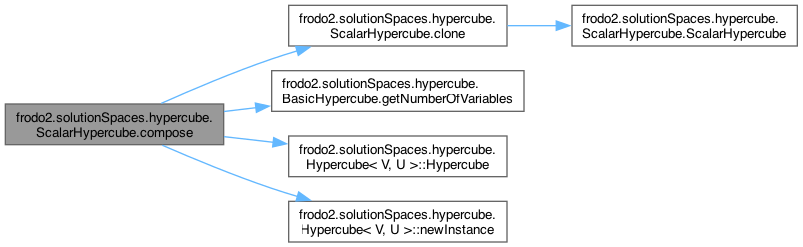
References clone(), frodo2.solutionSpaces.hypercube.BasicHypercube< V extends Addable< V >, U extends Serializable >.domains, frodo2.solutionSpaces.hypercube.BasicHypercube< V extends Addable< V >, U extends Serializable >.getNumberOfVariables(), frodo2.solutionSpaces.hypercube.Hypercube< V, U >.Hypercube(), frodo2.solutionSpaces.hypercube.Hypercube< V, U >.newInstance(), frodo2.solutionSpaces.hypercube.BasicHypercube< V extends Addable< V >, U extends Serializable >.values, and frodo2.solutionSpaces.hypercube.BasicHypercube< V extends Addable< V >, U extends Serializable >.variables.
◆ consensus()
|
protected |
Returns a clone of this ScalarHypercube as the return hypercube, and NullHypercube.NULL as the optimal assignments.
- See also
- Hypercube.consensus(java.lang.String, java.util.Map, boolean, boolean, boolean)
References clone().

◆ equals()
| boolean frodo2.solutionSpaces.hypercube.ScalarHypercube< V extends Addable< V >, U extends Addable< U > >.equals | ( | Object | hypercube | ) |
- See also
- Hypercube.equals(Object)
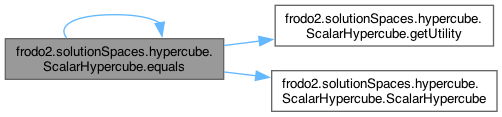
References equals(), getUtility(), and ScalarHypercube().
Referenced by equals().
◆ expectation()
| UtilitySolutionSpace< V, U > frodo2.solutionSpaces.hypercube.ScalarHypercube< V extends Addable< V >, U extends Addable< U > >.expectation | ( | Map< String, UtilitySolutionSpace< V, U > > | distributions | ) |
- See also
- Hypercube.expectation(java.util.Map)
◆ getDefaultUtility()
| U frodo2.solutionSpaces.hypercube.ScalarHypercube< V extends Addable< V >, U extends Addable< U > >.getDefaultUtility | ( | ) |
- Todo
- Auto-generated method stub
◆ getDomain() [1/3]
| V[] frodo2.solutionSpaces.hypercube.ScalarHypercube< V extends Addable< V >, U extends Addable< U > >.getDomain | ( | int | index | ) |
Always returns null.
- See also
- BasicHypercube.getDomain(int)
◆ getDomain() [2/3]
| V[] frodo2.solutionSpaces.hypercube.ScalarHypercube< V extends Addable< V >, U extends Addable< U > >.getDomain | ( | String | variable | ) |
Always returns null.
- See also
- BasicHypercube.getDomain(java.lang.String)
◆ getDomain() [3/3]
| V[] frodo2.solutionSpaces.hypercube.ScalarHypercube< V extends Addable< V >, U extends Addable< U > >.getDomain | ( | String | variable, |
| int | index ) |
Always returns null.
- See also
- BasicHypercube.getDomain(java.lang.String, int)
◆ getDomains()
| V[][] frodo2.solutionSpaces.hypercube.ScalarHypercube< V extends Addable< V >, U extends Addable< U > >.getDomains | ( | ) |
Always returns null.
- See also
- BasicHypercube.getDomains()
◆ getIndex()
| int frodo2.solutionSpaces.hypercube.ScalarHypercube< V extends Addable< V >, U extends Addable< U > >.getIndex | ( | String | variable | ) |
Always returns -1.
- See also
- BasicHypercube.getIndex(java.lang.String)
◆ getNumberOfSolutions()
| long frodo2.solutionSpaces.hypercube.ScalarHypercube< V extends Addable< V >, U extends Addable< U > >.getNumberOfSolutions | ( | ) |
Always returns 1.
◆ getNumberOfVariables()
| int frodo2.solutionSpaces.hypercube.ScalarHypercube< V extends Addable< V >, U extends Addable< U > >.getNumberOfVariables | ( | ) |
Always returns 0.
◆ getUtility() [1/3]
| U frodo2.solutionSpaces.hypercube.ScalarHypercube< V extends Addable< V >, U extends Addable< U > >.getUtility | ( | long | index | ) |
Always returns this ScalarHypercube's utility.
- See also
- BasicHypercube.getUtility(long)
◆ getUtility() [2/3]
| U frodo2.solutionSpaces.hypercube.ScalarHypercube< V extends Addable< V >, U extends Addable< U > >.getUtility | ( | String[] | variables_names, |
| V[] | variables_values ) |
Always returns this ScalarHypercube's utility.
- See also
- BasicHypercube.getUtility(java.lang.String[], Addable[])
◆ getUtility() [3/3]
| U frodo2.solutionSpaces.hypercube.ScalarHypercube< V extends Addable< V >, U extends Addable< U > >.getUtility | ( | V[] | variables_values | ) |
Always returns this ScalarHypercube's utility.
- See also
- BasicHypercube#getUtility(Addable[])
Referenced by blindProjectAll(), equals(), and join().
◆ getVariable()
| String frodo2.solutionSpaces.hypercube.ScalarHypercube< V extends Addable< V >, U extends Addable< U > >.getVariable | ( | int | index | ) |
Always returns null.
- See also
- BasicHypercube.getVariable(int)
◆ getVariables()
| String[] frodo2.solutionSpaces.hypercube.ScalarHypercube< V extends Addable< V >, U extends Addable< U > >.getVariables | ( | ) |
It returns the internal order of variables used within a solutionSpace.
It is used for any function which assumes default/internal order of variables.
- Returns
- String array containing the names of the variables of the solutionSpace
◆ isIncludedIn()
| boolean frodo2.solutionSpaces.hypercube.ScalarHypercube< V extends Addable< V >, U extends Addable< U > >.isIncludedIn | ( | UtilitySolutionSpace< V, U > | space | ) |
Checks if this solutionSpace is included in the provided SolutionSpace (i.e.
both contain the same variables, and all assignments in the utility diagram appear with the same utility values in the solutionSpace).
- Parameters
-
space solutionSpace object
- Returns
- true if this UtilityDiagram is included in the provided solutionSpace object, and false if else
◆ iterator() [1/4]
| UtilitySolutionSpace.Iterator< V, U > frodo2.solutionSpaces.hypercube.ScalarHypercube< V extends Addable< V >, U extends Addable< U > >.iterator | ( | ) |
◆ iterator() [2/4]
| UtilitySolutionSpace.Iterator< V, U > frodo2.solutionSpaces.hypercube.ScalarHypercube< V extends Addable< V >, U extends Addable< U > >.iterator | ( | String[] | variables | ) |
◆ iterator() [3/4]
| UtilitySolutionSpace.Iterator< V, U > frodo2.solutionSpaces.hypercube.ScalarHypercube< V extends Addable< V >, U extends Addable< U > >.iterator | ( | String[] | variables, |
| V | domains[][] ) |
- See also
- BasicHypercube#iterator(String[], Addable[][])
◆ iterator() [4/4]
| UtilitySolutionSpace.Iterator< V, U > frodo2.solutionSpaces.hypercube.ScalarHypercube< V extends Addable< V >, U extends Addable< U > >.iterator | ( | String[] | variables, |
| V | domains[][], | ||
| V[] | assignment ) |
- See also
- Hypercube.iterator(java.lang.String[], Addable[][], Addable[])
◆ join() [1/5]
| SolutionSpace< V > frodo2.solutionSpaces.hypercube.ScalarHypercube< V extends Addable< V >, U extends Addable< U > >.join | ( | SolutionSpace< V > | space | ) |
Computes the join of this solutionSpace with the input solutionSpace.
Order of variables is chosen as it fits.
◆ join() [2/5]
| SolutionSpace< V > frodo2.solutionSpaces.hypercube.ScalarHypercube< V extends Addable< V >, U extends Addable< U > >.join | ( | SolutionSpace< V > | space, |
| String[] | total_variables ) |
Return a SolutionSpace object obtained by joining this solutionSpace object with the one provided as a parameter.
- Parameters
-
space the solutionSpace to join this one with total_variables the order of the variables in both solutionSpaces
- Returns
- SolutionSpace object obtained by joining this solutionSpace with the one provided as a parameter Originally this function in the solutionSpaces assumes that order is not conflicting.
◆ join() [3/5]
| SolutionSpace< V > frodo2.solutionSpaces.hypercube.ScalarHypercube< V extends Addable< V >, U extends Addable< U > >.join | ( | SolutionSpace< V >[] | spaces, |
| String[] | total_variables_order ) |
Returns a SolutionSpace object obtained by joining the SolutionSpace for which this method is called and the SolutionSpaces present in the array of SolutionSpaces given to this method as a parameter.
- Parameters
-
spaces an array of the solutionSpaces to be added to this solutionSpace total_variables_order the order of the variables in all solutionSpaces
- Returns
- SolutionSpace object obtained by joining this SolutionSpace with all the SolutionSpaces in the array of SolutionSpaces Originally this function in the hypercubes assumes that order is not conflicting.
◆ join() [4/5]
| UtilitySolutionSpace< V, U > frodo2.solutionSpaces.hypercube.ScalarHypercube< V extends Addable< V >, U extends Addable< U > >.join | ( | UtilitySolutionSpace< V, U > | space, |
| boolean | addition, | ||
| boolean | minNCCCs ) |
- See also
- Hypercube#join(UtilitySolutionSpace, boolean, boolean)
References join().

◆ join() [5/5]
|
protected |
- See also
- Hypercube.join(UtilitySolutionSpace, java.lang.String[], boolean, boolean)
- Bug
- The output hypercube does not respect the input variable order
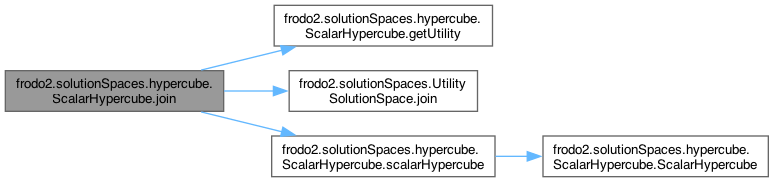
References getUtility(), frodo2.solutionSpaces.UtilitySolutionSpace< V extends Addable< V >, U extends Addable< U > >.join(), and scalarHypercube().
Referenced by join().
◆ max()
| ScalarHypercube< V, U > frodo2.solutionSpaces.hypercube.ScalarHypercube< V extends Addable< V >, U extends Addable< U > >.max | ( | String | variable | ) |
- See also
- Hypercube.max(java.lang.String)
References clone(), and ScalarHypercube().

◆ min()
| ScalarHypercube< V, U > frodo2.solutionSpaces.hypercube.ScalarHypercube< V extends Addable< V >, U extends Addable< U > >.min | ( | String | variable | ) |
- See also
- Hypercube.min(java.lang.String)
References clone(), and ScalarHypercube().

◆ prettyPrint()
| String frodo2.solutionSpaces.hypercube.ScalarHypercube< V extends Addable< V >, U extends Addable< U > >.prettyPrint | ( | U | unused | ) |
- See also
- BasicHypercube.prettyPrint(java.io.Serializable)
References toString().

◆ project() [1/3]
| ProjOutput< V, U > frodo2.solutionSpaces.hypercube.ScalarHypercube< V extends Addable< V >, U extends Addable< U > >.project | ( | int | number_to_project, |
| boolean | maximum ) |
Returns a clone of this ScalarHypercube as the return hypercube, and NullHypercube.NULL as the optimal assignments.
- See also
- Hypercube.project(int, boolean)
References clone().

◆ project() [2/3]
| ProjOutput< V, U > frodo2.solutionSpaces.hypercube.ScalarHypercube< V extends Addable< V >, U extends Addable< U > >.project | ( | String | variable_name, |
| boolean | maximum ) |
Returns a clone of this ScalarHypercube as the return hypercube, and NullHypercube.NULL as the optimal assignments.
- See also
- Hypercube.project(java.lang.String, boolean)
References clone().

◆ project() [3/3]
| ProjOutput< V, U > frodo2.solutionSpaces.hypercube.ScalarHypercube< V extends Addable< V >, U extends Addable< U > >.project | ( | String[] | variables_names, |
| boolean | maximum ) |
Returns a clone of this ScalarHypercube as the return hypercube, and NullHypercube.NULL as the optimal assignments.
- See also
- Hypercube.project(java.lang.String[], boolean)
References clone().

◆ projectAll()
| ProjOutput< V, U > frodo2.solutionSpaces.hypercube.ScalarHypercube< V extends Addable< V >, U extends Addable< U > >.projectAll | ( | boolean | maximum | ) |
Returns a clone of this ScalarHypercube as the return hypercube, and NullHypercube.NULL as the optimal assignments.
- See also
- Hypercube.projectAll(boolean)
References clone(), and projectAll().
Referenced by projectAll().

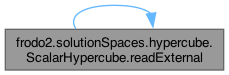
◆ readExternal()
| void frodo2.solutionSpaces.hypercube.ScalarHypercube< V extends Addable< V >, U extends Addable< U > >.readExternal | ( | ObjectInput | in | ) | throws IOException, ClassNotFoundException |
- See also
- java.io.Externalizable#readExternal(java.io.ObjectInput)
References readExternal().
Referenced by readExternal().
◆ renameAllVars()
| BasicHypercube< V, U > frodo2.solutionSpaces.hypercube.ScalarHypercube< V extends Addable< V >, U extends Addable< U > >.renameAllVars | ( | String[] | newVarNames | ) |
◆ renameVariable()
| void frodo2.solutionSpaces.hypercube.ScalarHypercube< V extends Addable< V >, U extends Addable< U > >.renameVariable | ( | String | oldName, |
| String | newName ) |
Does nothing.
◆ sample()
| Map< V, Double > frodo2.solutionSpaces.hypercube.ScalarHypercube< V extends Addable< V >, U extends Addable< U > >.sample | ( | int | nbrSamples | ) |
Returns an empty sample set.
- See also
- Hypercube.sample(int)
◆ saveAsXML()
| void frodo2.solutionSpaces.hypercube.ScalarHypercube< V extends Addable< V >, U extends Addable< U > >.saveAsXML | ( | String | file | ) |
- See also
- Hypercube.saveAsXML(java.lang.String)
- Bug
- To be implemented
◆ scalarHypercube()
|
protected |
- See also
- Hypercube#scalarHypercube(Addable)
References ScalarHypercube().
Referenced by join().

◆ setDefaultUtility()
| void frodo2.solutionSpaces.hypercube.ScalarHypercube< V extends Addable< V >, U extends Addable< U > >.setDefaultUtility | ( | U | utility | ) |
- See also
- BasicHypercube.setDefaultUtility(java.io.Serializable)
- Todo
- Auto-generated method stub
◆ setDomain()
| void frodo2.solutionSpaces.hypercube.ScalarHypercube< V extends Addable< V >, U extends Addable< U > >.setDomain | ( | String | var, |
| V[] | dom ) |
Does nothing.
- See also
- BasicHypercube#setDomain(String, Addable[])
◆ setStepsHashmaps()
|
package |
Does nothing.
◆ setUtility() [1/2]
| void frodo2.solutionSpaces.hypercube.ScalarHypercube< V extends Addable< V >, U extends Addable< U > >.setUtility | ( | long | index, |
| U | utility ) |
Ignores index and sets this scalar hypercube's utility to utility.
- See also
- BasicHypercube.setUtility(long, java.io.Serializable)
◆ setUtility() [2/2]
| boolean frodo2.solutionSpaces.hypercube.ScalarHypercube< V extends Addable< V >, U extends Addable< U > >.setUtility | ( | V[] | variables_values, |
| U | utility ) |
Ignores variables_values and sets this scalar hypercube's utility to utility.
- See also
- BasicHypercube.setUtility(Addable[], java.io.Serializable)
◆ slice() [1/4]
| ScalarHypercube< V, U > frodo2.solutionSpaces.hypercube.ScalarHypercube< V extends Addable< V >, U extends Addable< U > >.slice | ( | String | var, |
| V | val ) |
Returns a clone of this ScalarHypercube, without modifications.
- See also
- Hypercube.slice(java.lang.String, Addable)
References clone(), and ScalarHypercube().

◆ slice() [2/4]
| Hypercube< V, U > frodo2.solutionSpaces.hypercube.ScalarHypercube< V extends Addable< V >, U extends Addable< U > >.slice | ( | String[] | variables_names, |
| V[] | values ) |
Returns a clone of this ScalarHypercube, without modifications.
- See also
- Hypercube.slice(java.lang.String[], Addable[])
References clone(), and frodo2.solutionSpaces.hypercube.Hypercube< V, U >.Hypercube().

◆ slice() [3/4]
| ScalarHypercube< V, U > frodo2.solutionSpaces.hypercube.ScalarHypercube< V extends Addable< V >, U extends Addable< U > >.slice | ( | String[] | variables_names, |
| V | sub_domains[][] ) |
Returns a clone of this ScalarHypercube, without modifications.
- See also
- Hypercube.slice(java.lang.String[], Addable[][])
References clone(), and ScalarHypercube().

◆ slice() [4/4]
| ScalarHypercube< V, U > frodo2.solutionSpaces.hypercube.ScalarHypercube< V extends Addable< V >, U extends Addable< U > >.slice | ( | V[] | variables_values | ) |
Returns a clone of this ScalarHypercube, without modifications.
- See also
- Hypercube#slice(Addable[])
References clone(), and ScalarHypercube().

◆ sparseIter() [1/4]
| UtilitySolutionSpace.SparseIterator< V, U > frodo2.solutionSpaces.hypercube.ScalarHypercube< V extends Addable< V >, U extends Addable< U > >.sparseIter | ( | ) |
- See also
- Hypercube.sparseIter()
◆ sparseIter() [2/4]
| UtilitySolutionSpace.SparseIterator< V, U > frodo2.solutionSpaces.hypercube.ScalarHypercube< V extends Addable< V >, U extends Addable< U > >.sparseIter | ( | String[] | variables | ) |
◆ sparseIter() [3/4]
| UtilitySolutionSpace.SparseIterator< V, U > frodo2.solutionSpaces.hypercube.ScalarHypercube< V extends Addable< V >, U extends Addable< U > >.sparseIter | ( | String[] | variables, |
| V | domains[][] ) |
- See also
- BasicHypercube#sparseIter(String[], Addable[][])
◆ sparseIter() [4/4]
| UtilitySolutionSpace.SparseIterator< V, U > frodo2.solutionSpaces.hypercube.ScalarHypercube< V extends Addable< V >, U extends Addable< U > >.sparseIter | ( | String[] | variables, |
| V | domains[][], | ||
| V[] | assignment ) |
- See also
- Hypercube.sparseIter(java.lang.String[], Addable[][], Addable[])
◆ split()
| Hypercube< V, U > frodo2.solutionSpaces.hypercube.ScalarHypercube< V extends Addable< V >, U extends Addable< U > >.split | ( | U | threshold, |
| boolean | maximum ) |
Returns a clone of this SclararHypercube if its utility is higher that the threshold; null otherwise.
- See also
- Hypercube#split(Addable, boolean)
References clone().

◆ toString()
| String frodo2.solutionSpaces.hypercube.ScalarHypercube< V extends Addable< V >, U extends Addable< U > >.toString | ( | ) |
- See also
- Hypercube#toString()
Referenced by prettyPrint().
◆ writeExternal()
| void frodo2.solutionSpaces.hypercube.ScalarHypercube< V extends Addable< V >, U extends Addable< U > >.writeExternal | ( | ObjectOutput | out | ) | throws IOException |
- See also
- java.io.Externalizable#writeExternal(java.io.ObjectOutput)
The documentation for this class was generated from the following file:
- src/frodo2/solutionSpaces/hypercube/ScalarHypercube.java
