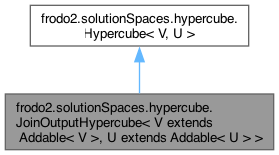
The special output of a join that remembers its inputs rather than computing itself explicitly. More...
Classes | |
| class | JoinOutputIterator |
| An iterator for a JoinOutputHypercube. More... | |
Public Member Functions | |
| JoinOutputHypercube (UtilitySolutionSpace< V, U > space1, UtilitySolutionSpace< V, U > space2, String[] vars, V[][] doms, boolean addition, U infeasibleUtil, long nbrUtils) | |
| Constructor for a binary join. | |
| JoinOutputHypercube () | |
| Empty constructor only to be used for externalization. | |
| void | writeExternal (ObjectOutput out) throws IOException |
| void | readExternal (ObjectInput in) throws IOException, ClassNotFoundException |
| Hypercube< V, U > | resolve () |
| Hypercube< V, U > | resolve (boolean sparse) |
| Hypercube< V, U > | clone () |
| boolean | knows (Class<?> spaceClass) |
| Class< U > | getClassOfU () |
| U | getUtility (long index) |
| U | getUtility (V[] variables_values) |
| String | toString () |
| Hypercube< V, U > | changeVariablesOrder (String[] variablesOrder) |
| boolean | isIncludedIn (UtilitySolutionSpace< V, U > space) |
| UtilitySolutionSpace.IteratorBestFirst< V, U > | iteratorBestFirst (boolean maximize) |
| UtilitySolutionSpace< V, U > | joinMinNCCCs (UtilitySolutionSpace< V, U > space) |
| UtilitySolutionSpace< V, U > | joinMinNCCCs (UtilitySolutionSpace< V, U >[] spaces) |
| UtilitySolutionSpace< V, U > | blindProject (String[] varsOut, boolean maximize) |
| ProjOutput< V, U > | projectAll (boolean maximum, String[] order) |
| UtilitySolutionSpace.ProjOutput< V, U > | project (int numberToProject, boolean maximum) |
| ProjOutput< V, U > | project (String[] varsOut, final boolean maximum) |
| ProjOutput< V, U > | projExpectMonotone (final String varOut, Map< String, UtilitySolutionSpace< V, U > > distributions, final boolean maximum) |
| Map< V, Double > | sample (int nbrSamples) |
| Hypercube< V, U > | slice (String var, V[] subDomain) |
| Hypercube< V, U > | slice (V[] variablesValues) |
| Hypercube< V, U > | split (U threshold, boolean maximum) |
| void | augment (V[] variablesValues, U utilityValue) |
| U | getDefaultUtility () |
| boolean | isIncludedIn (BasicUtilitySolutionSpace< V, U > space) |
| String | prettyPrint (U ignoredUtil) |
| void | setDefaultUtility (U utility) |
| boolean | setUtility (V[] variablesValues, U utility) |
| void | setUtility (long index, U utility) |
| void | augment (V[] variablesValues) |
| V[] | getDomain (String variable, int index) |
| long | getNumberOfSolutions () |
| SolutionSpace< V > | join (SolutionSpace< V > space, String[] totalVariables) |
| SolutionSpace< V > | join (SolutionSpace< V > space) |
| SolutionSpace< V > | join (SolutionSpace< V >[] spaces, String[] totalVariablesOrder) |
| SolutionSpace< V > | join (SolutionSpace< V >[] spaces) |
| void | renameVariable (String oldName, String newName) |
| BasicHypercube< V, U > | renameAllVars (String[] newVarNames) |
| void | setDomain (String var, V[] dom) |
| UtilitySolutionSpace< V, U > | expectation (Map< String, UtilitySolutionSpace< V, U > > distributions) |
| UtilitySolutionSpace< V, U > | compose (final String[] varsOut, final BasicUtilitySolutionSpace< V, ArrayList< V > > subst) |
| Public Member Functions inherited from frodo2.solutionSpaces.hypercube.Hypercube< V, U > | |
| Hypercube () | |
| Empty Hypercube constructor. | |
| void | saveAsXML (String file) |
| Creates an XML file from the hypercube. | |
| U | getUtility (String[] variables_names, V[] variables_values) |
| UtilitySolutionSpace< V, U > | joinMinNCCCs (UtilitySolutionSpace< V, U > space) |
| UtilitySolutionSpace< V, U > | multiply (UtilitySolutionSpace< V, U > space, String[] total_variables) |
| Hypercube< V, U > | slice (String[] variables_names, V[][] sub_domains) |
| UtilitySolutionSpace< V, U > | applyJoin (UtilitySolutionSpace< V, U > space, String[] total_variables) |
| Joins this hypercube with the provided hypercube if the utility values array is big enough, this hypercube is modified into the new hypercube, otherwise a new hypercube is created. | |
| ProjOutput< V, U > | consensus (final String varOut, final Map< String, UtilitySolutionSpace< V, U > > distributions, final boolean maximum) |
| ProjOutput< V, U > | consensusAllSols (String varOut, Map< String, UtilitySolutionSpace< V, U > > distributions, boolean maximum) |
| ProjOutput< V, U > | consensusExpect (final String varOut, final Map< String, UtilitySolutionSpace< V, U > > distributions, final boolean maximum) |
| ProjOutput< V, U > | consensusAllSolsExpect (String varOut, Map< String, UtilitySolutionSpace< V, U > > distributions, boolean maximum) |
| UtilitySolutionSpace.ProjOutput< V, U > | project (String[] varsOut, final boolean maximum) |
| Returns a Hypercube obtained by projecting some of the variables of the hypercube. | |
| UtilitySolutionSpace< V, U > | blindProject (String varOut, boolean maximize) |
| U | blindProjectAll (final boolean maximize) |
| Hypercube< V, U > | min (String var) |
| Hypercube< V, U > | max (String var) |
| ProjOutput< V, U > | projectAll (boolean maximum) |
| UtilitySolutionSpace.ProjOutput< V, U > | applyProject (String[] variables_names, final boolean maximum) |
| Returns a Hypercube obtained by projecting some of the variables of the hypercube this version of project does not create a new hypercube but directly modifies the current utility array. | |
| Hypercube< V, U > | split (U threshold, boolean maximum) |
| Returns a Hypercube containing variables values corresponding to utility values bigger than the provided threshold. | |
| UtilitySolutionSpace< V, U > | expectation (Map< String, UtilitySolutionSpace< V, U > > distributions) |
| ProjOutput< V, U > | projExpectMonotone (final String varOut, Map< String, UtilitySolutionSpace< V, U > > distributions, final boolean maximum) |
| Map< V, Double > | sample (int nbrSamples) |
| Hypercube< V, U > | changeVariablesOrder (String[] variables_order) |
| boolean | equals (Object o) |
| Checks if this hypercube equals the one provided as a parameter (including the order of variables). | |
| Hypercube< V, U > | clone () |
| Hypercube< V, U > | resolve () |
| Hypercube< V, U > | toHypercube () |
| boolean | isIncludedIn (UtilitySolutionSpace< V, U > space) |
| UtilitySolutionSpace< V, U > | compose (String[] varsOut, BasicUtilitySolutionSpace< V, ArrayList< V > > substitution) |
| UtilitySolutionSpace.IteratorBestFirst< V, U > | iteratorBestFirst (boolean maximize) |
| UtilitySolutionSpace.Iterator< V, U > | iterator () |
| UtilitySolutionSpace.SparseIterator< V, U > | sparseIter () |
| UtilitySolutionSpace< V, U > | rescale (U add, U multiply) |
Protected Member Functions | |
| JoinOutputHypercube (ArrayList< UtilitySolutionSpace< V, U > > inputs, String[] vars, V[][] doms, boolean addition, U infeasibleUtil, long nbrUtils) | |
| Constructor. | |
| JoinOutputHypercube (boolean addition) | |
| Constructor. | |
| UtilitySolutionSpace.Iterator< V, U > | newIter (String[] order, V[][] domains, V[] assignment, U skippedUtil) |
| BasicHypercube< V, U > | slice (String[] remainingVars, V[][] remainingDoms, V[][] iterDoms, long nbrRemainingUtils, Class<?> domClass) |
| Protected Member Functions inherited from frodo2.solutionSpaces.hypercube.Hypercube< V, U > | |
| UtilitySolutionSpace< V, U > | join (UtilitySolutionSpace< V, U > utilitySpace, String[] outputVars, final boolean addition, final boolean minNCCCs) |
| Returns a Hypercube object obtained by joining this hypercube with the one provided as a parameter. | |
| ScalarHypercube< V, U > | scalarHypercube (U utility) |
| Hypercube< V, U > | newInstance (String name, String[] new_variables, V[][] new_domains, U[] new_values, U infeasibleUtil) |
| UtilitySolutionSpace.Iterator< V, U > | newIter (String[] variables, V[][] domains, V[] assignment, U skippedUtil) |
Protected Attributes | |
| ArrayList< UtilitySolutionSpace< V, U > > | inputs = new ArrayList< UtilitySolutionSpace<V, U> > () |
| The input spaces to the join. | |
| long | nbrUtils |
| Number of solutions. | |
| final boolean | addition |
| Whether we are adding or multiplying. | |
Package Functions | |
| JoinOutputHypercube (UtilitySolutionSpace< V, U > space1, UtilitySolutionSpace< V, U >[] others, String[] vars, V[][] doms, boolean addition, U infeasibleUtil, long nbrUtils) | |
| Constructor for an n-ary join. | |
Static Package Functions | |
| [static initializer] | |
Private Member Functions | |
| Object | readResolve () throws ObjectStreamException |
| Replaces a de-serialized JoinOutputHypercube with a pure Hypercube. | |
| V[] | getAssignment (long index) |
| Computes the assignment of values to variables corresponding to a specific index. | |
| V[][] | reorderDomains (String[] varOrder, int nbrVars) |
| Reorders the domains according to the input variable order. | |
Static Private Attributes | |
| static HashSet< Class<?> > | knownSpaces |
| The types of spaces that we know how to handle. | |
Additional Inherited Members | |
| Static Public Member Functions inherited from frodo2.solutionSpaces.hypercube.Hypercube< V, U > | |
| static String[] | union (String[] list1, String[] list2) |
| Computes the union of two lists, perserving the order when possible. | |
Detailed Description
The special output of a join that remembers its inputs rather than computing itself explicitly.
- Parameters
-
<V> the type used for variable values <U> the type used for utility values
Constructor & Destructor Documentation
◆ JoinOutputHypercube() [1/5]
| frodo2.solutionSpaces.hypercube.JoinOutputHypercube< V extends Addable< V >, U extends Addable< U > >.JoinOutputHypercube | ( | UtilitySolutionSpace< V, U > | space1, |
| UtilitySolutionSpace< V, U > | space2, | ||
| String[] | vars, | ||
| V | doms[][], | ||
| boolean | addition, | ||
| U | infeasibleUtil, | ||
| long | nbrUtils ) |
Constructor for a binary join.
- Parameters
-
space1 the first space space2 the second space vars the array of variables doms the array of domains addition Whether we are adding or multiplying infeasibleUtil -INF if we are maximizing, +INF if we are minimizing nbrUtils the number of solutions
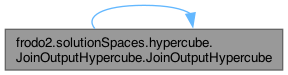
References addition, inputs, JoinOutputHypercube(), and nbrUtils.
Referenced by [static initializer](), changeVariablesOrder(), clone(), JoinOutputHypercube(), JoinOutputHypercube(), JoinOutputHypercube(), and slice().
◆ JoinOutputHypercube() [2/5]
|
package |
Constructor for an n-ary join.
- Parameters
-
space1 the first space others the other spaces vars the array of variables doms the array of domains addition Whether we are adding or multiplying infeasibleUtil -INF if we are maximizing, +INF if we are minimizing nbrUtils the number of solutions
References addition, inputs, JoinOutputHypercube(), and nbrUtils.

◆ JoinOutputHypercube() [3/5]
|
protected |
Constructor.
- Parameters
-
inputs the array of input spaces to the join vars the array of variables doms the array of domains addition Whether we are adding or multiplying infeasibleUtil -INF if we are maximizing, +INF if we are minimizing nbrUtils the number of solutions
References addition, inputs, JoinOutputHypercube(), and nbrUtils.

◆ JoinOutputHypercube() [4/5]
|
protected |
◆ JoinOutputHypercube() [5/5]
| frodo2.solutionSpaces.hypercube.JoinOutputHypercube< V extends Addable< V >, U extends Addable< U > >.JoinOutputHypercube | ( | ) |
Empty constructor only to be used for externalization.
Member Function Documentation
◆ [static initializer]()
|
staticpackage |
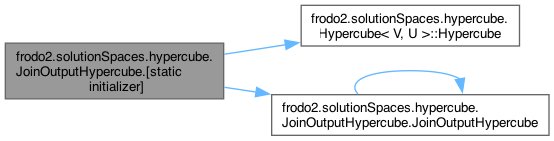
References frodo2.solutionSpaces.hypercube.Hypercube< V, U >.Hypercube(), JoinOutputHypercube(), and knownSpaces.
◆ augment() [1/2]
| void frodo2.solutionSpaces.hypercube.JoinOutputHypercube< V extends Addable< V >, U extends Addable< U > >.augment | ( | V[] | variablesValues | ) |
- See also
- Hypercube#augment(V[])
- Todo
- Auto-generated method stub
◆ augment() [2/2]
| void frodo2.solutionSpaces.hypercube.JoinOutputHypercube< V extends Addable< V >, U extends Addable< U > >.augment | ( | V[] | variablesValues, |
| U | utilityValue ) |
- See also
- Hypercube#augment(V[], java.io.Serializable)
- Todo
- Auto-generated method stub
◆ blindProject()
| UtilitySolutionSpace< V, U > frodo2.solutionSpaces.hypercube.JoinOutputHypercube< V extends Addable< V >, U extends Addable< U > >.blindProject | ( | String[] | varsOut, |
| boolean | maximize ) |
- See also
- Hypercube.blindProject(java.lang.String[], boolean)
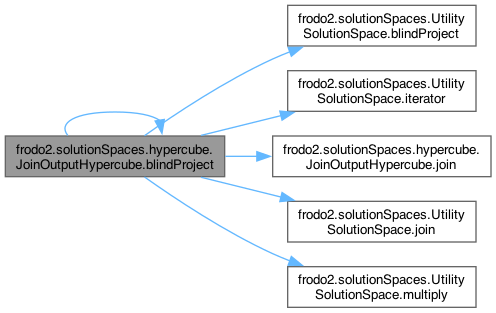
References addition, blindProject(), frodo2.solutionSpaces.UtilitySolutionSpace< V extends Addable< V >, U extends Addable< U > >.blindProject(), inputs, frodo2.solutionSpaces.UtilitySolutionSpace< V extends Addable< V >, U extends Addable< U > >.iterator(), frodo2.java, join(), frodo2.solutionSpaces.UtilitySolutionSpace< V extends Addable< V >, U extends Addable< U > >.join(), and frodo2.solutionSpaces.UtilitySolutionSpace< V extends Addable< V >, U extends Addable< U > >.multiply().
Referenced by blindProject().
◆ changeVariablesOrder()
| Hypercube< V, U > frodo2.solutionSpaces.hypercube.JoinOutputHypercube< V extends Addable< V >, U extends Addable< U > >.changeVariablesOrder | ( | String[] | variablesOrder | ) |
- See also
- Hypercube.changeVariablesOrder(java.lang.String[])
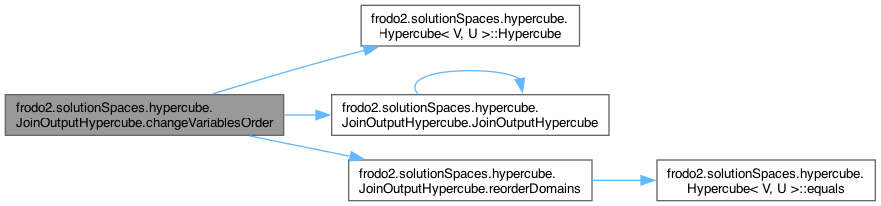
References frodo2.solutionSpaces.hypercube.Hypercube< V, U >.Hypercube(), inputs, JoinOutputHypercube(), and reorderDomains().
◆ clone()
| Hypercube< V, U > frodo2.solutionSpaces.hypercube.JoinOutputHypercube< V extends Addable< V >, U extends Addable< U > >.clone | ( | ) |
- See also
- Hypercube.clone()
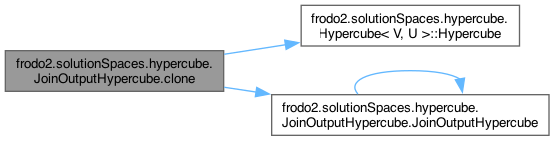
References frodo2.solutionSpaces.hypercube.Hypercube< V, U >.Hypercube(), inputs, and JoinOutputHypercube().
Referenced by project().
◆ compose()
| UtilitySolutionSpace< V, U > frodo2.solutionSpaces.hypercube.JoinOutputHypercube< V extends Addable< V >, U extends Addable< U > >.compose | ( | final String[] | varsOut, |
| final BasicUtilitySolutionSpace< V, ArrayList< V > > | subst ) |
- See also
- Hypercube.compose(java.lang.String[], BasicUtilitySolutionSpace)
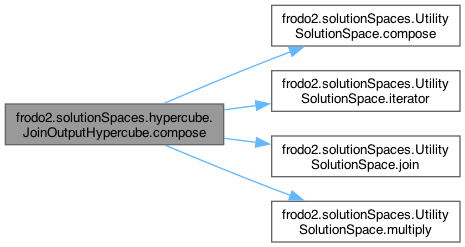
References addition, frodo2.solutionSpaces.UtilitySolutionSpace< V extends Addable< V >, U extends Addable< U > >.compose(), inputs, frodo2.solutionSpaces.UtilitySolutionSpace< V extends Addable< V >, U extends Addable< U > >.iterator(), frodo2.java, frodo2.solutionSpaces.UtilitySolutionSpace< V extends Addable< V >, U extends Addable< U > >.join(), and frodo2.solutionSpaces.UtilitySolutionSpace< V extends Addable< V >, U extends Addable< U > >.multiply().
◆ expectation()
| UtilitySolutionSpace< V, U > frodo2.solutionSpaces.hypercube.JoinOutputHypercube< V extends Addable< V >, U extends Addable< U > >.expectation | ( | Map< String, UtilitySolutionSpace< V, U > > | distributions | ) |
- See also
- Hypercube.expectation(java.util.Map)
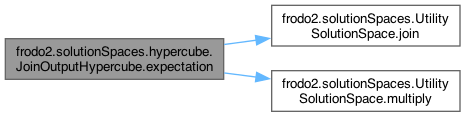
References addition, inputs, frodo2.solutionSpaces.UtilitySolutionSpace< V extends Addable< V >, U extends Addable< U > >.join(), and frodo2.solutionSpaces.UtilitySolutionSpace< V extends Addable< V >, U extends Addable< U > >.multiply().
◆ getAssignment()
|
private |
Computes the assignment of values to variables corresponding to a specific index.
- Parameters
-
index the index
- Returns
- the corresponding variable assignment
References nbrUtils.
Referenced by getUtility().
◆ getClassOfU()
| Class< U > frodo2.solutionSpaces.hypercube.JoinOutputHypercube< V extends Addable< V >, U extends Addable< U > >.getClassOfU | ( | ) |
◆ getDefaultUtility()
| U frodo2.solutionSpaces.hypercube.JoinOutputHypercube< V extends Addable< V >, U extends Addable< U > >.getDefaultUtility | ( | ) |
- See also
- Hypercube#getDefaultUtility()
- Todo
- Auto-generated method stub
◆ getDomain()
| V[] frodo2.solutionSpaces.hypercube.JoinOutputHypercube< V extends Addable< V >, U extends Addable< U > >.getDomain | ( | String | variable, |
| int | index ) |
- See also
- Hypercube#getDomain(java.lang.String, int)
- Todo
- Auto-generated method stub
Referenced by projExpectMonotone().
◆ getNumberOfSolutions()
| long frodo2.solutionSpaces.hypercube.JoinOutputHypercube< V extends Addable< V >, U extends Addable< U > >.getNumberOfSolutions | ( | ) |
- See also
- Hypercube#getNumberOfSolutions()
References nbrUtils.
◆ getUtility() [1/2]
| U frodo2.solutionSpaces.hypercube.JoinOutputHypercube< V extends Addable< V >, U extends Addable< U > >.getUtility | ( | long | index | ) |
- See also
- BasicHypercube.getUtility(long)
References getAssignment(), and getUtility().
Referenced by getUtility(), and resolve().

◆ getUtility() [2/2]
| U frodo2.solutionSpaces.hypercube.JoinOutputHypercube< V extends Addable< V >, U extends Addable< U > >.getUtility | ( | V[] | variables_values | ) |
- See also
- BasicHypercube#getUtility(Addable[])
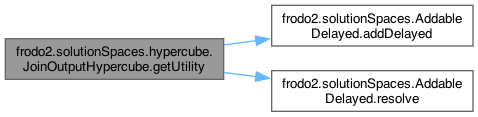
References frodo2.solutionSpaces.AddableDelayed< T extends Addable< T > >.addDelayed(), addition, inputs, and frodo2.solutionSpaces.AddableDelayed< T extends Addable< T > >.resolve().
◆ isIncludedIn() [1/2]
| boolean frodo2.solutionSpaces.hypercube.JoinOutputHypercube< V extends Addable< V >, U extends Addable< U > >.isIncludedIn | ( | BasicUtilitySolutionSpace< V, U > | space | ) |
- See also
- Hypercube#isIncludedIn(BasicUtilitySolutionSpace)
- Todo
- Auto-generated method stub
◆ isIncludedIn() [2/2]
| boolean frodo2.solutionSpaces.hypercube.JoinOutputHypercube< V extends Addable< V >, U extends Addable< U > >.isIncludedIn | ( | UtilitySolutionSpace< V, U > | space | ) |
- See also
- Hypercube#isIncludedIn(UtilitySolutionSpace)
- Todo
- Auto-generated method stub
◆ iteratorBestFirst()
| UtilitySolutionSpace.IteratorBestFirst< V, U > frodo2.solutionSpaces.hypercube.JoinOutputHypercube< V extends Addable< V >, U extends Addable< U > >.iteratorBestFirst | ( | boolean | maximize | ) |

◆ join() [1/4]
| SolutionSpace< V > frodo2.solutionSpaces.hypercube.JoinOutputHypercube< V extends Addable< V >, U extends Addable< U > >.join | ( | SolutionSpace< V > | space | ) |
- See also
- Hypercube#join(SolutionSpace)
- Todo
- Auto-generated method stub
◆ join() [2/4]
| SolutionSpace< V > frodo2.solutionSpaces.hypercube.JoinOutputHypercube< V extends Addable< V >, U extends Addable< U > >.join | ( | SolutionSpace< V > | space, |
| String[] | totalVariables ) |
- See also
- Hypercube.join(SolutionSpace, java.lang.String[])
- Todo
- Auto-generated method stub
Referenced by blindProject(), and project().
◆ join() [3/4]
| SolutionSpace< V > frodo2.solutionSpaces.hypercube.JoinOutputHypercube< V extends Addable< V >, U extends Addable< U > >.join | ( | SolutionSpace< V >[] | spaces | ) |
- See also
- Hypercube#join(SolutionSpace[])
- Todo
- Auto-generated method stub
◆ join() [4/4]
| SolutionSpace< V > frodo2.solutionSpaces.hypercube.JoinOutputHypercube< V extends Addable< V >, U extends Addable< U > >.join | ( | SolutionSpace< V >[] | spaces, |
| String[] | totalVariablesOrder ) |
- See also
- Hypercube.join(SolutionSpace[], java.lang.String[])
- Todo
- Auto-generated method stub
◆ joinMinNCCCs() [1/2]
| UtilitySolutionSpace< V, U > frodo2.solutionSpaces.hypercube.JoinOutputHypercube< V extends Addable< V >, U extends Addable< U > >.joinMinNCCCs | ( | UtilitySolutionSpace< V, U > | space | ) |
- See also
- Hypercube#joinMinNCCCs(UtilitySolutionSpace)
- Todo
- Auto-generated method stub
◆ joinMinNCCCs() [2/2]
| UtilitySolutionSpace< V, U > frodo2.solutionSpaces.hypercube.JoinOutputHypercube< V extends Addable< V >, U extends Addable< U > >.joinMinNCCCs | ( | UtilitySolutionSpace< V, U >[] | spaces | ) |
- See also
- Hypercube#joinMinNCCCs(UtilitySolutionSpace[])
References inputs, and frodo2.solutionSpaces.UtilitySolutionSpace< V extends Addable< V >, U extends Addable< U > >.joinMinNCCCs().

◆ knows()
| boolean frodo2.solutionSpaces.hypercube.JoinOutputHypercube< V extends Addable< V >, U extends Addable< U > >.knows | ( | Class<?> | spaceClass | ) |
- See also
- BasicHypercube.knows(java.lang.Class)
References knownSpaces.
◆ newIter()
|
protected |
◆ prettyPrint()
| String frodo2.solutionSpaces.hypercube.JoinOutputHypercube< V extends Addable< V >, U extends Addable< U > >.prettyPrint | ( | U | ignoredUtil | ) |
- See also
- Hypercube#prettyPrint(java.io.Serializable)
- Todo
- Auto-generated method stub
◆ project() [1/2]
| UtilitySolutionSpace.ProjOutput< V, U > frodo2.solutionSpaces.hypercube.JoinOutputHypercube< V extends Addable< V >, U extends Addable< U > >.project | ( | int | numberToProject, |
| boolean | maximum ) |
- See also
- Hypercube.project(int, boolean)
- Todo
- Auto-generated method stub
◆ project() [2/2]
| ProjOutput< V, U > frodo2.solutionSpaces.hypercube.JoinOutputHypercube< V extends Addable< V >, U extends Addable< U > >.project | ( | String[] | varsOut, |
| final boolean | maximum ) |
- See also
- Hypercube.project(java.lang.String[], boolean)
- Todo
- Improvement: call .getCurrentUtility(bound) on the last space
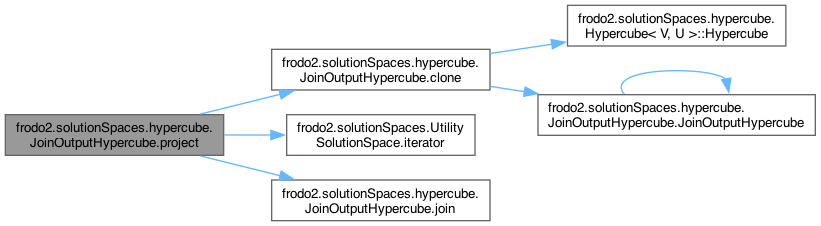
References clone(), inputs, frodo2.solutionSpaces.UtilitySolutionSpace< V extends Addable< V >, U extends Addable< U > >.iterator(), frodo2.java, and join().
◆ projectAll()
| ProjOutput< V, U > frodo2.solutionSpaces.hypercube.JoinOutputHypercube< V extends Addable< V >, U extends Addable< U > >.projectAll | ( | boolean | maximum, |
| String[] | order ) |
References reorderDomains(), and frodo2.solutionSpaces.hypercube.Hypercube< V, U >.sparseIter().

◆ projExpectMonotone()
| ProjOutput< V, U > frodo2.solutionSpaces.hypercube.JoinOutputHypercube< V extends Addable< V >, U extends Addable< U > >.projExpectMonotone | ( | final String | varOut, |
| Map< String, UtilitySolutionSpace< V, U > > | distributions, | ||
| final boolean | maximum ) |
- See also
- Hypercube.projExpectMonotone(java.lang.String, java.util.Map, boolean)
- Todo
- Performance improvements
- Todo
- Check whether all spaces involve varOut
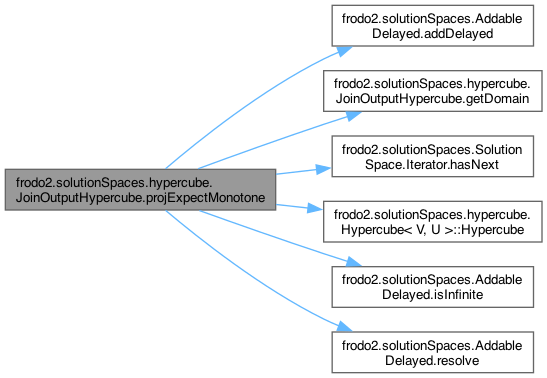
References frodo2.solutionSpaces.AddableDelayed< T extends Addable< T > >.addDelayed(), addition, getDomain(), frodo2.solutionSpaces.SolutionSpace< V extends Addable< V > >.Iterator< V >.hasNext(), frodo2.solutionSpaces.hypercube.Hypercube< V, U >.Hypercube(), inputs, frodo2.solutionSpaces.AddableDelayed< T extends Addable< T > >.isInfinite(), and frodo2.solutionSpaces.AddableDelayed< T extends Addable< T > >.resolve().
◆ readExternal()
| void frodo2.solutionSpaces.hypercube.JoinOutputHypercube< V extends Addable< V >, U extends Addable< U > >.readExternal | ( | ObjectInput | in | ) | throws IOException, ClassNotFoundException |
- See also
- java.io.Externalizable#readExternal(java.io.ObjectInput)
References nbrUtils, and readExternal().
Referenced by readExternal().
◆ readResolve()
|
private |
Replaces a de-serialized JoinOutputHypercube with a pure Hypercube.
- Returns
- a Hypercube corresponding to the explicit representation of this JoinOutputHypercube
- Exceptions
-
ObjectStreamException if an error occurs
References frodo2.solutionSpaces.hypercube.Hypercube< V, U >.Hypercube(), and readResolve().
Referenced by readResolve().

◆ renameAllVars()
| BasicHypercube< V, U > frodo2.solutionSpaces.hypercube.JoinOutputHypercube< V extends Addable< V >, U extends Addable< U > >.renameAllVars | ( | String[] | newVarNames | ) |
- Todo
- Auto-generated method stub
◆ renameVariable()
| void frodo2.solutionSpaces.hypercube.JoinOutputHypercube< V extends Addable< V >, U extends Addable< U > >.renameVariable | ( | String | oldName, |
| String | newName ) |
- See also
- Hypercube#renameVariable(java.lang.String, java.lang.String)
References inputs.
◆ reorderDomains()
|
private |
Reorders the domains according to the input variable order.
- Parameters
-
varOrder new variable order nbrVars number of variables
- Returns
- the reordered array of domains
References frodo2.solutionSpaces.hypercube.Hypercube< V, U >.equals().
Referenced by changeVariablesOrder(), and projectAll().

◆ resolve() [1/2]
| Hypercube< V, U > frodo2.solutionSpaces.hypercube.JoinOutputHypercube< V extends Addable< V >, U extends Addable< U > >.resolve | ( | ) |
- See also
- Hypercube.resolve()
References frodo2.solutionSpaces.hypercube.Hypercube< V, U >.Hypercube(), and resolve().
Referenced by iteratorBestFirst(), and resolve().

◆ resolve() [2/2]
| Hypercube< V, U > frodo2.solutionSpaces.hypercube.JoinOutputHypercube< V extends Addable< V >, U extends Addable< U > >.resolve | ( | boolean | sparse | ) |
- See also
- Hypercube.resolve(boolean)
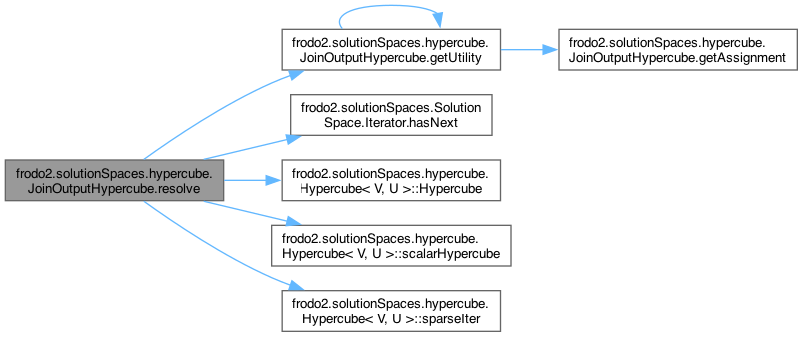
References getUtility(), frodo2.solutionSpaces.SolutionSpace< V extends Addable< V > >.Iterator< V >.hasNext(), frodo2.solutionSpaces.hypercube.Hypercube< V, U >.Hypercube(), nbrUtils, frodo2.solutionSpaces.hypercube.Hypercube< V, U >.scalarHypercube(), and frodo2.solutionSpaces.hypercube.Hypercube< V, U >.sparseIter().
◆ sample()
| Map< V, Double > frodo2.solutionSpaces.hypercube.JoinOutputHypercube< V extends Addable< V >, U extends Addable< U > >.sample | ( | int | nbrSamples | ) |
- See also
- Hypercube.sample(int)
- Todo
- Auto-generated method stub
◆ setDefaultUtility()
| void frodo2.solutionSpaces.hypercube.JoinOutputHypercube< V extends Addable< V >, U extends Addable< U > >.setDefaultUtility | ( | U | utility | ) |
- See also
- Hypercube#setDefaultUtility(java.io.Serializable)
- Todo
- Auto-generated method stub
◆ setDomain()
| void frodo2.solutionSpaces.hypercube.JoinOutputHypercube< V extends Addable< V >, U extends Addable< U > >.setDomain | ( | String | var, |
| V[] | dom ) |
- See also
- Hypercube#setDomain(java.lang.String, V[])
References inputs.
◆ setUtility() [1/2]
| void frodo2.solutionSpaces.hypercube.JoinOutputHypercube< V extends Addable< V >, U extends Addable< U > >.setUtility | ( | long | index, |
| U | utility ) |
- See also
- Hypercube#setUtility(long, java.io.Serializable)
- Todo
- Auto-generated method stub
◆ setUtility() [2/2]
| boolean frodo2.solutionSpaces.hypercube.JoinOutputHypercube< V extends Addable< V >, U extends Addable< U > >.setUtility | ( | V[] | variablesValues, |
| U | utility ) |
- See also
- Hypercube#setUtility(V[], java.io.Serializable)
- Todo
- Auto-generated method stub
◆ slice() [1/3]
| Hypercube< V, U > frodo2.solutionSpaces.hypercube.JoinOutputHypercube< V extends Addable< V >, U extends Addable< U > >.slice | ( | String | var, |
| V[] | subDomain ) |
- See also
- Hypercube.slice(java.lang.String, Addable[])
- Todo
- Auto-generated method stub
References frodo2.solutionSpaces.hypercube.Hypercube< V, U >.Hypercube().

◆ slice() [2/3]
|
protected |
- See also
- BasicHypercube.slice(java.lang.String[], Addable[][], Addable[][], long, java.lang.Class)
References addition, inputs, and JoinOutputHypercube().

◆ slice() [3/3]
| Hypercube< V, U > frodo2.solutionSpaces.hypercube.JoinOutputHypercube< V extends Addable< V >, U extends Addable< U > >.slice | ( | V[] | variablesValues | ) |
- See also
- Hypercube#slice(Addable[])
- Todo
- Auto-generated method stub
References frodo2.solutionSpaces.hypercube.Hypercube< V, U >.Hypercube().

◆ split()
| Hypercube< V, U > frodo2.solutionSpaces.hypercube.JoinOutputHypercube< V extends Addable< V >, U extends Addable< U > >.split | ( | U | threshold, |
| boolean | maximum ) |
- See also
- Hypercube#split(Addable, boolean)
- Todo
- Auto-generated method stub
References frodo2.solutionSpaces.hypercube.Hypercube< V, U >.Hypercube().

◆ toString()
| String frodo2.solutionSpaces.hypercube.JoinOutputHypercube< V extends Addable< V >, U extends Addable< U > >.toString | ( | ) |
- See also
- BasicHypercube.toString()
References inputs.
◆ writeExternal()
| void frodo2.solutionSpaces.hypercube.JoinOutputHypercube< V extends Addable< V >, U extends Addable< U > >.writeExternal | ( | ObjectOutput | out | ) | throws IOException |
- See also
- java.io.Externalizable#writeExternal(java.io.ObjectOutput)
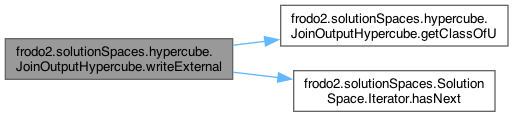
References getClassOfU(), frodo2.solutionSpaces.SolutionSpace< V extends Addable< V > >.Iterator< V >.hasNext(), and nbrUtils.
Member Data Documentation
◆ addition
|
protected |
Whether we are adding or multiplying.
Referenced by blindProject(), compose(), expectation(), getUtility(), JoinOutputHypercube(), JoinOutputHypercube(), JoinOutputHypercube(), JoinOutputHypercube(), newIter(), projExpectMonotone(), and slice().
◆ inputs
|
protected |
The input spaces to the join.
Referenced by blindProject(), changeVariablesOrder(), clone(), compose(), expectation(), getClassOfU(), getUtility(), joinMinNCCCs(), JoinOutputHypercube(), JoinOutputHypercube(), JoinOutputHypercube(), newIter(), project(), projExpectMonotone(), renameVariable(), setDomain(), slice(), and toString().
◆ knownSpaces
|
staticprivate |
The types of spaces that we know how to handle.
Referenced by [static initializer](), and knows().
◆ nbrUtils
|
protected |
Number of solutions.
Referenced by getAssignment(), getNumberOfSolutions(), JoinOutputHypercube(), JoinOutputHypercube(), JoinOutputHypercube(), readExternal(), resolve(), and writeExternal().
The documentation for this class was generated from the following file:
- src/frodo2/solutionSpaces/hypercube/JoinOutputHypercube.java
