An abstract problem instance. More...

Public Member Functions | |
| String | toString () |
| String | getAgent () |
| Set< String > | getVariables (final String owner) |
| V[] | getDomain (String var) |
| int | getDomainSize (String var) |
| Map< String, Set< String > > | getNeighborhoods () |
| Map< String, Set< String > > | getAnonymNeighborhoods () |
| Map< String, Set< String > > | getAnonymNeighborhoods (String agent) |
| Map< String, Integer > | getNeighborhoodSizes () |
| Map< String, Integer > | getNeighborhoodSizes (String agent) |
| int | getNbrNeighbors (String var) |
| int | getNbrNeighbors (String var, boolean withAnonymVars) |
| HashSet< String > | getNeighborVars (String var) |
| HashSet< String > | getNeighborVars (String var, boolean withAnonymVars) |
| int | getNumberOfCoordinationConstraints () |
| Map< String, Set< String > > | getAgentNeighborhoods () |
| Map< String, Set< String > > | getAgentNeighborhoods (String agent) |
| Map< String, Set< String > > | getVarScopes () |
| void | setAgent (String name) |
| Sets the name of the agent owning this subproblem. | |
| Set< String > | getAgents () |
| Class< U > | getUtilClass () |
| U | getMinInfUtility () |
| U | getPlusInfUtility () |
| int | getNbrVars () |
| int | getNbrVars (String agent) |
| int | getNbrIntVars () |
| Map< String, String > | getOwners () |
| String | getOwner (String var) |
| boolean | isRandom (String var) |
| List< ? extends UtilitySolutionSpace< V, U > > | getSolutionSpaces () |
| List< ? extends UtilitySolutionSpace< V, U > > | getSolutionSpaces (boolean withAnonymVars) |
| List< ? extends UtilitySolutionSpace< V, U > > | getSolutionSpaces (String var, boolean withAnonymVars) |
| List<? extends UtilitySolutionSpace< V, U > > | getSolutionSpaces (String var, Set< String > forbiddenVars) |
| List<? extends UtilitySolutionSpace< V, U > > | getSolutionSpaces (String var, final boolean withAnonymVars, Set< String > forbiddenVars) |
| List<? extends UtilitySolutionSpace< V, U > > | getSolutionSpaces (Set< String > vars, boolean withAnonymVars, Set< String > forbiddenVars) |
| UtilitySolutionSpace< V, U > | getUtility (Map< String, V > assignments) |
| Set< String > | getVariables () |
| Set< String > | getMyVars () |
| Set< String > | getAnonymVars () |
| Set< String > | getRandVars () |
| Set< String > | getAllVars () |
| U | getZeroUtility () |
| boolean | maximize () |
| void | setMaximize (final boolean maximize) |
| void | setUtilClass (Class< U > utilClass) |
| boolean | addAgent (String agent) |
| Map< String, Set< String > > | getNeighborhoods (String agent) |
| Map< String, Set< String > > | getNeighborhoods (String agent, boolean withAnonymVars, boolean onlyAnonymVars) |
| UtilitySolutionSpace< V, U > | addUnarySpace (String name, String var, V[] dom, U[] utils) |
| Public Member Functions inherited from frodo2.solutionSpaces.DCOPProblemInterface< V extends Addable< V >, U extends Addable< U > > | |
| Set< String > | getExtVars () |
| boolean | addVariable (String name, String owner, String domain) |
| Adds a new variable. | |
| boolean | addVariable (String name, String owner, V[] domain) |
| Adds a new variable. | |
| void | rescale (U multiply, U add) |
| Rescales the problem. | |
| void | setDomain (String var, V[] dom) |
| Sets the domain of a variable. | |
| boolean | setOwner (String var, String owner) |
| Sets the owner agent for the input variable. | |
| List< ? extends UtilitySolutionSpace< V, U > > | getProbabilitySpaces () |
| Returns the probability spaces in the problem. | |
| Map< String, ? extends UtilitySolutionSpace< V, U > > | getProbabilitySpacePerRandVar () |
| Returns the probability space of each random variable in the problem. | |
| List< ? extends UtilitySolutionSpace< V, U > > | getProbabilitySpaces (String var) |
| Returns the probability spaces involving the input variable. | |
| void | setProbSpace (String var, Map< V, Double > prob) |
| Adds to the problem a probability space for the input random variable. | |
| boolean | removeSpace (String name) |
| Removes the space with the given name. | |
| boolean | addSolutionSpace (UtilitySolutionSpace< V, U > space) |
| Adds a solution space to the problem. | |
| UtilitySolutionSpace< V, U > | getUtility (Map< String, V > assignments, final boolean withAnonymVars) |
| Computes the total utility of the input assignment to variables. | |
| UtilitySolutionSpace< V, U > | getExpectedUtility (Map< String, V > assignments) |
| Computes the expectation over the random variables of the utility for the input assignments. | |
| UtilitySolutionSpace< V, U > | getParamUtility (Map< String[], BasicUtilitySolutionSpace< V, ArrayList< V > > > assignments) |
| Computes the total utility of the input assignment to variables, conditioned on the values of parameters. | |
| DCOPProblemInterface< V, U > | getSubProblem (String agent) |
| void | ground (String var, V val) |
| Adds a constraint that enforces that var = val. | |
| Public Member Functions inherited from frodo2.solutionSpaces.ProblemInterface< V, U > | |
| void | reset (ProblemInterface< V, U > newProblem) |
| Resets this problem to be the same as the input one. | |
| void | setDomClass (Class< V > domClass) |
| Sets the class to be used for variable values. | |
| Class< V > | getDomClass () |
| void | setUtilClass (Class< U > utilClass) |
| Sets the class to be used for utility values. | |
| Class< U > | getUtilClass () |
| U | getZeroUtility () |
| U | getPlusInfUtility () |
| U | getMinInfUtility () |
| String | getAgent () |
| Set< String > | getAgents () |
| ProblemInterface< V, U > | getSubProblem (String agent) |
| Builds the subproblem description for a given agent by extracting it from the overall problem description. | |
| boolean | multipleTypes () |
| void | incrNCCCs (long incr) |
| Increments the number of constraint checks. | |
| long | getNCCCs () |
| void | setNCCCs (long ncccs) |
| Sets the NCCC count. | |
Protected Member Functions | |
| AbstractProblem () | |
| Constructor. | |
| AbstractProblem (boolean maximize, boolean publicAgents, boolean mpc, boolean extendedRandNeighborhoods) | |
| Constructor. | |
| Set< String > | getScope (String var) |
| Returns the agent scope of the input anonymous variable. | |
| U | getInfeasibleUtil () |
| void | setVarScope (String var, Set< String > scope) |
| Sets the agent scope of a shared variable. | |
Protected Attributes | |
| boolean | maximize |
| Whether this is a maximization or a minimization problem. | |
| Map< String, String > | owners |
| For each variable, the name of its owner agent. | |
| Set< String > | randVars |
| The random variables. | |
| HashSet< String > | agents = new HashSet<String> () |
| The set of agents. | |
| List< UtilitySolutionSpace< V, U > > | spaces |
| The list of solution spaces. | |
| Map< String, V[]> | domains |
| The domain of each variable. | |
| Class< U > | utilClass = (Class<U>) AddableInteger.class |
| The class used for utility values. | |
| String | agentName |
| The name of the agent owning this subproblem. | |
| final boolean | publicAgents |
| Whether each agent knows the identities of all agents. | |
| final boolean | extendedRandNeighborhoods |
If true, neighborhood relationships between decision variables are extended through random variables. | |
| final boolean | mpc |
| Whether to behave in MPC mode. | |
| HashMap< String, Set< String > > | varScopes = new HashMap<String, Set<String>> () |
| For each shared variable, the names of the agents in its scope. | |
Private Member Functions | |
| HashSet< String > | getAgentNeighbors (String var) |
| Returns the neighboring agents of the input variable. | |
Static Private Attributes | |
| static final long | serialVersionUID = -1050483109528194609L |
| Used for serialization. | |
Detailed Description
An abstract problem instance.
- Parameters
-
<V> the class used for variable values <U> the class used for utility values
Constructor & Destructor Documentation
◆ AbstractProblem() [1/2]
|
protected |
Constructor.
References AbstractProblem().
Referenced by AbstractProblem().
◆ AbstractProblem() [2/2]
|
protected |
Constructor.
- Parameters
-
maximize Whether this is a maximization or a minimization problem publicAgents Whether each agent knows the identities of all agents mpc Whether to behave in MPC mode (each agent knows the identities of all agents and knows all variables) extendedRandNeighborhoods Whether neighborhood relationships between decision variables are extended through random variables
References extendedRandNeighborhoods, maximize, mpc, and publicAgents.
Member Function Documentation
◆ addAgent()
| boolean frodo2.algorithms.AbstractProblem< V extends Addable< V >, U extends Addable< U > >.addAgent | ( | String | agent | ) |
- See also
- DCOPProblemInterface.addAgent(java.lang.String)
Implements frodo2.solutionSpaces.DCOPProblemInterface< V extends Addable< V >, U extends Addable< U > >.
Referenced by frodo2.solutionSpaces.JaCoP.JaCoPproblem< V extends Addable< V > >.clone(), frodo2.algorithms.XCSPparser< V extends Addable< V >, U extends Addable< U > >.parse(), and frodo2.solutionSpaces.JaCoP.JaCoPxcspParser< V extends Addable< V > >.parse().
◆ addUnarySpace()
| UtilitySolutionSpace< V, U > frodo2.algorithms.AbstractProblem< V extends Addable< V >, U extends Addable< U > >.addUnarySpace | ( | String | name, |
| String | var, | ||
| V[] | dom, | ||
| U[] | utils ) |
- See also
- DCOPProblemInterface#addUnarySpace(String, String, Addable[], Addable[])
Implements frodo2.solutionSpaces.DCOPProblemInterface< V extends Addable< V >, U extends Addable< U > >.
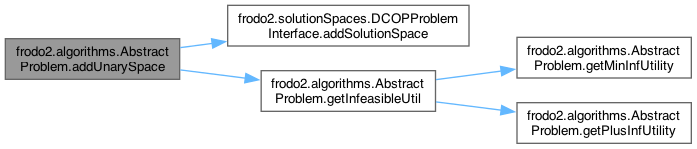
References frodo2.solutionSpaces.DCOPProblemInterface< V extends Addable< V >, U extends Addable< U > >.addSolutionSpace(), and getInfeasibleUtil().
◆ getAgent()
| String frodo2.algorithms.AbstractProblem< V extends Addable< V >, U extends Addable< U > >.getAgent | ( | ) |
- See also
- DCOPProblemInterface.getAgent()
References agentName.
Referenced by frodo2.solutionSpaces.JaCoP.JaCoPproblem< V extends Addable< V > >.clone(), getAnonymNeighborhoods(), getNeighborhoods(), and getNeighborhoodSizes().
◆ getAgentNeighborhoods() [1/2]
| Map< String, Set< String > > frodo2.algorithms.AbstractProblem< V extends Addable< V >, U extends Addable< U > >.getAgentNeighborhoods | ( | ) |
Implements frodo2.solutionSpaces.DCOPProblemInterface< V extends Addable< V >, U extends Addable< U > >.
References agentName, and getAgentNeighborhoods().
Referenced by getAgentNeighborhoods().
◆ getAgentNeighborhoods() [2/2]
| Map< String, Set< String > > frodo2.algorithms.AbstractProblem< V extends Addable< V >, U extends Addable< U > >.getAgentNeighborhoods | ( | String | agent | ) |
- See also
- DCOPProblemInterface.getAgentNeighborhoods(java.lang.String)
Implements frodo2.solutionSpaces.DCOPProblemInterface< V extends Addable< V >, U extends Addable< U > >.
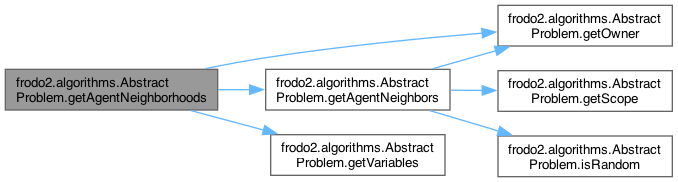
References getAgentNeighbors(), getOwner(), and getVariables().
◆ getAgentNeighbors()
|
private |
Returns the neighboring agents of the input variable.
- Parameters
-
var the variable
- Returns
- the variable's neighboring agents
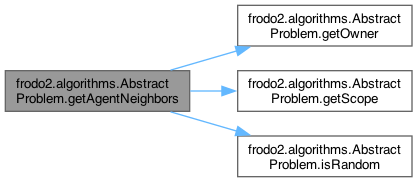
References extendedRandNeighborhoods, getOwner(), getScope(), and isRandom().
Referenced by getAgentNeighborhoods().
◆ getAgents()
| Set< String > frodo2.algorithms.AbstractProblem< V extends Addable< V >, U extends Addable< U > >.getAgents | ( | ) |
◆ getAllVars()
| Set< String > frodo2.algorithms.AbstractProblem< V extends Addable< V >, U extends Addable< U > >.getAllVars | ( | ) |
Implements frodo2.solutionSpaces.DCOPProblemInterface< V extends Addable< V >, U extends Addable< U > >.
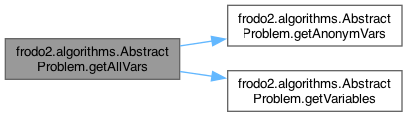
References getAnonymVars(), and getVariables().
◆ getAnonymNeighborhoods() [1/2]
| Map< String, Set< String > > frodo2.algorithms.AbstractProblem< V extends Addable< V >, U extends Addable< U > >.getAnonymNeighborhoods | ( | ) |
Implements frodo2.solutionSpaces.DCOPProblemInterface< V extends Addable< V >, U extends Addable< U > >.
Reimplemented in frodo2.solutionSpaces.JaCoP.JaCoPproblem< V extends Addable< V > >.
References getAgent(), and getAnonymNeighborhoods().
Referenced by getAnonymNeighborhoods().

◆ getAnonymNeighborhoods() [2/2]
| Map< String, Set< String > > frodo2.algorithms.AbstractProblem< V extends Addable< V >, U extends Addable< U > >.getAnonymNeighborhoods | ( | String | agent | ) |
- See also
- DCOPProblemInterface.getAnonymNeighborhoods(java.lang.String)
Implements frodo2.solutionSpaces.DCOPProblemInterface< V extends Addable< V >, U extends Addable< U > >.
Reimplemented in frodo2.solutionSpaces.JaCoP.JaCoPproblem< V extends Addable< V > >.
References getNeighborhoods().

◆ getAnonymVars()
| Set< String > frodo2.algorithms.AbstractProblem< V extends Addable< V >, U extends Addable< U > >.getAnonymVars | ( | ) |
Implements frodo2.solutionSpaces.DCOPProblemInterface< V extends Addable< V >, U extends Addable< U > >.
Referenced by getAllVars().
◆ getDomain()
| V[] frodo2.algorithms.AbstractProblem< V extends Addable< V >, U extends Addable< U > >.getDomain | ( | String | var | ) |
- See also
- DCOPProblemInterface.getDomain(java.lang.String)
Implements frodo2.solutionSpaces.DCOPProblemInterface< V extends Addable< V >, U extends Addable< U > >.
Referenced by getDomainSize().
◆ getDomainSize()
| int frodo2.algorithms.AbstractProblem< V extends Addable< V >, U extends Addable< U > >.getDomainSize | ( | String | var | ) |
- See also
- DCOPProblemInterface.getDomainSize(java.lang.String)
Implements frodo2.solutionSpaces.DCOPProblemInterface< V extends Addable< V >, U extends Addable< U > >.
References getDomain().

◆ getInfeasibleUtil()
|
protected |
- Returns
- -INF if we are maximizing, +INF if we are minimizing
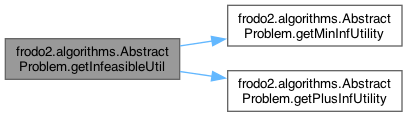
References getMinInfUtility(), and getPlusInfUtility().
Referenced by addUnarySpace(), and frodo2.solutionSpaces.JaCoP.JaCoPproblem< V extends Addable< V > >.getUtility().
◆ getMinInfUtility()
| U frodo2.algorithms.AbstractProblem< V extends Addable< V >, U extends Addable< U > >.getMinInfUtility | ( | ) |
References utilClass.
Referenced by getInfeasibleUtil(), and setMaximize().
◆ getMyVars()
| Set< String > frodo2.algorithms.AbstractProblem< V extends Addable< V >, U extends Addable< U > >.getMyVars | ( | ) |
- See also
- DCOPProblemInterface.getMyVars()
Implements frodo2.solutionSpaces.DCOPProblemInterface< V extends Addable< V >, U extends Addable< U > >.
References agentName.
Referenced by getNbrIntVars().
◆ getNbrIntVars()
| int frodo2.algorithms.AbstractProblem< V extends Addable< V >, U extends Addable< U > >.getNbrIntVars | ( | ) |
Implements frodo2.solutionSpaces.DCOPProblemInterface< V extends Addable< V >, U extends Addable< U > >.
References getMyVars().

◆ getNbrNeighbors() [1/2]
| int frodo2.algorithms.AbstractProblem< V extends Addable< V >, U extends Addable< U > >.getNbrNeighbors | ( | String | var | ) |
- See also
- DCOPProblemInterface.getNbrNeighbors(java.lang.String)
Implements frodo2.solutionSpaces.DCOPProblemInterface< V extends Addable< V >, U extends Addable< U > >.
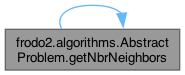
References getNbrNeighbors().
Referenced by getNbrNeighbors().
◆ getNbrNeighbors() [2/2]
| int frodo2.algorithms.AbstractProblem< V extends Addable< V >, U extends Addable< U > >.getNbrNeighbors | ( | String | var, |
| boolean | withAnonymVars ) |
- See also
- DCOPProblemInterface.getNbrNeighbors(java.lang.String, boolean)
Implements frodo2.solutionSpaces.DCOPProblemInterface< V extends Addable< V >, U extends Addable< U > >.
References getNeighborVars().

◆ getNbrVars() [1/2]
| int frodo2.algorithms.AbstractProblem< V extends Addable< V >, U extends Addable< U > >.getNbrVars | ( | ) |
Implements frodo2.solutionSpaces.DCOPProblemInterface< V extends Addable< V >, U extends Addable< U > >.
References getVariables().
Referenced by frodo2.solutionSpaces.JaCoP.tests.JaCoPproblemTest< V extends Addable< V > >.solve().

◆ getNbrVars() [2/2]
| int frodo2.algorithms.AbstractProblem< V extends Addable< V >, U extends Addable< U > >.getNbrVars | ( | String | agent | ) |
- See also
- DCOPProblemInterface.getNbrVars(java.lang.String)
Implements frodo2.solutionSpaces.DCOPProblemInterface< V extends Addable< V >, U extends Addable< U > >.
◆ getNeighborhoods() [1/3]
| Map< String, Set< String > > frodo2.algorithms.AbstractProblem< V extends Addable< V >, U extends Addable< U > >.getNeighborhoods | ( | ) |
Implements frodo2.solutionSpaces.DCOPProblemInterface< V extends Addable< V >, U extends Addable< U > >.
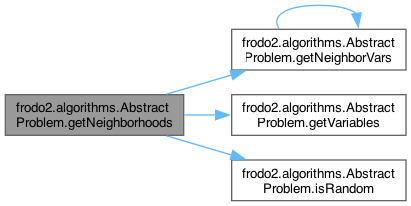
References getAgent(), and getNeighborhoods().
Referenced by getAnonymNeighborhoods(), getNeighborhoods(), getNeighborhoods(), and getNeighborhoodSizes().

◆ getNeighborhoods() [2/3]
| Map< String, Set< String > > frodo2.algorithms.AbstractProblem< V extends Addable< V >, U extends Addable< U > >.getNeighborhoods | ( | String | agent | ) |
- See also
- DCOPProblemInterface.getNeighborhoods(java.lang.String)
Implements frodo2.solutionSpaces.DCOPProblemInterface< V extends Addable< V >, U extends Addable< U > >.
References getNeighborhoods().

◆ getNeighborhoods() [3/3]
| Map< String, Set< String > > frodo2.algorithms.AbstractProblem< V extends Addable< V >, U extends Addable< U > >.getNeighborhoods | ( | String | agent, |
| boolean | withAnonymVars, | ||
| boolean | onlyAnonymVars ) |
- See also
- DCOPProblemInterface.getNeighborhoods(java.lang.String, boolean, boolean)
Implements frodo2.solutionSpaces.DCOPProblemInterface< V extends Addable< V >, U extends Addable< U > >.
References getNeighborVars(), getVariables(), and isRandom().
◆ getNeighborhoodSizes() [1/2]
| Map< String, Integer > frodo2.algorithms.AbstractProblem< V extends Addable< V >, U extends Addable< U > >.getNeighborhoodSizes | ( | ) |
Implements frodo2.solutionSpaces.DCOPProblemInterface< V extends Addable< V >, U extends Addable< U > >.
References getAgent(), and getNeighborhoodSizes().
Referenced by getNeighborhoodSizes().

◆ getNeighborhoodSizes() [2/2]
| Map< String, Integer > frodo2.algorithms.AbstractProblem< V extends Addable< V >, U extends Addable< U > >.getNeighborhoodSizes | ( | String | agent | ) |
- See also
- DCOPProblemInterface.getNeighborhoodSizes(java.lang.String)
Implements frodo2.solutionSpaces.DCOPProblemInterface< V extends Addable< V >, U extends Addable< U > >.
References getNeighborhoods().

◆ getNeighborVars() [1/2]
| HashSet< String > frodo2.algorithms.AbstractProblem< V extends Addable< V >, U extends Addable< U > >.getNeighborVars | ( | String | var | ) |
- See also
- DCOPProblemInterface.getNeighborVars(java.lang.String)
Implements frodo2.solutionSpaces.DCOPProblemInterface< V extends Addable< V >, U extends Addable< U > >.
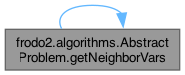
References getNeighborVars().
Referenced by getNbrNeighbors(), getNeighborhoods(), and getNeighborVars().
◆ getNeighborVars() [2/2]
| HashSet< String > frodo2.algorithms.AbstractProblem< V extends Addable< V >, U extends Addable< U > >.getNeighborVars | ( | String | var, |
| boolean | withAnonymVars ) |
- See also
- DCOPProblemInterface.getNeighborVars(java.lang.String, boolean)
Implements frodo2.solutionSpaces.DCOPProblemInterface< V extends Addable< V >, U extends Addable< U > >.
References extendedRandNeighborhoods, and getOwner().

◆ getNumberOfCoordinationConstraints()
| int frodo2.algorithms.AbstractProblem< V extends Addable< V >, U extends Addable< U > >.getNumberOfCoordinationConstraints | ( | ) |
◆ getOwner()
| String frodo2.algorithms.AbstractProblem< V extends Addable< V >, U extends Addable< U > >.getOwner | ( | String | var | ) |
- See also
- DCOPProblemInterface.getOwner(java.lang.String)
Implements frodo2.solutionSpaces.DCOPProblemInterface< V extends Addable< V >, U extends Addable< U > >.
Referenced by frodo2.solutionSpaces.JaCoP.JaCoPproblem< V extends Addable< V > >.clone(), getAgentNeighborhoods(), getAgentNeighbors(), getNeighborVars(), frodo2.solutionSpaces.JaCoP.JaCoPproblem< V extends Addable< V > >.getSubProblem(), getVariables(), setVarScope(), and frodo2.solutionSpaces.JaCoP.tests.JaCoPproblemTest< V extends Addable< V > >.solve().
◆ getOwners()
| Map< String, String > frodo2.algorithms.AbstractProblem< V extends Addable< V >, U extends Addable< U > >.getOwners | ( | ) |
◆ getPlusInfUtility()
| U frodo2.algorithms.AbstractProblem< V extends Addable< V >, U extends Addable< U > >.getPlusInfUtility | ( | ) |
References utilClass.
Referenced by getInfeasibleUtil(), and setMaximize().
◆ getRandVars()
| Set< String > frodo2.algorithms.AbstractProblem< V extends Addable< V >, U extends Addable< U > >.getRandVars | ( | ) |
◆ getScope()
|
protected |
Returns the agent scope of the input anonymous variable.
- Parameters
-
var the variable
- Returns
- the agent scope of the variable
References varScopes.
Referenced by getAgentNeighbors().
◆ getSolutionSpaces() [1/6]
| List< ? extends UtilitySolutionSpace< V, U > > frodo2.algorithms.AbstractProblem< V extends Addable< V >, U extends Addable< U > >.getSolutionSpaces | ( | ) |
Implements frodo2.solutionSpaces.DCOPProblemInterface< V extends Addable< V >, U extends Addable< U > >.
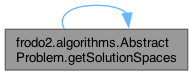
References getSolutionSpaces().
Referenced by frodo2.solutionSpaces.JaCoP.JaCoPproblem< V extends Addable< V > >.clone(), getSolutionSpaces(), getSolutionSpaces(), getSolutionSpaces(), getSolutionSpaces(), getSolutionSpaces(), frodo2.solutionSpaces.JaCoP.JaCoPproblem< V extends Addable< V > >.getUtility(), and frodo2.solutionSpaces.JaCoP.tests.JaCoPproblemTest< V extends Addable< V > >.solve().
◆ getSolutionSpaces() [2/6]
| List< ? extends UtilitySolutionSpace< V, U > > frodo2.algorithms.AbstractProblem< V extends Addable< V >, U extends Addable< U > >.getSolutionSpaces | ( | boolean | withAnonymVars | ) |
Implements frodo2.solutionSpaces.DCOPProblemInterface< V extends Addable< V >, U extends Addable< U > >.
References getSolutionSpaces().

◆ getSolutionSpaces() [3/6]
| List<? extends UtilitySolutionSpace< V, U > > frodo2.algorithms.AbstractProblem< V extends Addable< V >, U extends Addable< U > >.getSolutionSpaces | ( | Set< String > | vars, |
| boolean | withAnonymVars, | ||
| Set< String > | forbiddenVars ) |
- See also
- DCOPProblemInterface.getSolutionSpaces(java.util.Set, boolean, java.util.Set)
Implements frodo2.solutionSpaces.DCOPProblemInterface< V extends Addable< V >, U extends Addable< U > >.
◆ getSolutionSpaces() [4/6]
| List< ? extends UtilitySolutionSpace< V, U > > frodo2.algorithms.AbstractProblem< V extends Addable< V >, U extends Addable< U > >.getSolutionSpaces | ( | String | var, |
| boolean | withAnonymVars ) |
Implements frodo2.solutionSpaces.DCOPProblemInterface< V extends Addable< V >, U extends Addable< U > >.
References getSolutionSpaces().

◆ getSolutionSpaces() [5/6]
| List<? extends UtilitySolutionSpace< V, U > > frodo2.algorithms.AbstractProblem< V extends Addable< V >, U extends Addable< U > >.getSolutionSpaces | ( | String | var, |
| final boolean | withAnonymVars, | ||
| Set< String > | forbiddenVars ) |
- See also
- DCOPProblemInterface.getSolutionSpaces(java.lang.String, boolean, java.util.Set)
Implements frodo2.solutionSpaces.DCOPProblemInterface< V extends Addable< V >, U extends Addable< U > >.
References getSolutionSpaces().

◆ getSolutionSpaces() [6/6]
| List<? extends UtilitySolutionSpace< V, U > > frodo2.algorithms.AbstractProblem< V extends Addable< V >, U extends Addable< U > >.getSolutionSpaces | ( | String | var, |
| Set< String > | forbiddenVars ) |
- See also
- DCOPProblemInterface.getSolutionSpaces(java.lang.String, java.util.Set)
Implements frodo2.solutionSpaces.DCOPProblemInterface< V extends Addable< V >, U extends Addable< U > >.
References getSolutionSpaces().

◆ getUtilClass()
| Class< U > frodo2.algorithms.AbstractProblem< V extends Addable< V >, U extends Addable< U > >.getUtilClass | ( | ) |
References utilClass.
◆ getUtility()
| UtilitySolutionSpace< V, U > frodo2.algorithms.AbstractProblem< V extends Addable< V >, U extends Addable< U > >.getUtility | ( | Map< String, V > | assignments | ) |
- See also
- DCOPProblemInterface.getUtility(java.util.Map)
- Todo
- Test this method.
Implements frodo2.solutionSpaces.DCOPProblemInterface< V extends Addable< V >, U extends Addable< U > >.
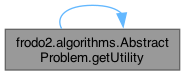
References getUtility().
Referenced by getUtility().
◆ getVariables() [1/2]
| Set< String > frodo2.algorithms.AbstractProblem< V extends Addable< V >, U extends Addable< U > >.getVariables | ( | ) |
◆ getVariables() [2/2]
| Set< String > frodo2.algorithms.AbstractProblem< V extends Addable< V >, U extends Addable< U > >.getVariables | ( | final String | owner | ) |
- See also
- DCOPProblemInterface.getVariables(java.lang.String)
Implements frodo2.solutionSpaces.DCOPProblemInterface< V extends Addable< V >, U extends Addable< U > >.
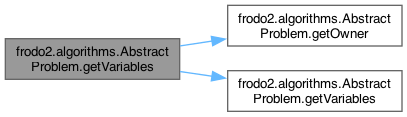
References getOwner(), and getVariables().
◆ getVarScopes()
| Map< String, Set< String > > frodo2.algorithms.AbstractProblem< V extends Addable< V >, U extends Addable< U > >.getVarScopes | ( | ) |
◆ getZeroUtility()
| U frodo2.algorithms.AbstractProblem< V extends Addable< V >, U extends Addable< U > >.getZeroUtility | ( | ) |
References utilClass.
Referenced by frodo2.solutionSpaces.JaCoP.JaCoPproblem< V extends Addable< V > >.getUtility().
◆ isRandom()
| boolean frodo2.algorithms.AbstractProblem< V extends Addable< V >, U extends Addable< U > >.isRandom | ( | String | var | ) |
- See also
- DCOPProblemInterface.isRandom(java.lang.String)
Implements frodo2.solutionSpaces.DCOPProblemInterface< V extends Addable< V >, U extends Addable< U > >.
Referenced by getAgentNeighbors(), getNeighborhoods(), and frodo2.solutionSpaces.JaCoP.JaCoPproblem< V extends Addable< V > >.getSubProblem().
◆ maximize()
| boolean frodo2.algorithms.AbstractProblem< V extends Addable< V >, U extends Addable< U > >.maximize | ( | ) |
◆ setAgent()
| void frodo2.algorithms.AbstractProblem< V extends Addable< V >, U extends Addable< U > >.setAgent | ( | String | name | ) |
Sets the name of the agent owning this subproblem.
- Parameters
-
name the name of the agent
Referenced by frodo2.solutionSpaces.JaCoP.JaCoPproblem< V extends Addable< V > >.clone(), frodo2.solutionSpaces.JaCoP.JaCoPproblem< V extends Addable< V > >.getSubProblem(), and frodo2.solutionSpaces.JaCoP.JaCoPxcspParser< V extends Addable< V > >.parse().
◆ setMaximize()
| void frodo2.algorithms.AbstractProblem< V extends Addable< V >, U extends Addable< U > >.setMaximize | ( | final boolean | maximize | ) |
Implements frodo2.solutionSpaces.DCOPProblemInterface< V extends Addable< V >, U extends Addable< U > >.
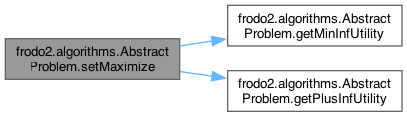
References getMinInfUtility(), getPlusInfUtility(), and maximize.
◆ setUtilClass()
| void frodo2.algorithms.AbstractProblem< V extends Addable< V >, U extends Addable< U > >.setUtilClass | ( | Class< U > | utilClass | ) |
- See also
- DCOPProblemInterface.setUtilClass(java.lang.Class)
References utilClass.
Referenced by frodo2.algorithms.Problem< V extends Addable< V >, U extends Addable< U > >.getSubProblem(), frodo2.algorithms.dpop.test.UTILpropagationTest< U extends Addable< U > >.Listener.Listener(), frodo2.algorithms.XCSPparser< V extends Addable< V >, U extends Addable< U > >.parse(), frodo2.algorithms.adopt.test.ADOPTagentTest< V extends Addable< V >, U extends Addable< U > >.setUp(), frodo2.algorithms.asodpop.tests.ASODPOPagentTest< V extends Addable< V >, U extends Addable< U > >.testRandom(), and frodo2.algorithms.asodpop.tests.ASODPOPBinaryAgentTest< V extends Addable< V >, U extends Addable< U > >.testRandom().
◆ setVarScope()
|
protected |
Sets the agent scope of a shared variable.
- Parameters
-
var the variable scope the names of the agents in the variable's scope
References getOwner(), and varScopes.
Referenced by frodo2.solutionSpaces.JaCoP.JaCoPproblem< V extends Addable< V > >.getSubProblem().

◆ toString()
| String frodo2.algorithms.AbstractProblem< V extends Addable< V >, U extends Addable< U > >.toString | ( | ) |
- See also
- java.lang.Object#toString()
References agentName, extendedRandNeighborhoods, mpc, publicAgents, and utilClass.
Member Data Documentation
◆ agentName
|
protected |
The name of the agent owning this subproblem.
Referenced by getAgent(), getAgentNeighborhoods(), getMyVars(), frodo2.algorithms.Problem< V extends Addable< V >, U extends Addable< U > >.reset(), and toString().
◆ agents
|
protected |
The set of agents.
Referenced by frodo2.solutionSpaces.JaCoP.JaCoPproblem< V extends Addable< V > >.addVariable(), frodo2.algorithms.Problem< V extends Addable< V >, U extends Addable< U > >.getSubProblem(), frodo2.solutionSpaces.JaCoP.JaCoPproblem< V extends Addable< V > >.getSubProblem(), and frodo2.algorithms.Problem< V extends Addable< V >, U extends Addable< U > >.reset().
◆ domains
|
protected |
The domain of each variable.
Referenced by frodo2.solutionSpaces.JaCoP.JaCoPproblem< V extends Addable< V > >.addVariable(), and frodo2.algorithms.Problem< V extends Addable< V >, U extends Addable< U > >.reset().
◆ extendedRandNeighborhoods
|
protected |
If true, neighborhood relationships between decision variables are extended through random variables.
In other words, for a given decision variable x, its neighborhood consists of:
- the decision variables that share constraints with x (as usual),
- the decision variables that are direct neighbors of any random variable that can be reached from x by a path that involves only random variables.
Referenced by AbstractProblem(), frodo2.solutionSpaces.JaCoP.JaCoPproblem< V extends Addable< V > >.clone(), getAgentNeighbors(), getNeighborVars(), frodo2.solutionSpaces.JaCoP.JaCoPproblem< V extends Addable< V > >.getSubProblem(), frodo2.solutionSpaces.JaCoP.JaCoPproblem< V extends Addable< V > >.JaCoPproblem(), and toString().
◆ maximize
|
protected |
Whether this is a maximization or a minimization problem.
Referenced by AbstractProblem(), frodo2.solutionSpaces.JaCoP.JaCoPproblem< V extends Addable< V > >.clone(), frodo2.solutionSpaces.JaCoP.JaCoPproblem< V extends Addable< V > >.getSubProblem(), frodo2.solutionSpaces.JaCoP.JaCoPproblem< V extends Addable< V > >.JaCoPproblem(), frodo2.solutionSpaces.JaCoP.JaCoPproblem< V extends Addable< V > >.JaCoPproblem(), frodo2.algorithms.Problem< V extends Addable< V >, U extends Addable< U > >.reset(), setMaximize(), and frodo2.solutionSpaces.JaCoP.tests.JaCoPproblemTest< V extends Addable< V > >.solve().
◆ mpc
|
protected |
Whether to behave in MPC mode.
In MPC mode:
- each agent knows the identities of all agents;
- all variables are known to all agents.
Referenced by AbstractProblem(), and toString().
◆ owners
|
protected |
For each variable, the name of its owner agent.
Referenced by frodo2.solutionSpaces.JaCoP.JaCoPproblem< V extends Addable< V > >.addVariable(), and frodo2.algorithms.Problem< V extends Addable< V >, U extends Addable< U > >.reset().
◆ publicAgents
|
protected |
Whether each agent knows the identities of all agents.
Referenced by AbstractProblem(), frodo2.solutionSpaces.JaCoP.JaCoPproblem< V extends Addable< V > >.clone(), frodo2.solutionSpaces.JaCoP.JaCoPproblem< V extends Addable< V > >.getSubProblem(), frodo2.solutionSpaces.JaCoP.JaCoPproblem< V extends Addable< V > >.JaCoPproblem(), and toString().
◆ randVars
|
protected |
The random variables.
Referenced by frodo2.algorithms.Problem< V extends Addable< V >, U extends Addable< U > >.reset().
◆ serialVersionUID
|
staticprivate |
Used for serialization.
◆ spaces
|
protected |
The list of solution spaces.
Referenced by frodo2.solutionSpaces.JaCoP.JaCoPproblem< V extends Addable< V > >.getSubProblem(), frodo2.solutionSpaces.JaCoP.JaCoPproblem< V extends Addable< V > >.getUtility(), frodo2.solutionSpaces.JaCoP.JaCoPproblem< V extends Addable< V > >.rescale(), and frodo2.algorithms.Problem< V extends Addable< V >, U extends Addable< U > >.reset().
◆ utilClass
|
protected |
The class used for utility values.
Referenced by getMinInfUtility(), getPlusInfUtility(), getUtilClass(), getZeroUtility(), frodo2.algorithms.Problem< V extends Addable< V >, U extends Addable< U > >.reset(), setUtilClass(), frodo2.solutionSpaces.JaCoP.JaCoPproblem< V extends Addable< V > >.setUtilClass(), and toString().
◆ varScopes
|
protected |
For each shared variable, the names of the agents in its scope.
Referenced by getScope(), frodo2.algorithms.Problem< V extends Addable< V >, U extends Addable< U > >.getSubProblem(), frodo2.solutionSpaces.JaCoP.JaCoPproblem< V extends Addable< V > >.getSubProblem(), getVarScopes(), frodo2.algorithms.Problem< V extends Addable< V >, U extends Addable< U > >.reset(), and setVarScope().
The documentation for this class was generated from the following file:
- src/frodo2/algorithms/AbstractProblem.java
